How Does The Earth Produce Oil

Ever fueled up your car, zipped around in a plastic-fantastic contraption, or marvelled at the sheer convenience of modern life, and paused to wonder: how on Earth did we get all this oil? It's a question that often gets lost in the daily grind, but the answer is a fascinating tale spanning millennia, involving ancient life, immense pressure, and a whole lot of geological magic. Forget what you heard about dinosaurs filling up the gas tank – the real story is even cooler!
Let's dive into Earth’s most exclusive recipe for liquid gold. It’s not about giant dino pools; it’s far more subtle and, frankly, a lot more widespread than you might imagine. Think of it as Mother Nature’s ultimate slow-cooker project.
The Main Ingredients: Ancient Life's Legacy
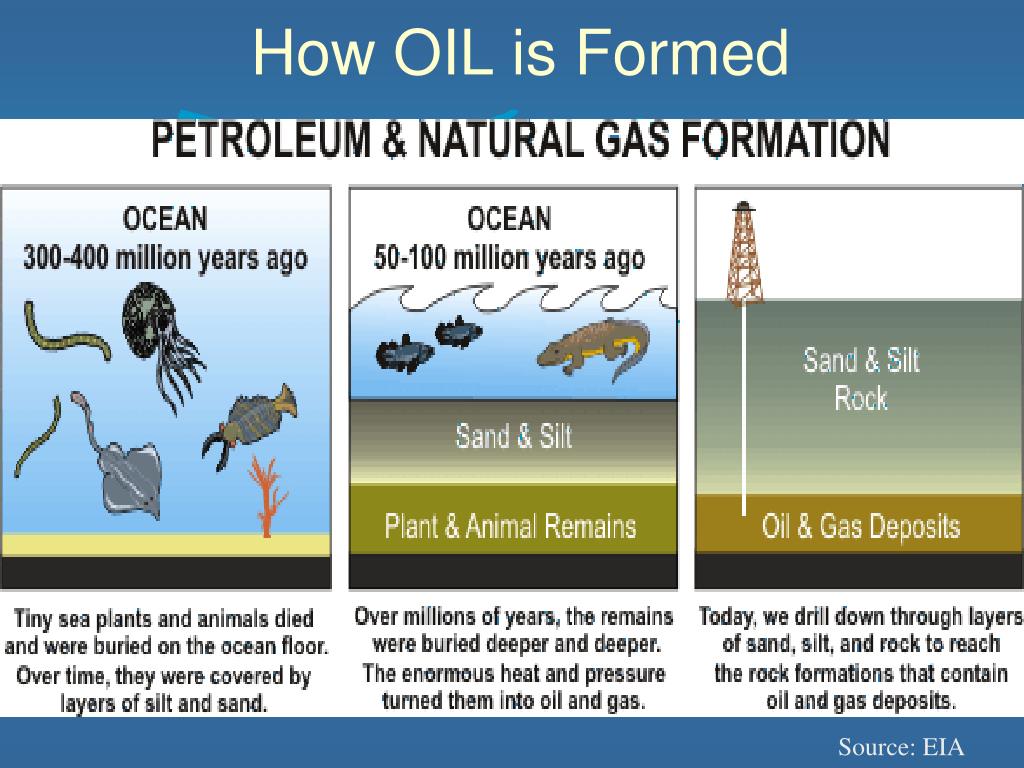
The first step in producing oil isn't about giant creatures, but rather tiny ones. We’re talking about microscopic marine organisms like plankton, algae, and other plant matter that thrived in ancient oceans and lakes hundreds of millions of years ago. When these little guys died, they didn't just vanish. Instead, they sank to the bottom, accumulating in vast layers in oxygen-poor environments. This lack of oxygen was crucial, as it prevented them from completely decomposing away.
Must Read
Imagine vast, shallow seas teeming with life, a bit like a primordial superfood smoothie. Over time, countless generations of these organisms lived and died, forming a thick, gooey layer of organic-rich mud on the seabed. This sludge is the true beginning of oil.
The Earth's Pressure Cooker: Heat and Time
Now, this is where things get really interesting. Over millions of years, layers upon layers of sediment – sand, silt, clay – began to pile up on top of this organic-rich mud. This immense weight created unimaginable pressure. As these layers buried the organic material deeper and deeper, the temperature also began to rise. We're talking serious heat, typically between 60°C and 160°C (around 140°F to 320°F). Think of it like a gigantic, slow-motion pressure cooker.

Under this intense heat and pressure, the complex organic molecules began to break down and transform. First, they turned into a waxy substance called kerogen. If the heat and pressure continued to increase, this kerogen would further break down, first into liquid crude oil, and then, at even higher temperatures, into natural gas. It’s a delicate balance; too hot, and you get gas; just right, and you get oil. This process takes millions upon millions of years – truly a geological timescale that dwarfs human history!
The Great Migration: Finding a Home
Once the oil is formed in these deep "source rocks," it doesn't just sit there in a neat pool. Most source rocks are relatively impermeable. So, the newly formed oil, often mixed with natural gas and water, begins to migrate. It seeps and flows through tiny pores and cracks in surrounding, more permeable rocks, like sandstones or limestones. Think of it like water slowly making its way through a giant sponge.

But where does it stop? This is where geological "traps" come into play. These are specific rock formations – often domes, folds, or fault lines – that create an impermeable barrier, preventing the oil and gas from continuing their upward journey. The oil gets "trapped" beneath these caprock layers, accumulating in what we call a reservoir. These are the underground deposits that exploration companies search for – not vast caverns of oil, but rather oil saturating the pore spaces within rocks, much like water in a sponge.
From Ancient Seas to Your Daily Commute
It's mind-boggling, isn't it? Every time you fill your car, use a plastic container, or take medicine that relies on petrochemicals, you're tapping into a resource that began as microscopic lifeforms swimming in ancient seas, transformed by the Earth's immense power over countless ages. It's a testament to the incredible, patient processes of our planet.
Understanding this intricate journey can shift our perspective. Oil isn't just a commodity; it's a profound gift from deep time, a stored form of ancient solar energy captured by tiny organisms. While it powers so much of our modern world, knowing its origin reminds us of its finite nature and the extraordinary effort the Earth put into creating it. Perhaps, with this newfound appreciation, we can all make small choices – like opting to walk more, choosing reusable items, or simply being more mindful of our consumption – to honor this incredible, ancient legacy beneath our feet.