
How Does Plasma Cutting Work
Ever stood near a workshop, heard that distinctive hiss, and seen a shower of bright, almost magical sparks flying as someone effortlessly slices through metal? Chances are, you were witnessing the incredible power of plasma cutting! And let me tell you, it's not just for industrial giants; this technology is way cooler, and more accessible, than you might think.
Imagine being able to take a thick sheet of steel, aluminum, or even copper, and carve intricate designs or precise shapes out of it as if it were butter. Sounds like something out of a sci-fi movie, right? Well, it's real, it's happening, and it's powered by one of the universe's most abundant states of matter!
What in the World is Plasma? (No, Not Blood Plasma!)
Before we dive into the cutting action, let's clear up a common misconception. We're not talking about the stuff in your veins! In physics, plasma is often called the "fourth state of matter." You know solids, liquids, and gases, right? Well, if you take a gas and heat it up to an incredibly high temperature, the atoms get so energized that their electrons break free.
Must Read
This creates an ionized gas – a super-hot, electrically conductive soup of charged particles. Think of it like a miniature, controllable bolt of lightning, or the stuff stars are made of! Yes, the sun itself is a giant ball of plasma. Pretty powerful company to keep, wouldn't you say?
The Setup: Your Mini Star-Making Machine!
So, how do we harness this stellar power for cutting? It all starts with a few key components:
- A power supply: This is the muscle, providing the high voltage and current needed.
- A source of compressed gas: Usually air, nitrogen, or oxygen. This is the raw material for our plasma.
- A plasma torch: This is the magic wand, where all the action happens.
It's essentially a system designed to take ordinary gas and turn it into something extraordinary, right at the tip of your fingers (well, safely away from them, of course!).

The Electrifying Dance: How it Cuts!
Now for the cool part – the actual cutting! Here's the simplified, awe-inspiring sequence of events:
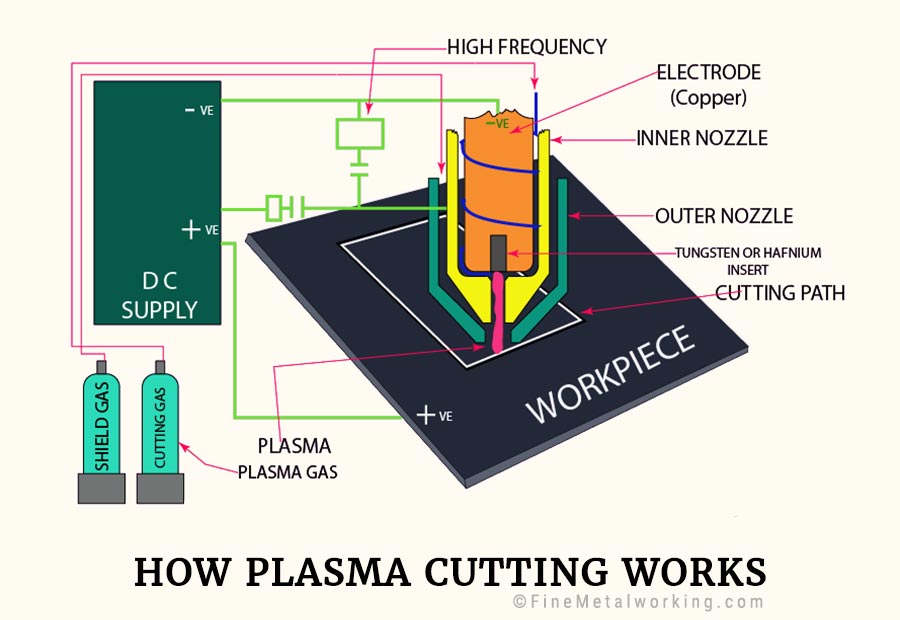
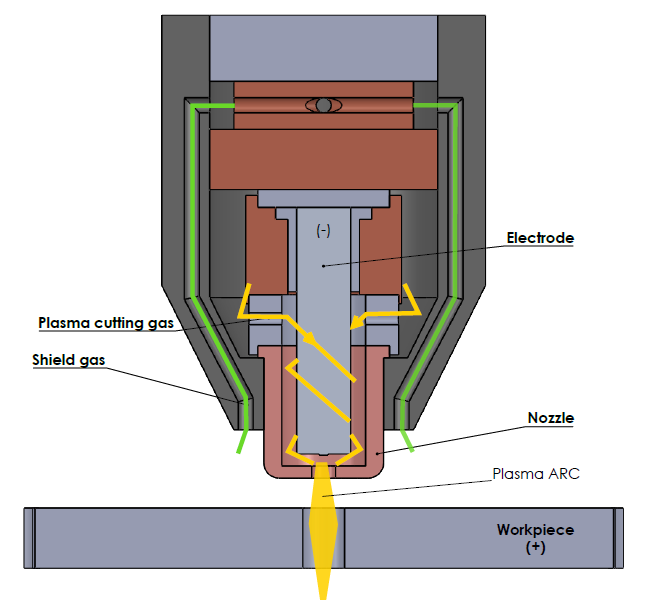
First, the compressed gas (let's say air) starts flowing through the plasma torch, heading towards a tiny opening called the nozzle.
Next, the power supply kicks in. A high-frequency electrical arc jumps from an electrode inside the torch to the metal workpiece you want to cut. This initial spark is called the pilot arc.

As the pilot arc passes through the gas, it heats it to extreme temperatures – we're talking up to 40,000°F (22,000°C)! That's hotter than the surface of the sun! This intense heat instantly ionizes the gas, transforming it into our beloved plasma.
This super-heated, super-fast-moving plasma jet is then forced through the tiny nozzle opening. Since it's electrically conductive, the main cutting current transfers from the torch, through the plasma jet, and into the workpiece.
The sheer heat and velocity of this plasma jet melt through the metal with incredible speed and precision. The high-speed jet simply blows the molten metal away, creating a clean, narrow cut known as a "kerf." Voila! You've just sliced through metal like a hot knife through butter.

Why Plasma Cutting Makes Life More Fun!
So, besides being incredibly cool from a scientific standpoint, why should you care about plasma cutting? Because it unlocks a world of creative possibilities and practical solutions that are genuinely exciting!
Imagine crafting a custom metal sign for your garage, designing unique art pieces for your garden, or even making specialized brackets for your latest DIY project. Plasma cutting offers unmatched precision and speed, outperforming traditional methods like slower, steel-only oxy-fuel cutting.
It works on a wide variety of electrically conductive metals – steel, stainless steel, aluminum, copper, brass – giving artists, fabricators, and hobbyists immense versatility. You can freehand cut, use stencils, or even hook it up to a CNC machine for jaw-droppingly intricate designs.
Think about it: that rusty old garden gate could become a canvas for a stunning metal scrollwork design. A plain sheet of aluminum could transform into a sleek, personalized part for your car or motorcycle. The ability to manipulate metal with such ease and artistry is incredibly empowering and, dare I say, a lot of fun!
A Little Word on Safety (Because Superpowers Come with Responsibility!)
While immensely satisfying, plasma cutting involves intense heat and bright light. Always remember to wear appropriate safety gear, like welding helmets, gloves, and protective clothing. It's a powerful tool, and respecting its capabilities ensures you can safely enjoy all the awesome things it lets you create.
Ready to Ignite Your Curiosity?
From the smallest home workshop to massive industrial fabrication plants, plasma cutting is a testament to human ingenuity, harnessing fundamental physics to achieve incredible results. It's more than just cutting metal; it's about transforming raw materials into objects of beauty, utility, and even pure fantastical expression.
So, the next time you hear that distinctive hiss and see those dazzling sparks, remember the miniature star-like phenomenon happening at the tip of that torch. It’s a powerful reminder that the world is full of amazing processes, just waiting for us to understand and appreciate them. So, who knows? Perhaps your next creative adventure involves a plasma cutter! The possibilities, much like the universe's plasma, are truly boundless. Go ahead, learn more, and let your imagination take flight!