How Does Hydroelectric Power Produce Electricity
Ever flipped a light switch and wondered where that magical electricity comes from? We often take it for granted, but understanding the source of our power can be surprisingly fascinating. Let's dive into one of the most established and renewable sources of electricity: hydroelectric power!
Hydroelectric power, in simple terms, uses the power of moving water to generate electricity. Think of it as nature's own dynamo. Its purpose is to provide a clean and sustainable alternative to fossil fuels, which contribute significantly to pollution and climate change. By harnessing the energy of flowing water, we can reduce our reliance on these harmful sources and create a greener future. The benefits are numerous: it's a renewable resource (the water cycle ensures a constant supply), it produces virtually no air pollution during operation, and it can also help control floods and provide a reliable water supply for irrigation and drinking.
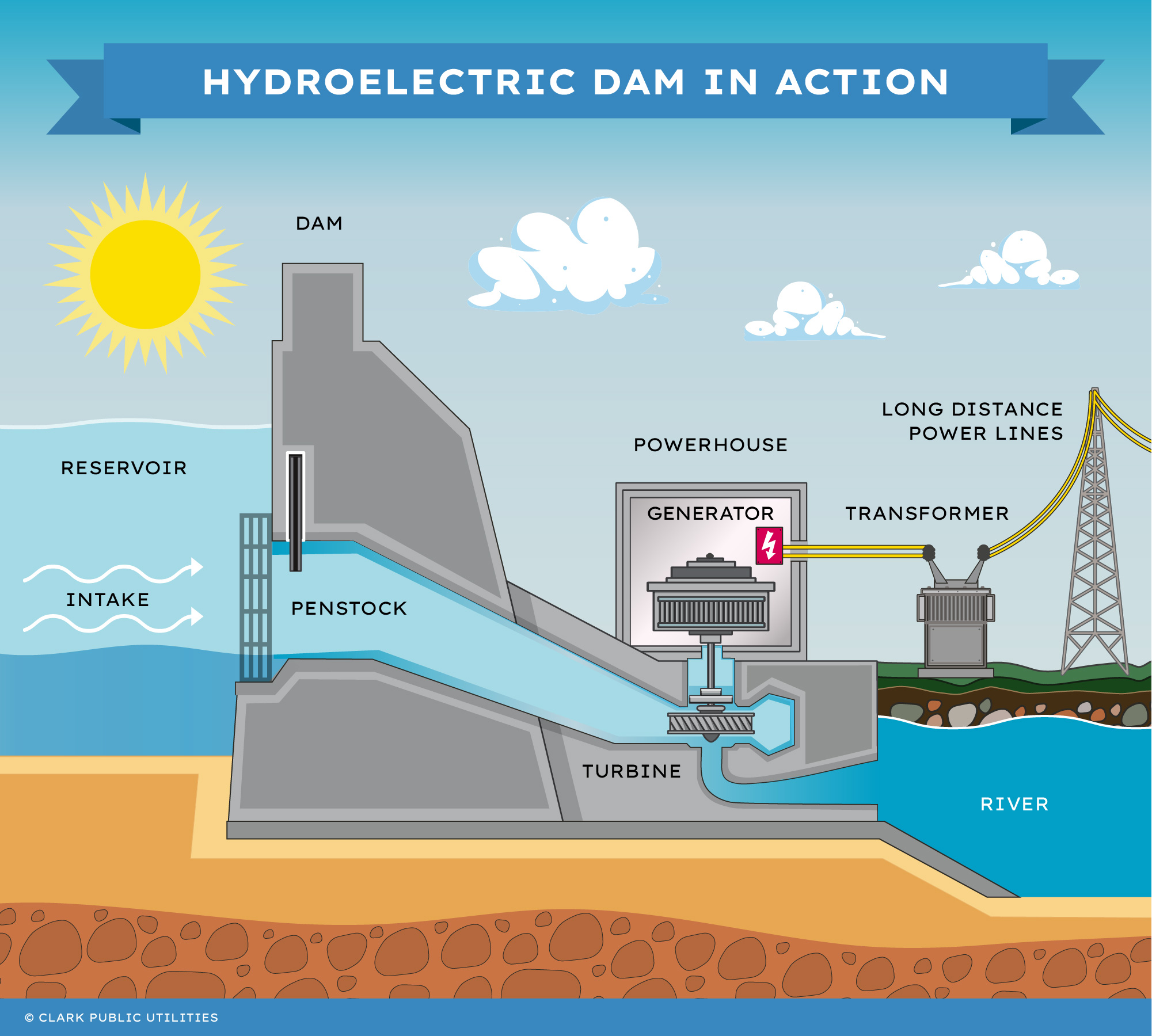
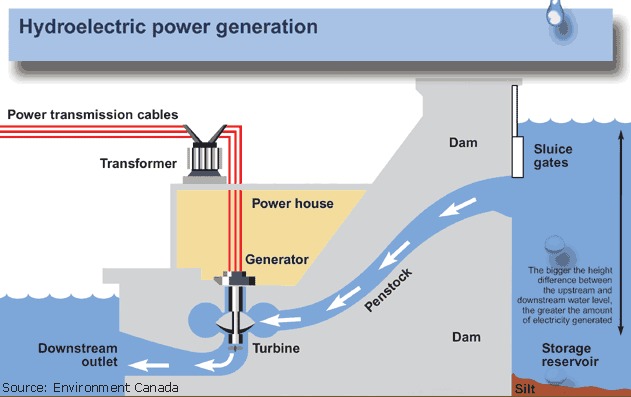
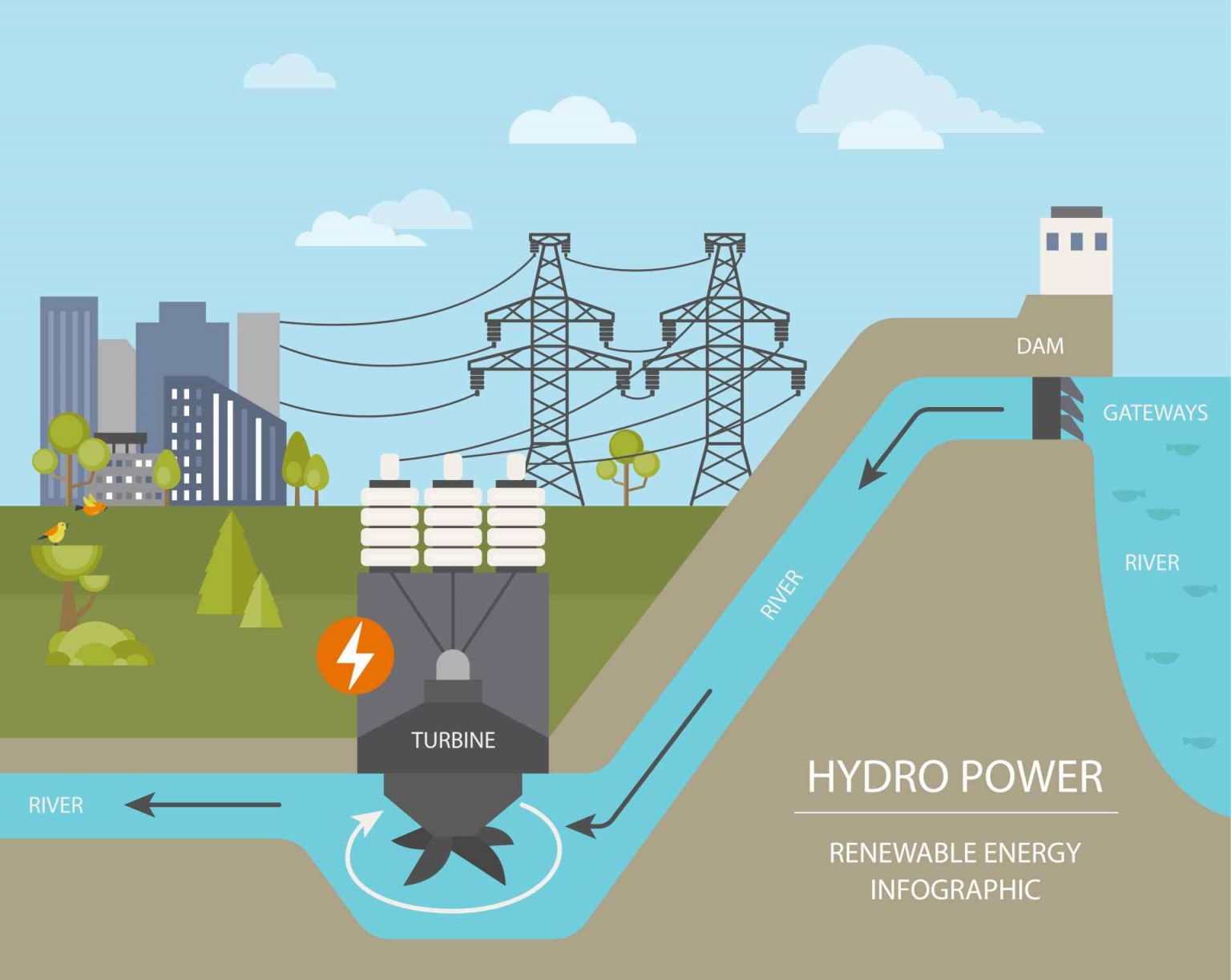
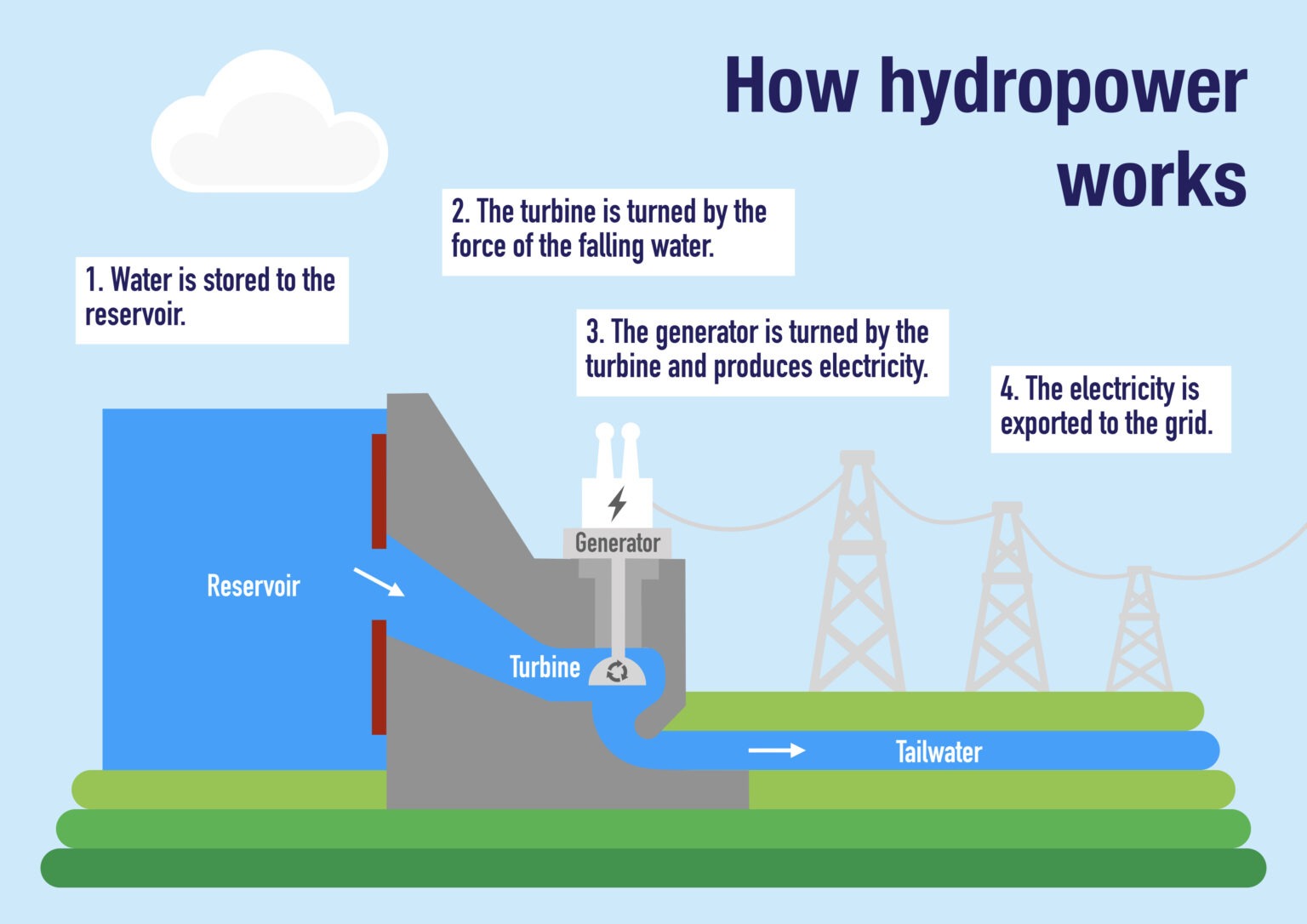
The basic principle is quite ingenious. A dam is constructed to create a large reservoir of water. This creates a significant difference in water level – a higher level behind the dam and a lower level downstream. Water is then released from the reservoir through controlled openings, flowing through a tunnel called a penstock. This rushing water spins the blades of a turbine, much like the wind spins the blades of a windmill. The turbine is connected to a generator, a device that converts the mechanical energy of the spinning turbine into electrical energy. The electricity is then sent through power lines to homes, schools, and businesses.
Must Read
You might be surprised to learn how often hydroelectric power impacts your life. Many schools use hydroelectric power to keep the lights on and the computers running. In your daily life, it might be powering your refrigerator, your television, or even your electric car. Large-scale hydroelectric projects, like the Hoover Dam in the United States or the Three Gorges Dam in China, are iconic examples of how we can harness the power of water to meet our energy needs.
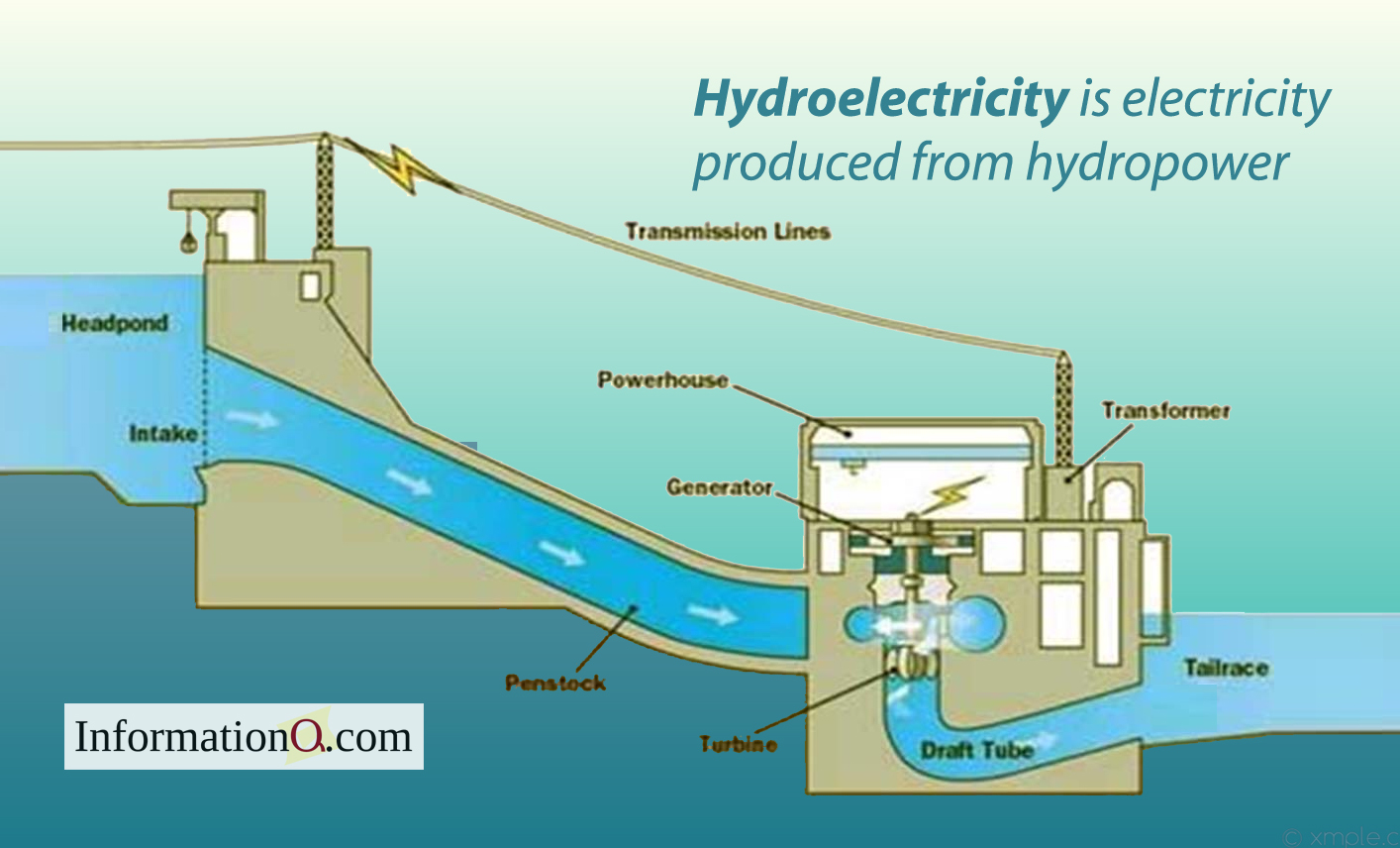
Even in education, hydroelectric power plays a part. Many science classes use models of hydroelectric dams to teach students about energy conversion and renewable resources. These hands-on activities help bring the concept to life and illustrate the principles of physics in an engaging way.
Want to explore hydroelectric power further? Here are a few simple ideas: Research the nearest hydroelectric dam and learn about its capacity and impact on the local community. Watch videos online that explain the process of hydroelectric power generation. You could even build a simple model of a water wheel using recycled materials to see how water can be used to generate movement. Observe a local stream or river and consider how its energy could potentially be harnessed (though, of course, actual construction requires significant planning and environmental consideration!). The key is to stay curious and keep asking questions. Understanding where our energy comes from is a crucial step towards building a more sustainable future.