
How Does Coal Mining Impact The Environment

Hey there, earth explorers! Ever wondered what happens after that trainload of coal chugs its way out of the mountains and heads to power our homes? Let’s dive into the exciting, and sometimes a bit bumpy, world of coal mining and its impact on our beloved planet!
The Big Dig: A Bird's-Eye View
Imagine you're building a giant sandcastle. You scoop up tons of sand, leaving a big hole behind, right? Well, coal mining is kind of like that, only on a much, MUCH larger scale.
There are two main ways to get to that sweet, sweet coal: surface mining and underground mining. Both leave their mark, just in different ways.
Must Read
Surface Mining: The Land Transformer
Surface mining, also known as strip mining, is like giving the earth a gigantic haircut! We’re talking about moving mountains of dirt and rock – the "overburden" – to get to the coal beneath. Think of it as giving Mother Nature a serious buzz cut.
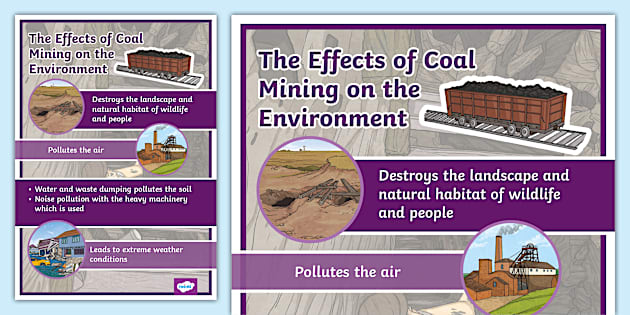
This process can completely reshape the landscape. Imagine turning a lush forest into a moonscape! It’s a dramatic makeover, to say the least, and not always the kind Mother Nature asked for.
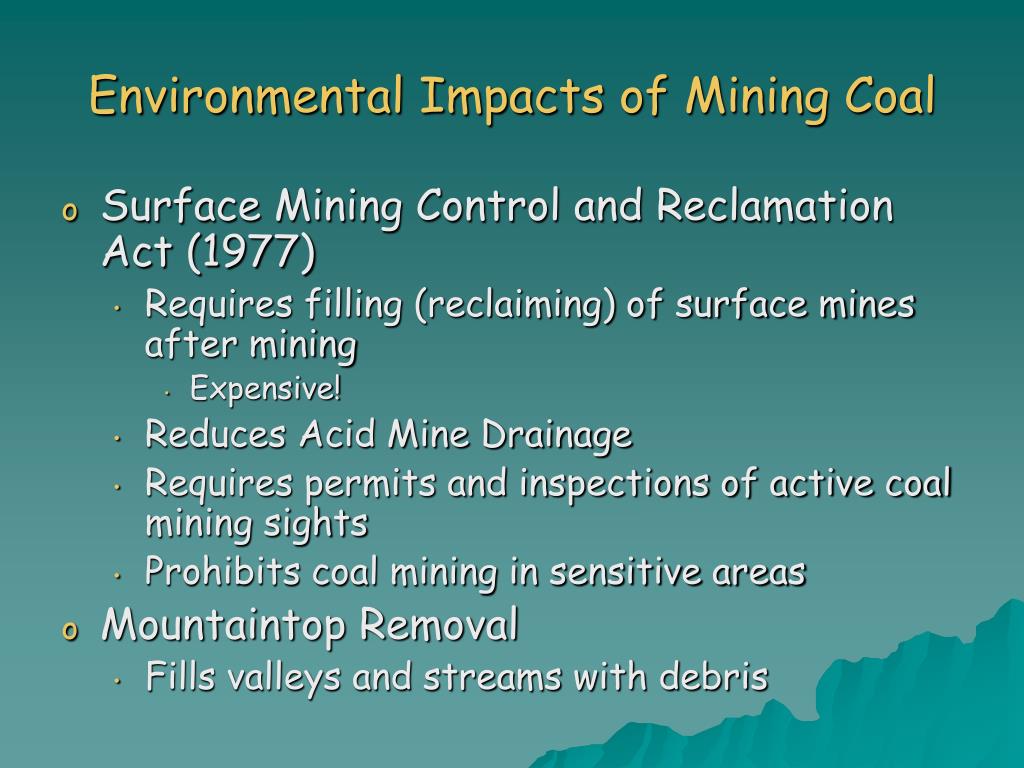
All that displaced earth has to go somewhere. Often, it ends up in nearby valleys, burying streams and changing the whole flow of water. It’s like rearranging the furniture in a river's living room, without asking permission!
Underground Mining: Tunnels of Trouble
Underground mining is like sending a team of expert burrowers deep into the earth. Miners dig tunnels and shafts to reach the coal seams. It's like building an elaborate ant farm, only with much bigger ants… and much more dust!
This can cause the ground above to sink or collapse, creating what are called subsidence. Imagine your perfectly flat backyard suddenly developing a few unexpected dips and valleys. Not exactly ideal for croquet!
Water can also seep into these underground tunnels, becoming contaminated with minerals and other nasty stuff. It's like accidentally dropping your favorite smoothie into a muddy puddle. Yuck!
Water, Water Everywhere, But Not a Drop to Drink?
Speaking of water, coal mining can have a significant impact on our H2O supply. Both surface and underground mining can pollute streams and rivers.
Acid mine drainage (AMD) is a big culprit. When water mixes with exposed minerals, it creates a toxic soup that can harm aquatic life. It’s like turning a pristine mountain stream into a lemon battery – powerful, but not exactly refreshing.
The sediment runoff from mining sites can also cloud up the water, making it difficult for fish and other creatures to see and breathe. Imagine trying to swim in a giant glass of muddy water! Not fun.
Air Apparent: Dirty Air Woes
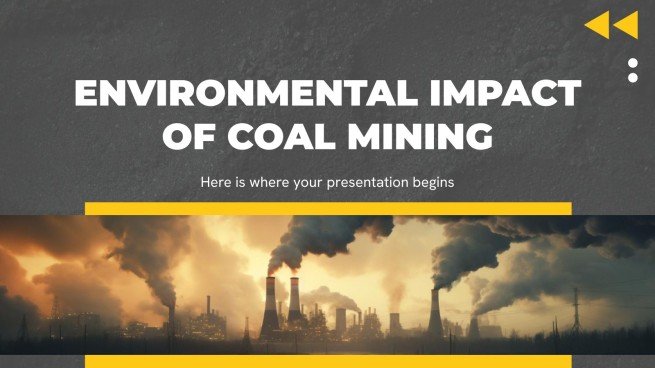
Coal mining also releases dust and other pollutants into the air. Think of it as a giant dirt cloud party – not a party anyone wants to attend!
This dust can cause respiratory problems and contribute to air pollution. It’s like living in a constant state of having a bad hair day, only for your lungs.
Plus, burning coal releases greenhouse gases, contributing to climate change. It’s like adding extra blankets to the earth’s bed, making it a little too toasty.
Goodbye, Wildlife?
All this land disturbance and pollution can have a devastating impact on wildlife. Animals lose their habitats, and their food sources become contaminated.
Imagine trying to find a new home after your entire neighborhood has been bulldozed! It’s a tough break for our furry and feathered friends.
Some animals may even be directly harmed by mining activities. It’s like accidentally stepping on a ladybug – a sad accident with big consequences for a tiny creature.
Reclaiming the Land: A Hopeful Note
Okay, so it sounds a bit gloomy, right? But here's the good news! Many coal mining companies are required to reclaim the land after they're done mining. This means trying to restore the land to its original condition, or at least make it usable for other purposes.

Reclamation can involve replanting trees, stabilizing slopes, and treating polluted water. It's like giving the earth a spa day after a tough workout.
While reclamation can't completely undo the damage, it can help to mitigate the negative impacts of coal mining. It’s a step in the right direction, like saying “sorry” with a bouquet of wildflowers.
Sustainable Solutions: A Brighter Future
Of course, the best way to reduce the environmental impact of coal mining is to reduce our reliance on coal itself! We need to invest in cleaner, renewable energy sources like solar, wind, and hydro power.
These sources produce electricity without the same devastating environmental consequences. It's like choosing a salad over a double cheeseburger – better for you and the planet!
By embracing sustainable solutions, we can create a brighter future for ourselves and for generations to come. It’s like planting a seed today that will grow into a mighty tree tomorrow.
What Can You Do?
So, what can you, the everyday earth explorer, do about all this? Plenty!
You can reduce your energy consumption, support policies that promote renewable energy, and educate yourself and others about the impacts of coal mining. It’s like becoming a superhero for the environment, one small act at a time!
Every little bit helps. Together, we can make a difference and create a more sustainable world. It’s like a team effort, where everyone plays a crucial role in protecting our planet.
The Final Scoop
Coal mining definitely has a significant impact on the environment, but it’s not all doom and gloom. By understanding the challenges and embracing sustainable solutions, we can work towards a cleaner, healthier future.
So, go forth, be informed, and be a champion for the planet! The earth will thank you for it. Remember, even small changes can make a big difference!
Now, go enjoy the great outdoors! And maybe plant a tree or two while you're at it. You’ll feel great, and Mother Nature will give you a high five (in spirit, of course!).