
How Does A Window Ac Unit Work

Alright, settle in, grab another sip of that (iced, hopefully) latte, because we're about to demystify one of life's greatest pleasures: that grumpy, humming box in your window that magically turns your sauna-like room into a polar bear's paradise. Yes, we're talking about the window AC unit, the true MVP of summer.
You see it, you love it, you probably haven't thought twice about how it actually works. Is it just a tiny arctic gnome blowing cold air? A secret portal to Alaska? While those theories are undeniably more fun, the truth, as always, is a little less magical and a lot more scientific. But don't worry, we'll keep it entertaining. Think of your AC unit as a tiny, highly efficient heat magician, but instead of pulling rabbits out of hats, it's pulling heat out of your house and flinging it unceremoniously outside.
The Star of the Show: Refrigerant – The Chameleon of Coolness
Every great story needs a hero, and in the AC saga, that hero is a special fluid called refrigerant. This isn't just any liquid; it's a superstar with a fascinating party trick: it can change from a liquid to a gas and back again at relatively low temperatures. Think of it as a microscopic ninja, constantly shifting forms to steal heat. It’s the secret sauce, the special ingredient that makes everything else tick.
Must Read
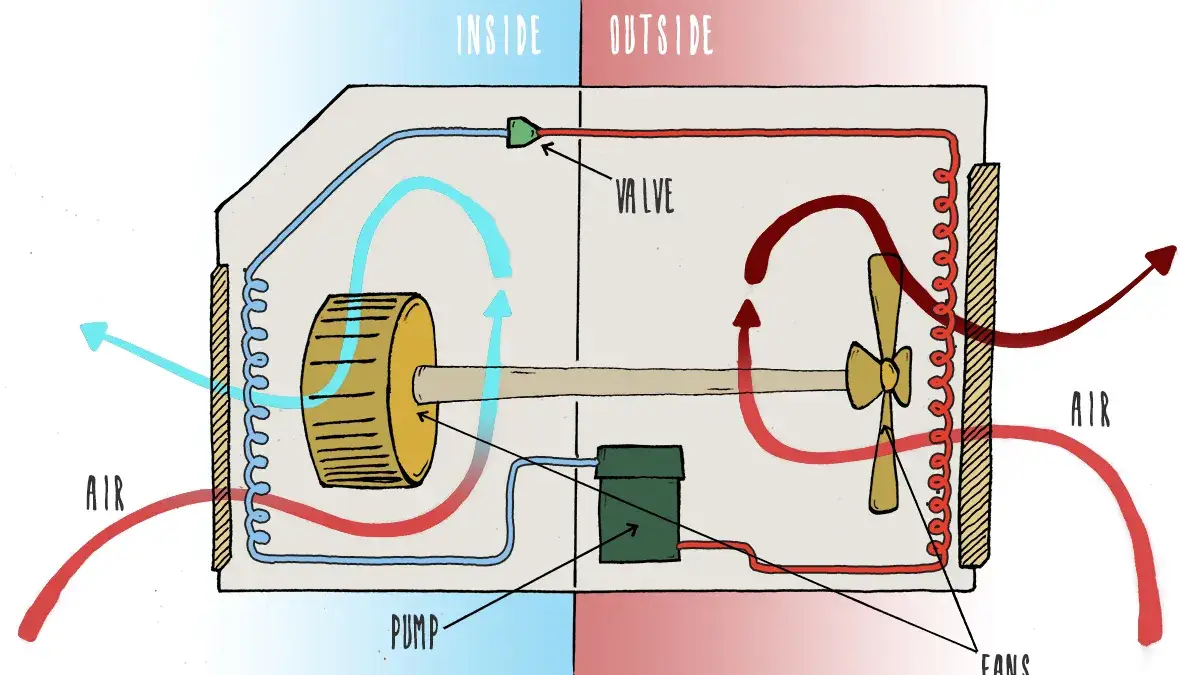
The whole brilliant dance of your AC unit hinges on this chameleon-like quality. When refrigerant turns into a gas, it absorbs a lot of heat. And when it changes back into a liquid, it releases that heat. Your AC unit is essentially a fancy, sealed loop designed to make this phase change happen strategically – absorbing heat inside your home, and releasing it outside.
The Four Musketeers of Cool: Your AC Unit's Inner Circle
Our refrigerant hero needs some trusty sidekicks to pull off its heat-stealing heist. There are four main components working in a constant, synchronized ballet to keep you from melting. Let's meet the band:
1. The Compressor: The Muscle (and the Loudmouth)
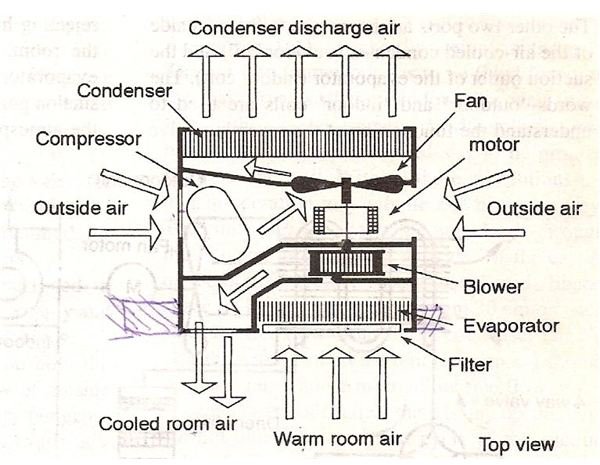
First up, we have the compressor. This is the bouncer at the coolest club in town, ensuring only the right vibes (cold air) get in and the wrong ones (heat) get thrown out. The compressor is basically a powerful pump that takes the refrigerant, which has now become a low-pressure, low-temperature gas after absorbing your room's heat, and squeezes it. Hard. Imagine trying to cram an entire sofa into a shoebox. That's what the compressor does to the gas molecules. This intense squeezing, or compression, does two things:

- It turns the refrigerant into a high-pressure, high-temperature gas.
- It makes the refrigerant hotter than the air outside, which is crucial for the next step.
This is often the part of your AC unit that makes that deep, rumbling sound, a bit like a contented cat, but much, much louder. It's working hard, folks!
2. The Condenser Coils: The Hot Mess (Outside)
After being super-pressurized and heated by the compressor, our refrigerant, now a hot, high-pressure gas, flows into the condenser coils. You can find these on the outside part of your window unit, usually looking like a metallic radiator with fins. And guess what? There’s a fan blowing outside air over these coils.
Because the refrigerant inside the coils is now hotter than the outside air (thanks, compressor!), it happily starts to shed its heat to the cooler air whizzing by. It’s like it's saying, "Phew, glad to get rid of that!" As it releases its heat, the refrigerant cools down and changes back into a high-pressure liquid. Think of it as the heat’s grand exit stage, where it waves goodbye (hopefully forever) to your comfortable indoor air.
3. The Expansion Valve (or Capillary Tube): The Pressure Dropper
Now we have high-pressure liquid refrigerant, but it's still warm-ish. To make it ready to absorb more heat from your room, we need to drop its pressure dramatically. Enter the expansion valve (or often, a simple capillary tube in smaller window units). This component is like a tiny, strict bottleneck. It takes that high-pressure liquid and forces it through a very narrow opening.
The sudden drop in pressure causes the liquid refrigerant to immediately cool down and start turning back into a gas. It becomes a low-pressure, low-temperature liquid/gas mixture. This is a bit like spraying an aerosol can – the sudden pressure drop makes the spray feel cold. It's now super eager to soak up any heat it can find.
4. The Evaporator Coils: The Cool Guy (Inside)
Finally, the super-chilled, low-pressure refrigerant enters the evaporator coils. These are the coils you see on the inside of your window unit, often hidden behind a filter. And guess what else is there? Another fan, merrily blowing your room’s warm, muggy air over these icy-cold coils.

As your warm room air passes over the frigid evaporator coils, the refrigerant inside says, "Aha! Heat! Mine!" It eagerly absorbs the heat from the air, causing the refrigerant to completely evaporate and turn back into a low-pressure, low-temperature gas. The air, now stripped of its heat (and often some humidity too, which condenses into water and drips out the back), is blown back into your room, making you sigh with pure, unadulterated comfort.
And then, that low-pressure gas flows right back to the compressor to start the whole glorious cycle all over again. It’s a continuous loop of heat absorption, compression, rejection, and expansion, all designed to keep your personal space blissfully chilly.
Don't Forget the Fans!
Of course, none of this heat transfer would happen without the crucial work of the fans. One fan inside pulls warm room air over the evaporator coils, and another fan outside blows air over the condenser coils. They're the unsung heroes, ensuring the heat is efficiently moved from one place to another. Without them, it would be like having a brilliant stage play with no audience to witness it!
The Thermostat: The Brains of the Operation
So, how does your AC unit know when to stop freezing you solid? That's where the thermostat comes in. It's the brain, constantly monitoring your room's temperature. Once your room hits that perfectly chosen, glorious 72 degrees Fahrenheit (or whatever your personal comfort zone dictates), the thermostat tells the compressor to take a break. The cycle pauses, energy is saved, and you bask in the perfect coolness. When the temperature creeps back up, the thermostat signals the compressor to kick back into action, and the magic restarts.
The Simple Truth
So, there you have it! Your window AC unit isn't powered by tiny ice giants or wishes; it's a clever, relentless heat pump, tirelessly moving heat from where you don't want it (inside) to where it doesn't bother you (outside). It's a marvel of engineering, making summer infinitely more bearable, one cool breeze at a time.
Now you know the secret life of your window AC. Go forth, appreciate its hum, and revel in the fact that you’re surrounded by tiny, heat-stealing ninjas doing their phase-changing dance just for you. Pretty cool, right?