How Does A Power Plant Generate Electricity
Ever wonder where the juice comes from that powers your phone, makes your toast pop, or keeps the lights on during that scary movie? Well, pull up a comfy chair, because we're about to take a whimsical journey into the heart of a power plant – and trust me, it's more exciting than it sounds!
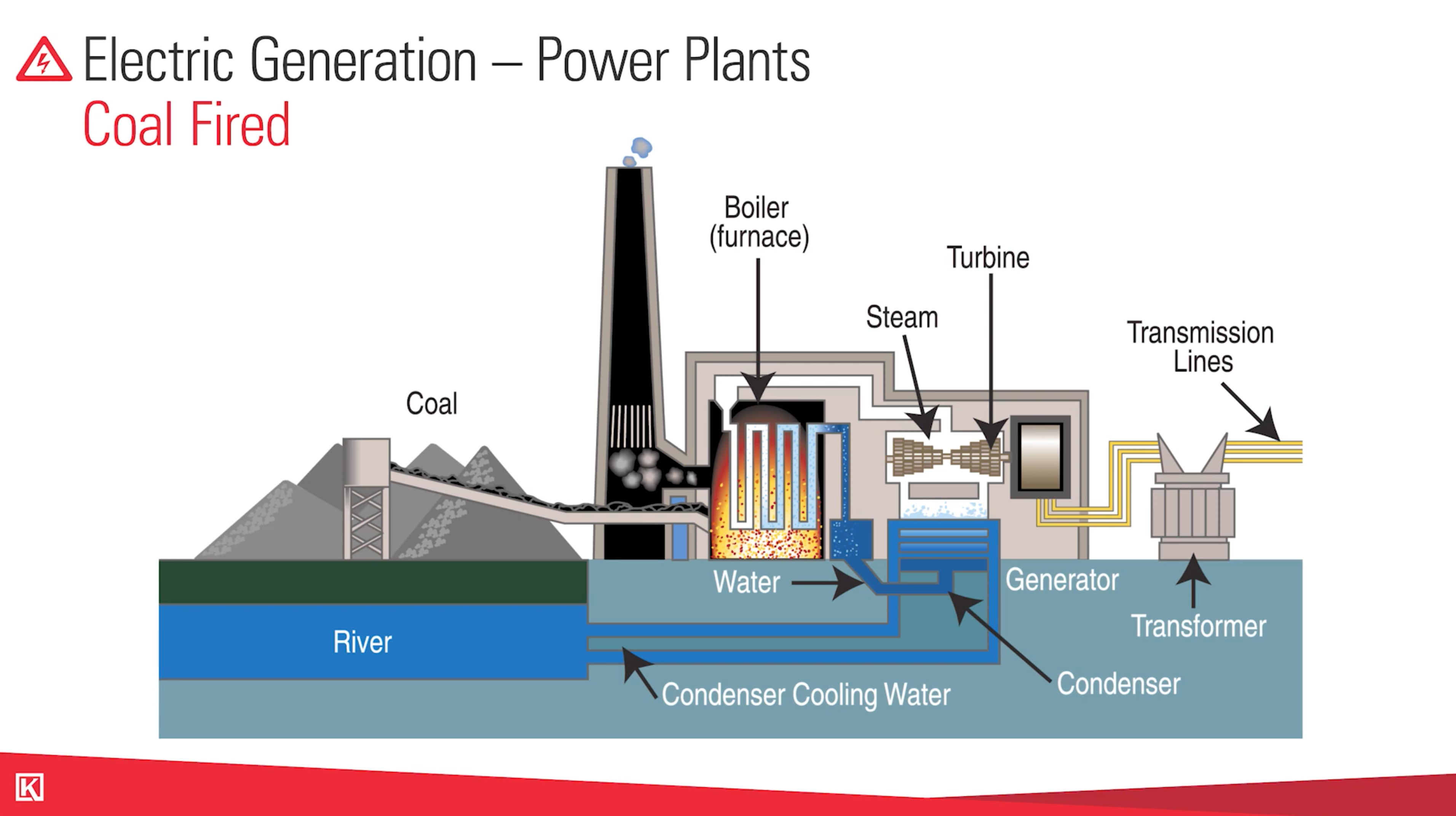
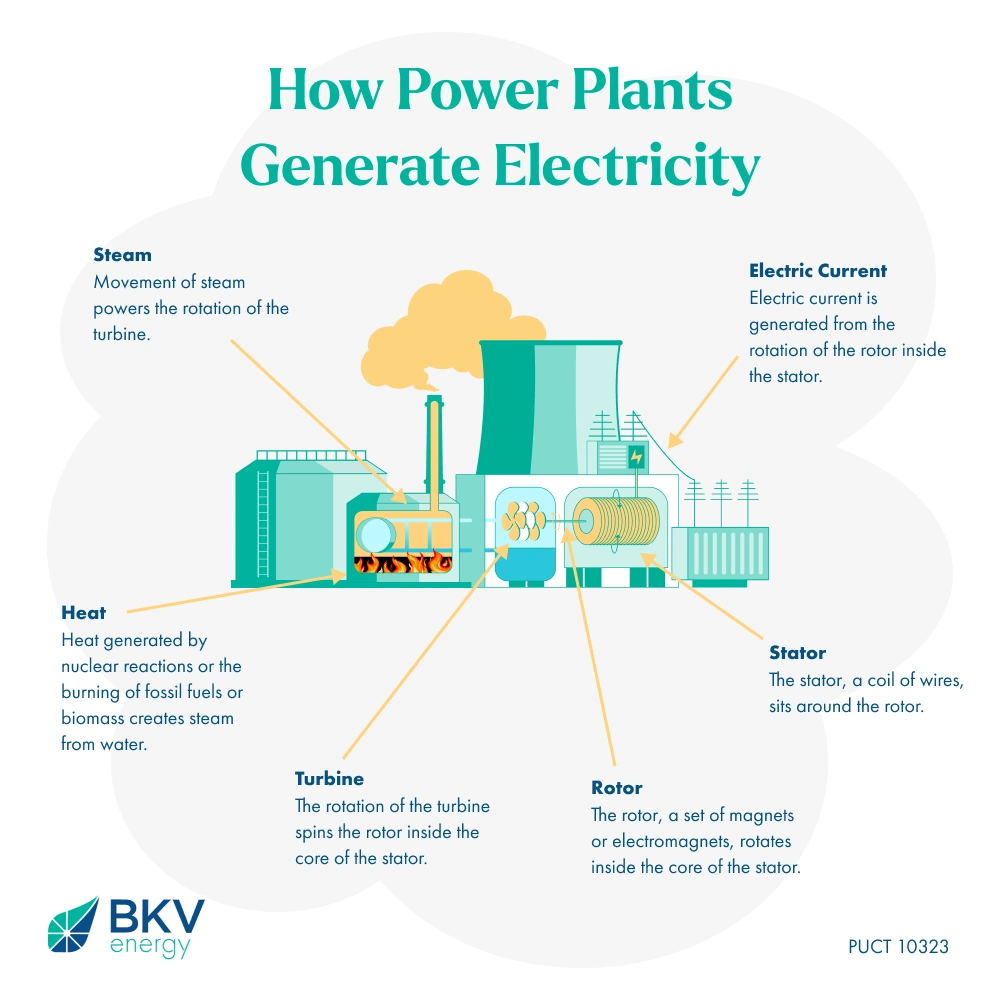
Think of a power plant as a giant, high-tech smoothie blender. Instead of fruits and veggies, though, we're blending something a little more… potent. The main ingredient? Something that can be burned to create heat. This could be coal, natural gas, or even good ol' fashioned wood (though you won't find that in many modern plants!). Some even use the heat generated by nuclear reactions, but that's a story for another day (filled with radiation and tiny particles that would make your hair stand on end!).
The Great Water Works
This heat, no matter where it comes from, is used to boil water. Yes, that's right, plain old H2O! But this isn't your grandma's kettle. We're talking about massive amounts of water, superheated to create high-pressure steam. Imagine the strongest geyser you've ever seen, amplified a thousand times! This steam is the real workhorse of the operation.
Must Read
Now, here's where it gets interesting. This super-heated steam is channeled into a giant pinwheel – a turbine. Think of it as a really, really big version of those little windmills you used to play with as a kid, only instead of wind, it's being blasted by a jet of incredibly forceful steam. This makes the turbine spin. And spin. And spin. Faster and faster!
The Magic of Magnets
Connected to the turbine is a generator, which is where the real magic happens. Inside the generator, you'll find coils of wire and powerful magnets. As the turbine spins, it forces these magnets to spin past the coils of wire. And here's the amazing part: this movement of magnets near wires creates electricity! It's like waving a magic wand, but instead of rabbits, you get power for your TV!

Okay, so the electricity is generated, but it's not quite ready for prime time. It needs to be “transformed” to a higher voltage to travel long distances efficiently. This is where transformers come in – those big metal boxes you often see near power plants. They're like the voltage translators of the electrical world, stepping up the voltage so it can zoom across power lines without losing too much energy.
From Power Plant to Your Plug
Finally, the electricity zooms across power lines, eventually reaching a substation near your home. There, it gets stepped down to a lower voltage, making it safe to use in your appliances. And voila! It flows into your home, ready to power your life. From the moment that fuel is burned to when your toaster pops, the electricity has traveled a long and winding road!
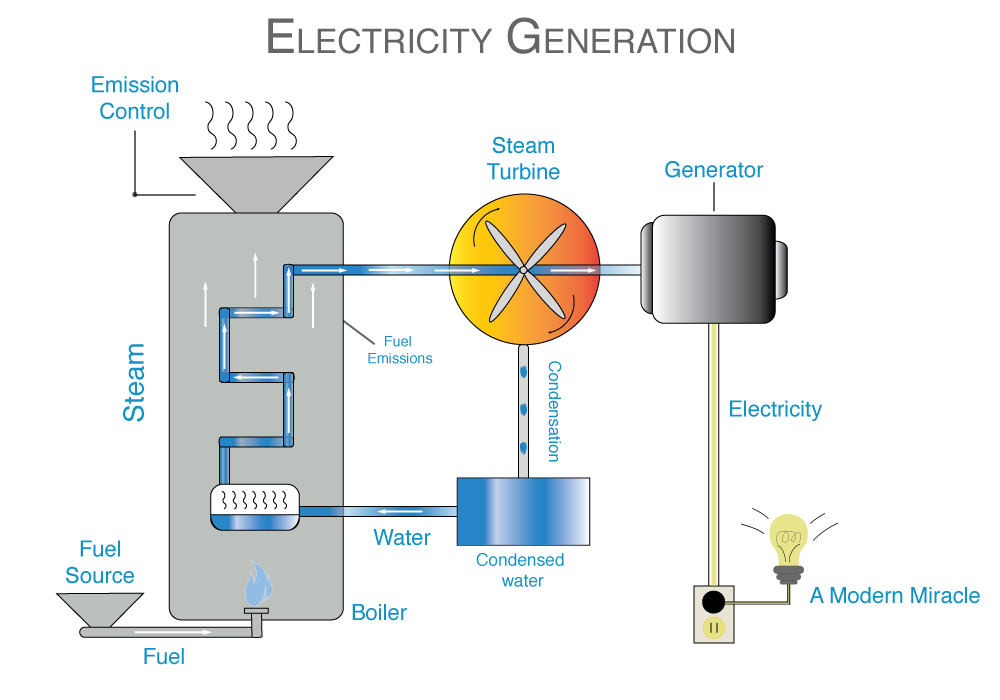
It’s quite a journey, isn’t it? From burning fuel to creating steam to spinning magnets, it's a fascinating chain of events that brings power to our fingertips. Next time you flip a light switch, take a moment to appreciate the complex and somewhat bizarre process that makes it all possible. Think of all the water, the steam, the spinning turbines, and the hard work of folks like Michael Faraday and Nikola Tesla, without whom it would not be possible!
And remember, even the most mundane things, like electricity, can be pretty darn cool when you take a closer look!
So, there you have it! The power plant, demystified! Next time someone asks you where electricity comes from, you can tell them the tale of the super-heated steam, the spinning turbines, and the magic of magnets. You might even impress them with your newfound knowledge (or at least entertain them with your enthusiasm!).