How Does A Portable Air Conditioner Work Diagram
Ever felt the blissful relief of stepping into an air-conditioned room on a scorching summer day? We often take for granted how these cooling marvels work. But what if you could understand the magic behind the chilled air? Let's explore the inner workings of a portable air conditioner, and specifically, how a diagram can help us grasp its ingenious simplicity.
Portable air conditioners are essentially self-contained cooling units. Unlike central air systems that rely on ductwork, a portable AC can be wheeled around and plugged into a standard electrical outlet. Their primary purpose is to provide localized cooling, and the benefits are numerous: from instantly making a stuffy room comfortable to saving energy by only cooling the spaces you're actively using. They offer flexibility and convenience, making them ideal for apartments, dorm rooms, or even workshops where a fixed AC unit isn't feasible.
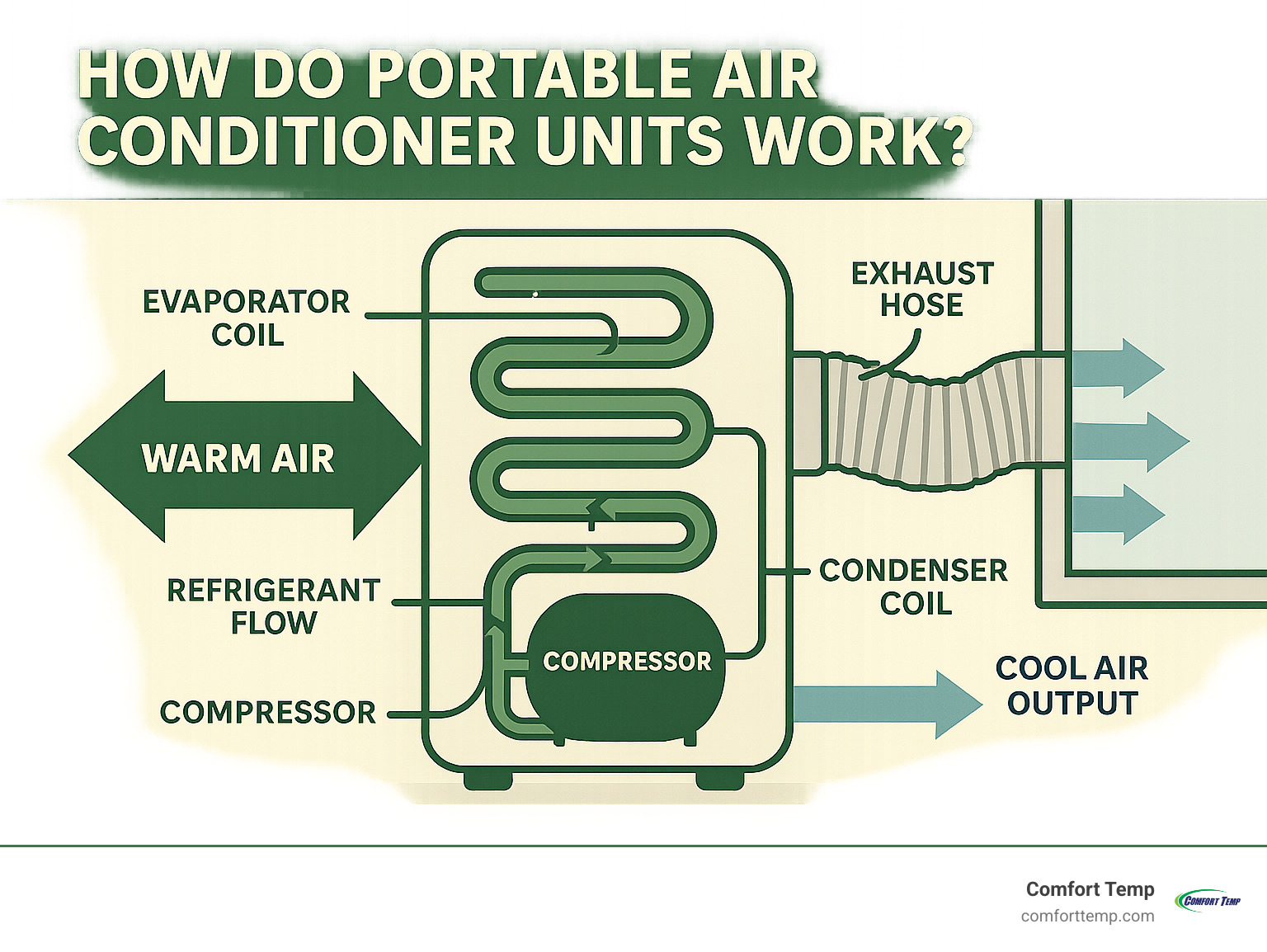
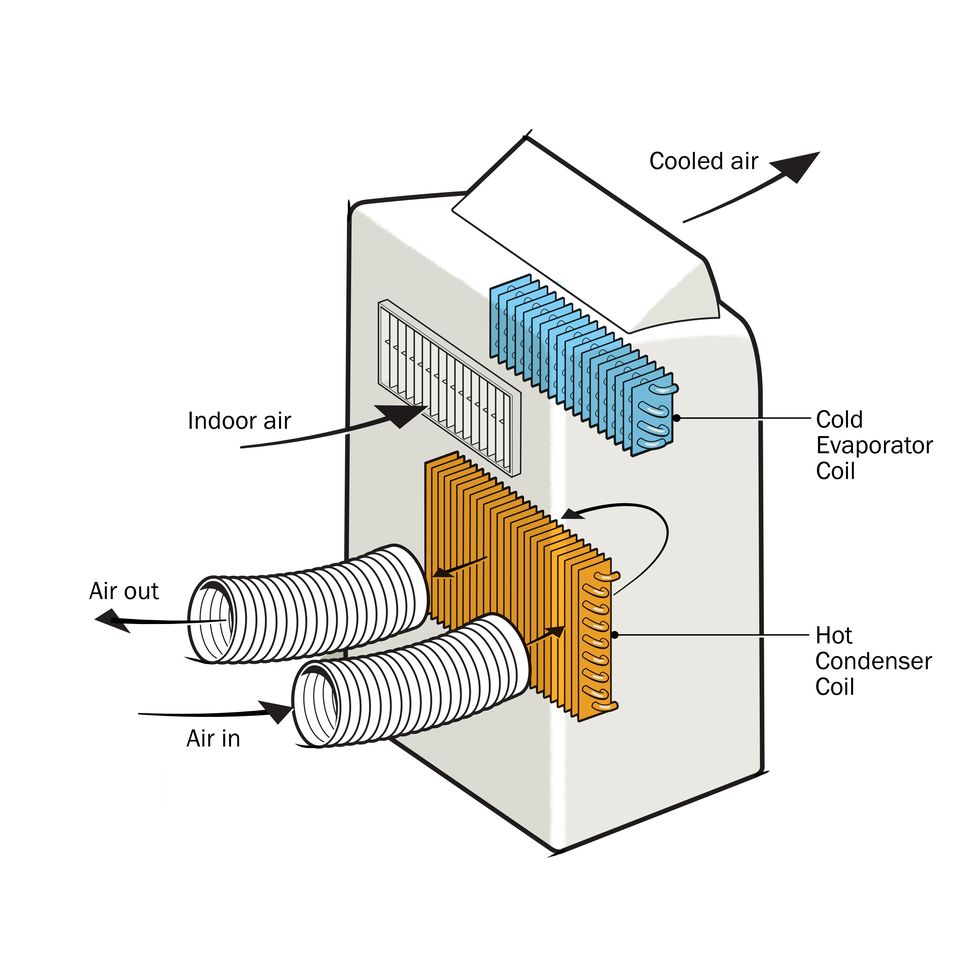
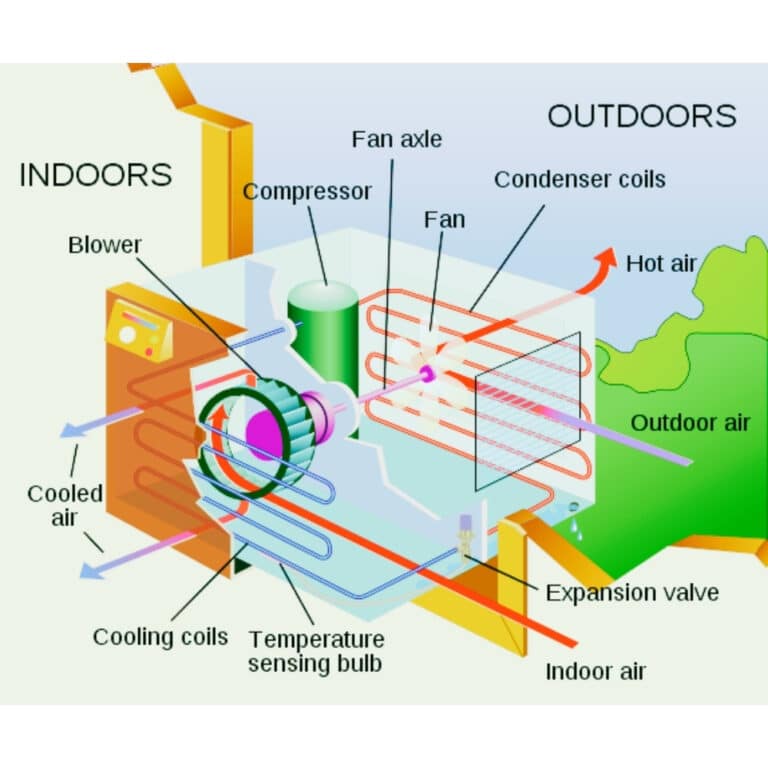
So, how does a box on wheels manage to pump out cool air? That's where the diagram comes in! A portable AC diagram visually represents the key components and their relationships within the unit. Think of it as a roadmap to understanding the cooling process. Typically, the diagram illustrates four major components: the compressor, the evaporator, the condenser, and the expansion valve. These components work in a closed-loop system with a refrigerant that cycles through them.
Must Read
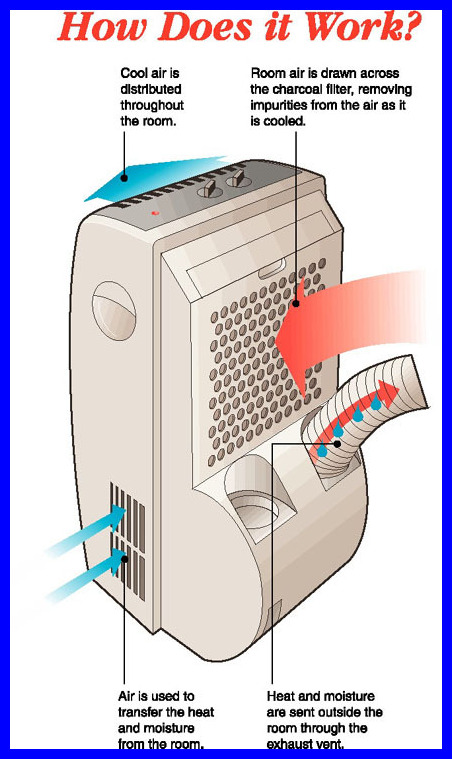
Here's the basic process, as depicted in the diagram: First, the compressor compresses the refrigerant, increasing its temperature and pressure. Next, the hot, high-pressure refrigerant flows to the condenser, where it releases heat to the outside air, typically through a vent hose that expels warm air. This process turns the refrigerant into a high-pressure liquid. Then, the liquid refrigerant passes through the expansion valve, which rapidly reduces its pressure, causing it to cool down significantly. Finally, the cold, low-pressure refrigerant enters the evaporator, where it absorbs heat from the room air, cooling the air down. A fan then blows this cooled air back into the room. The refrigerant, now a low-pressure gas, returns to the compressor to repeat the cycle.
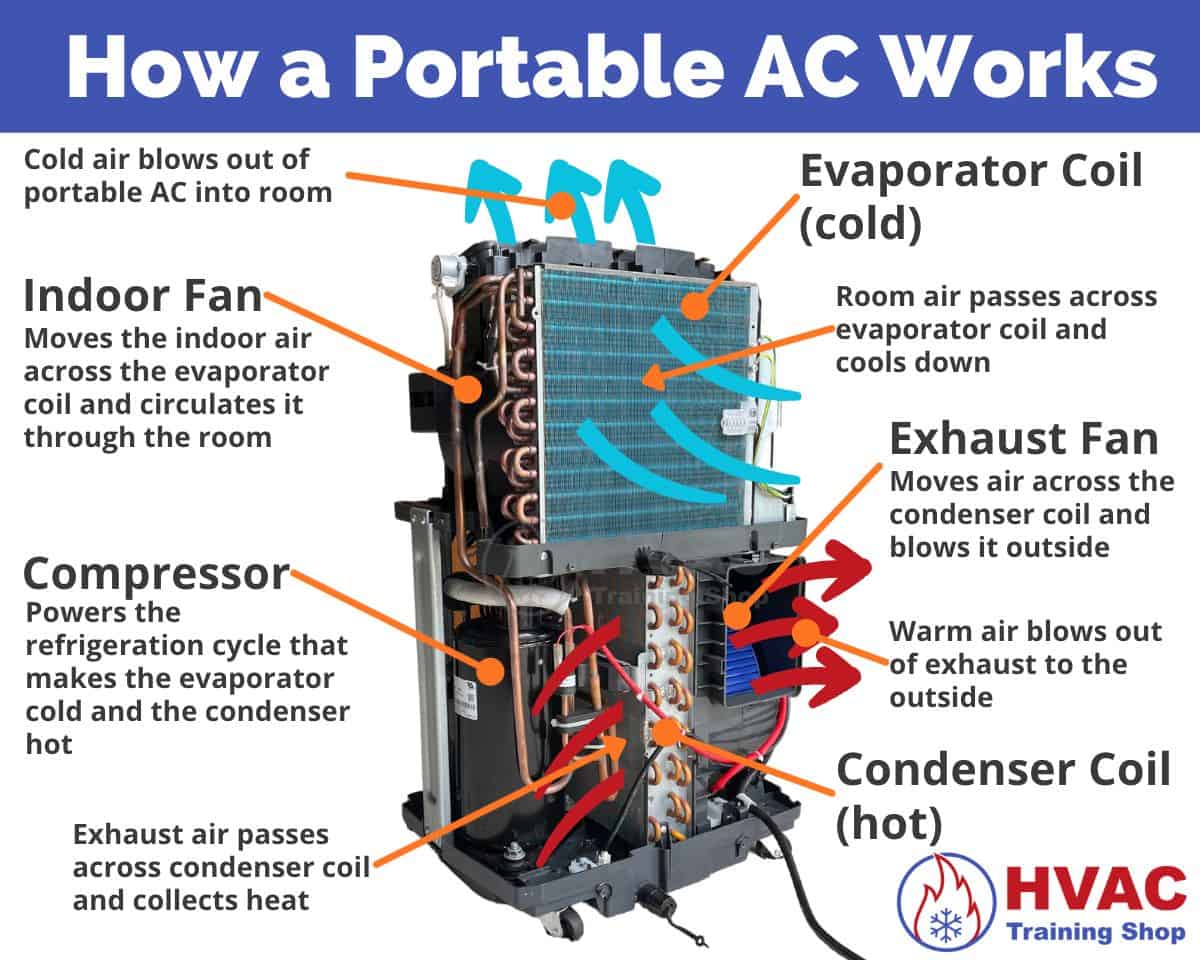
Understanding this cycle through a diagram has practical applications. For example, in education, physics students can use it to visualize thermodynamic principles. In daily life, it can help you troubleshoot minor issues with your portable AC. If it's not cooling properly, you might check the diagram to understand which components are responsible for specific functions and potentially identify the problem (like a clogged filter restricting airflow to the condenser).
Want to dive deeper? You can find diagrams of portable air conditioners online with a simple search. Look for labeled diagrams that clearly show the flow of refrigerant and airflow. Some diagrams even include animations! Another practical tip is to compare diagrams of different portable AC models to see how their designs vary. You might notice that some have additional features, like dehumidifiers, which add another layer to the cooling process. Even simply tracing the lines on a diagram with your finger can help solidify your understanding. Don't be intimidated by the technical terms; focus on the big picture and the overall flow of energy. By exploring a portable AC diagram, you’ll gain a newfound appreciation for the ingenuity that keeps us cool on those sweltering days.