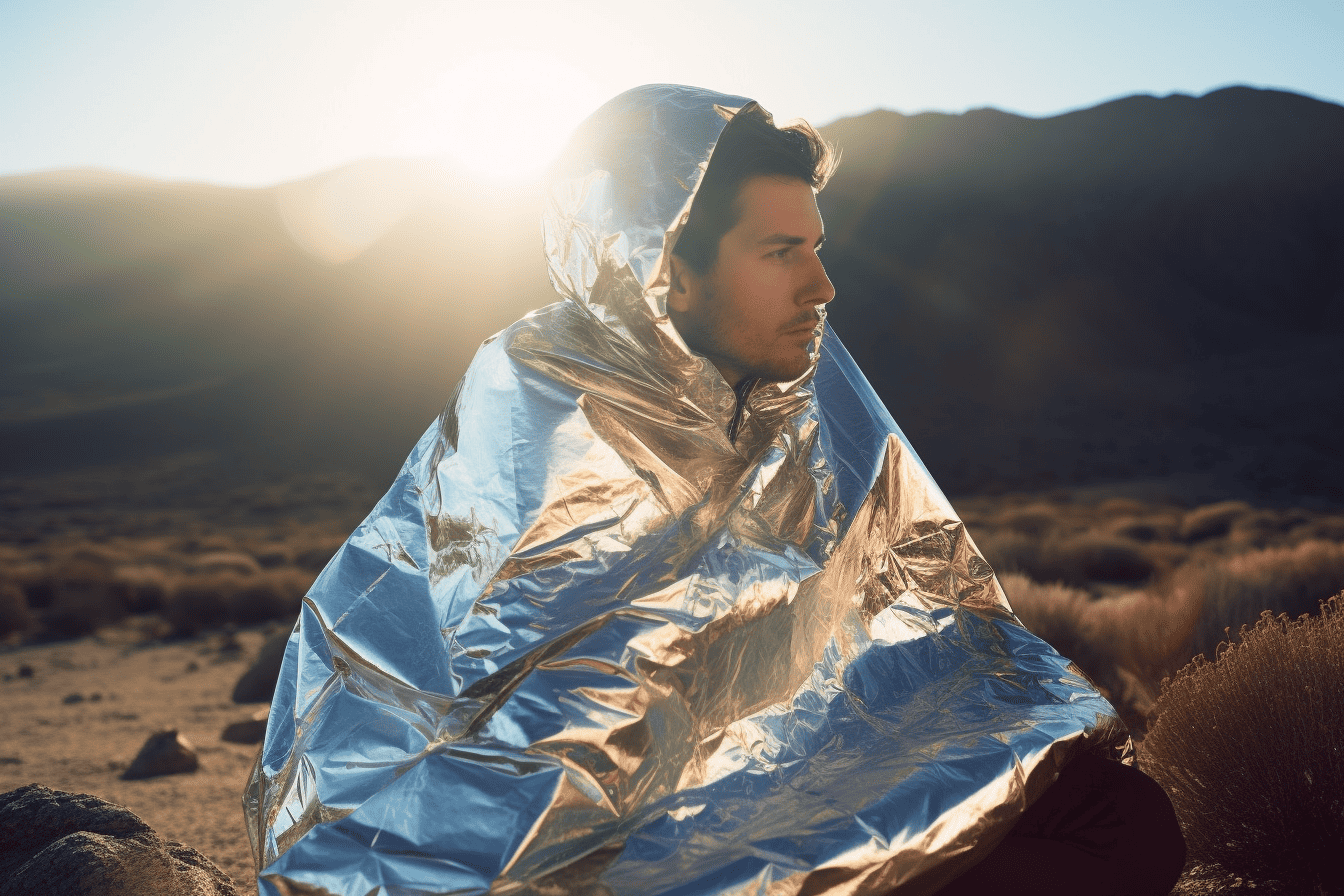
How Does A Mylar Blanket Work
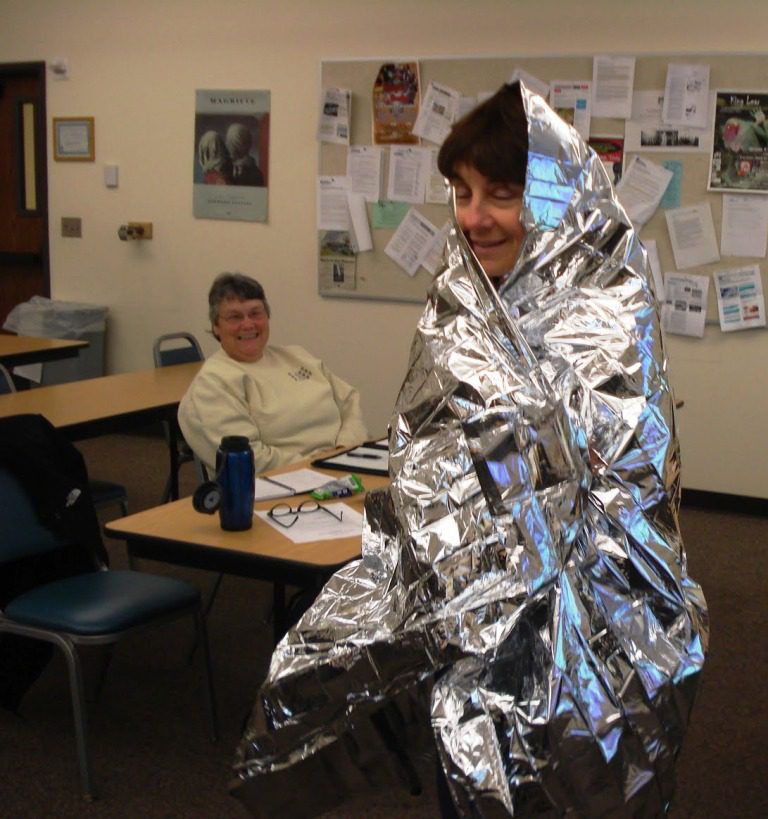
You’ve seen them, right? Those impossibly thin, crinkly, shimmering sheets of silver foil that look like they’ve escaped from a giant baked potato. They pop up everywhere: draped around exhausted marathon runners at the finish line, tucked into emergency kits, or even used by campers who like to pack light. We call them space blankets, survival blankets, or more officially, Mylar blankets. They look so simple, almost flimsy, yet they promise to keep you warm when the chips are down. But how on earth does a glorified piece of shiny plastic actually work its magic?
It's All About Mirror, Mirror, on the Wall (for Heat!)
Forget everything you thought you knew about blankets generating warmth. A Mylar blanket doesn't create heat. Nope, not a single watt. Instead, it's a brilliant, slightly cheeky thief. It steals your escaping body heat and then, with a mischievous little crinkle, throws it right back at you!
Think of it like this: your body is constantly radiating heat, like a tiny, personal sun. This heat, called thermal radiation, is always trying to escape into the colder world around you. Now, imagine holding a regular mirror up to a flashlight beam. What happens? The light bounces off the mirror, right? Well, a Mylar blanket does pretty much the same thing, but for your heat instead of light. Its secret lies in its incredibly thin layer of aluminum, vacuum-deposited onto a polyester film – that’s the fancy bit that gives Mylar its iconic shine.
Must Read
"It’s like your body is trying to send out little heat signals, and the Mylar blanket is a giant satellite dish bouncing them right back to you."
That silvery surface is fantastic at reflecting up to 90% of your body’s radiated heat. So, instead of your precious warmth wafting away into the chilly air, it hits the shiny surface of the blanket and gets politely but firmly directed straight back to your skin. It’s like having a personal bodyguard for your warmth!

More Than Just a Pretty Shine: The NASA Connection
Here’s where it gets even cooler (or warmer, rather): these clever blankets weren’t just dreamed up by some random camping enthusiast. They have a rather distinguished lineage, rooted in the space race! NASA first developed the technology in 1964 to protect sensitive equipment and astronauts from the extreme temperature fluctuations of space. So, when you’re wrapped in one of these crinkly wonders, you’re basically wearing a tiny piece of space history – a material designed to withstand the void!
And it's not just about bouncing heat back. That thin, impermeable layer of Mylar also acts as a surprisingly effective barrier against wind and moisture. So, if you’re caught in an unexpected gust or a light drizzle, it helps to keep the cold air from sneaking in and carrying your warmth away through convection. It's a double-whammy of protection from the elements!
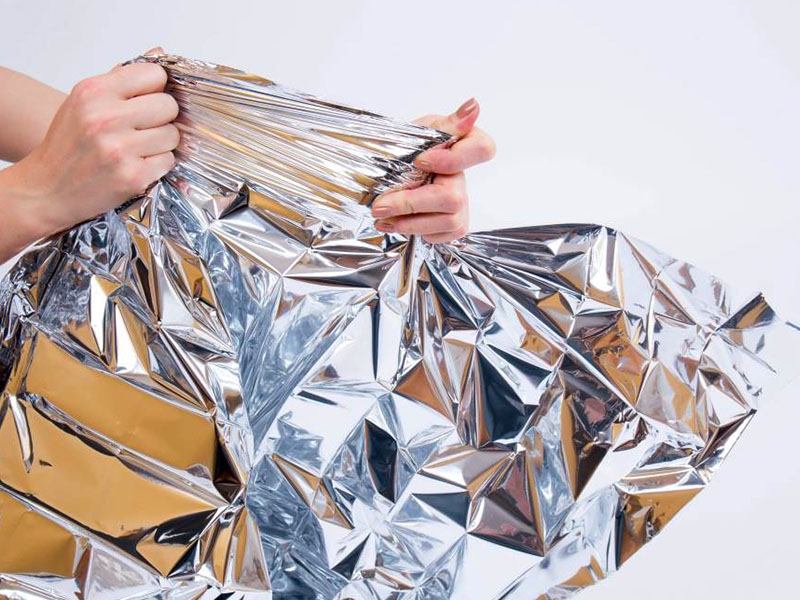
The Crinkly, Comforting Hug
What's truly heartwarming about these blankets is how universally helpful they are. From saving lives in emergency situations to offering a moment of restorative warmth to an exhausted athlete, they provide an immediate, tangible sense of care and safety. That distinctive crinkling sound, often compared to walking around in a giant bag of potato chips, isn't just noise; it's the sound of science working its quiet magic, reflecting your own vital warmth back to you.
So, the next time you see a Mylar blanket, don't just dismiss it as a quirky piece of foil. Appreciate it for what it truly is: a brilliantly simple, space-age invention that doesn’t generate warmth but ingeniously keeps the warmth you already have. It's a testament to the power of reflection, a silent guardian against the cold, and a crinkly, comforting hug in times of need. It’s a reminder that sometimes, the most effective solutions are the ones that simply make the most of what’s already there.