
How Does A Laser Cutter Work
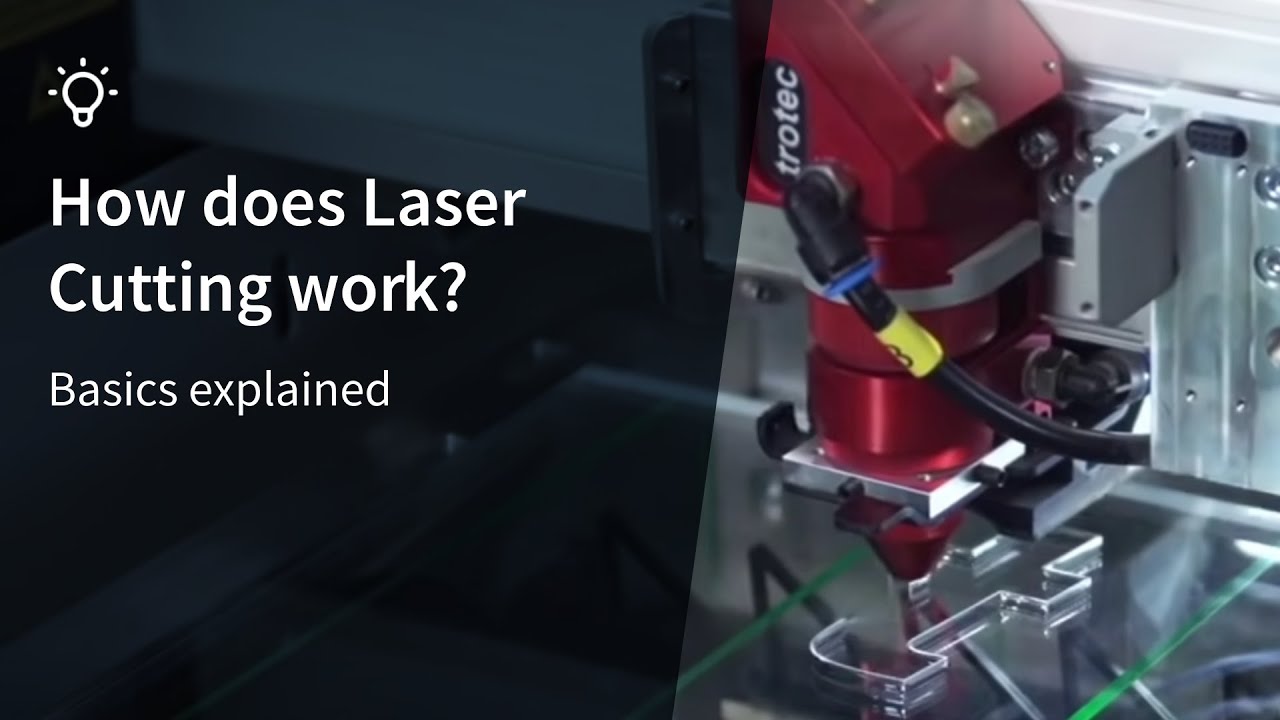
Ever gazed at a beautifully cut piece of wood or a custom-engraved trophy and thought, "How on Earth did they do that?" It often looks too perfect for human hands. Well, prepare to have your mind gently zapped by the wonder that is the modern laser cutter.
Here's my slightly unpopular opinion right off the bat:
scissors, knives, and saws are terribly old-fashioned.They are delightful for crafts, certainly. But for real precision, they are just… quaint.
Imagine harnessing a concentrated beam of light so powerful it can slice through steel like butter. No, this isn't science fiction anymore. It’s what laser cutters do every single day!
Must Read
It All Starts With a Super-Charged Light Beam
First, let's talk about the star of the show: the laser itself. Now, this isn't your grandma's flashlight. A laser is a very special kind of light.
Unlike regular light, which scatters everywhere, laser light is incredibly focused. Think of it like a spotlight versus a regular lamp. All the energy is bundled into one super-tight beam.
It's also all one color, or monochromatic. This makes it incredibly pure and powerful. It’s a bit like a highly disciplined army marching in perfect unison.
This focused, disciplined light beam is what gives a laser cutter its incredible cutting power. It’s not just bright; it's intensely concentrated light energy.
Generating the Beam: The Laser Engine Room
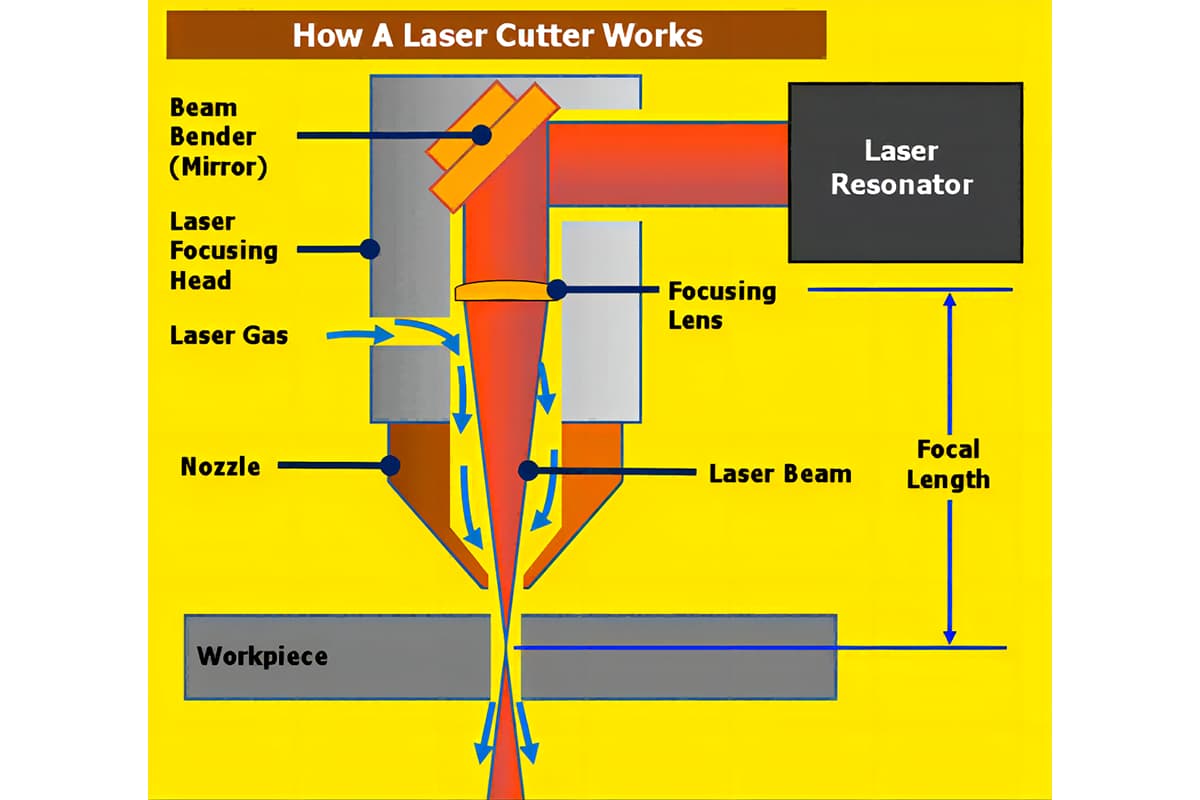
So, where does this magical light come from? Inside a laser cutter, there's a special component called a resonator. This is essentially the "engine" that creates the laser beam.
There are different types of resonators, each suited for different jobs. A common one is the CO2 laser, great for cutting materials like wood, acrylic, fabric, and paper. It's like a versatile all-rounder.
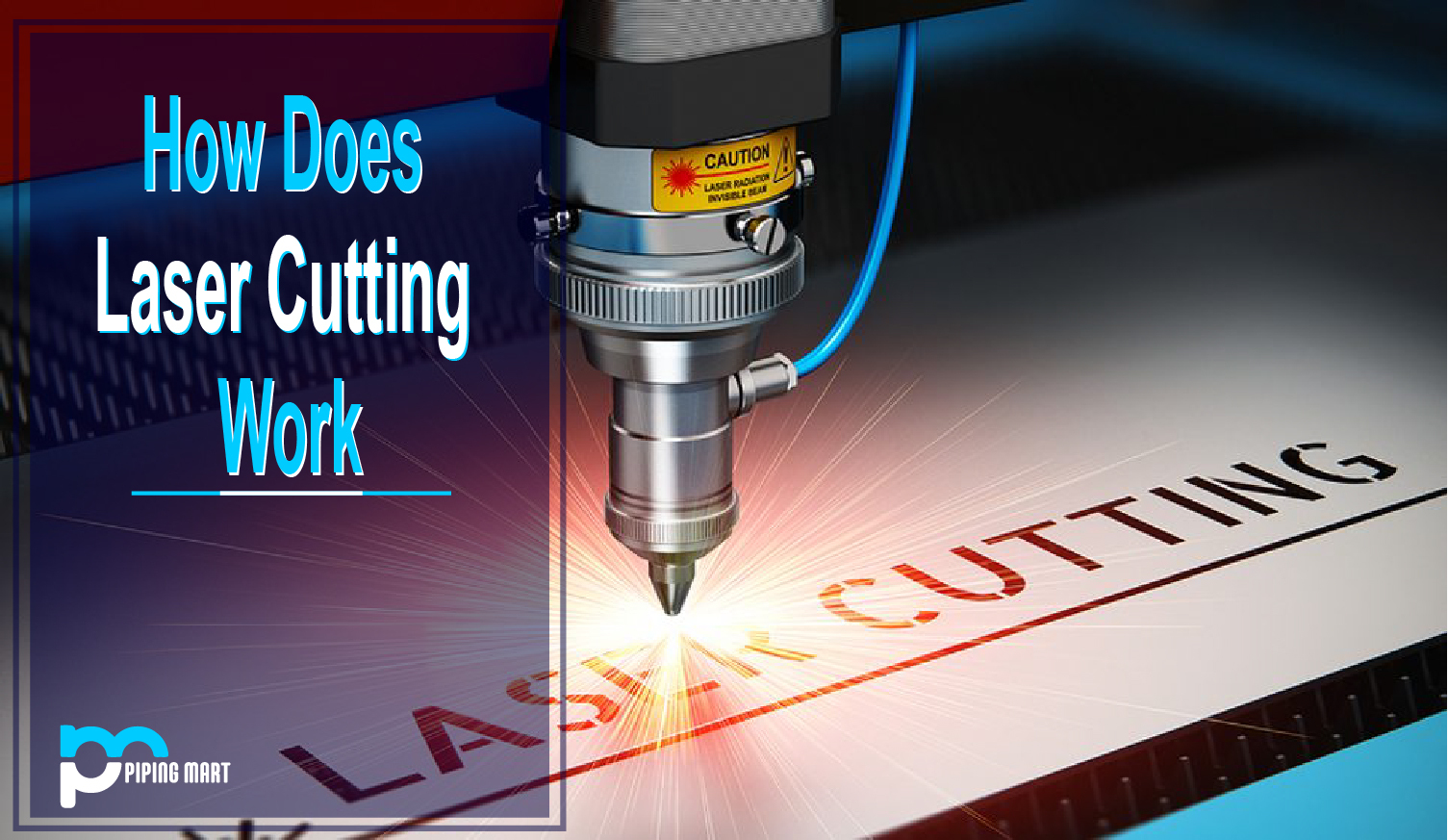
Then you have fiber lasers, which are incredibly powerful for cutting metals. They are the heavy-duty champions. Each type has its own special kick.
The resonator pumps energy into a special gas or crystal. This excites the atoms, making them emit photons—tiny particles of light. These photons bounce around inside, gaining energy, until they burst out as a coherent, powerful laser beam.
It's a bit like building up pressure in a hose before a powerful jet of water emerges. But with light!
Guiding the Beam: The Mirror Maze
Once we have this fantastic laser beam, it can’t just shoot off randomly. It needs to be carefully directed. This is where a clever system of mirrors and lenses comes into play.
Imagine a miniature funhouse for light. The laser beam travels from the resonator, bouncing off several highly polished mirrors. These mirrors guide the beam across the cutting area.
These aren't just any mirrors, though. They are designed to reflect the laser beam with minimal energy loss. It’s a very precise game of light-billiards.
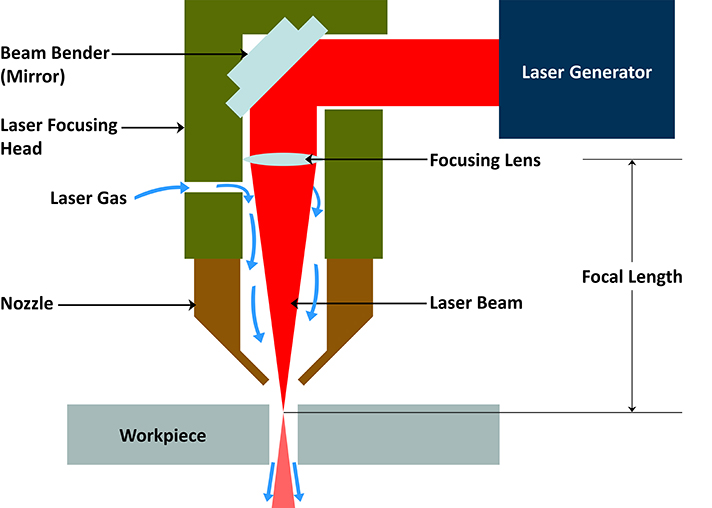
Finally, the beam hits a special focusing lens. This lens is crucial. It takes the already concentrated laser beam and narrows it down to an incredibly tiny, intense point.
Think of using a magnifying glass to focus sunlight. This lens does the same, but with a much more powerful light source, creating a pinpoint of immense energy.
The Moment of Truth: What Happens When It Cuts?
Now, for the really exciting part: what happens when that super-focused laser beam hits your material? It’s pretty dramatic, in a tiny, precise way.
When the pinpoint of laser energy touches the material, it delivers such intense heat that the material doesn't just melt; it often instantly vaporizes. Poof! Gone in a puff of smoke.
This rapid vaporization creates a super clean cut. It’s like the material simply disappears along the laser's path. No sawdust, no ragged edges, just perfect lines.
For some materials, it melts rather than vaporizes. But the principle is the same: immense heat delivered with surgical precision. And here’s another unpopular opinion:
the smell of burnt wood from a laser cutter is oddly satisfying.Don't judge me.
But wait, there's more! To keep the cut clean and prevent messy residue, most laser cutters use something called an assist gas. This is often air, nitrogen, or oxygen.
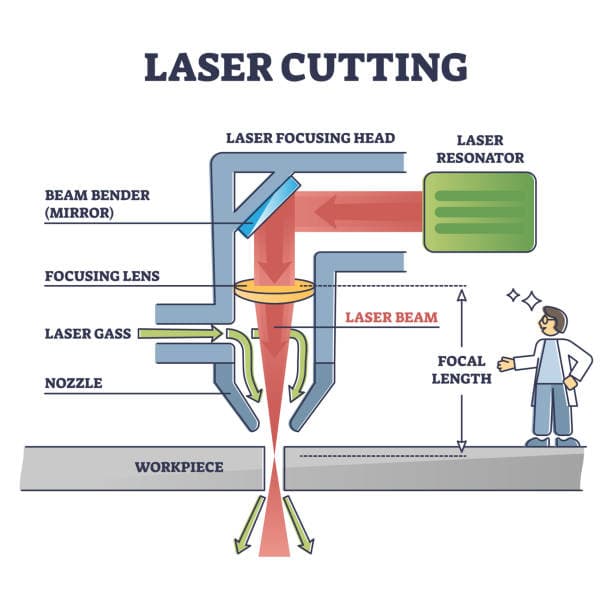
This gas is blown directly into the cutting area, right where the laser hits. It helps to clear away the molten material or vaporized particles. It’s like a tiny, powerful breath blowing away debris.
This assist gas is vital for achieving those incredibly smooth, clean edges that laser cutters are famous for. It ensures your material isn't just cut, but beautifully finished.
The Brains Behind the Beam: Precision Control
All this power and precision would be useless without control. This is where the computer comes in. Laser cutters are basically incredibly sophisticated robots.
You design your intricate patterns and shapes on a computer using CAD software. Think of it like drawing with extreme accuracy.
Then, the computer translates this design into a set of instructions for the laser cutter. It tells the machine exactly where to move the laser head and when to fire the laser.
The laser head itself moves with incredible accuracy, guided by motors along X and Y axes. It’s like a super-precise printer, but instead of ink, it’s using focused light to cut or engrave.
This digital control is why laser cutters can create designs that would be impossible or incredibly time-consuming by hand. We're talking about designs with phenomenal detail and repeatability.
So, every intricate cut and perfect curve is thanks to this seamless dance between powerful light and meticulous computer programming. It's a true marvel of modern engineering.
Why Are Laser Cutters So Cool?
The magic of a laser cutter lies in its non-contact cutting method. There's no physical blade dulling or getting stuck. This means faster, cleaner cuts and less material waste.
They can work with a vast array of materials, from delicate paper to tough metals. This versatility makes them incredibly useful across countless industries, from fashion to aerospace.
And let's be honest, watching one work is mesmerizing. That tiny, intense beam dancing across a material, leaving a perfectly cut path in its wake—it truly feels like observing futuristic technology.
So, next time you see a beautifully crafted wooden sign, a perfectly etched glass, or an intricately cut piece of metal art, spare a thought for the humble, yet incredibly powerful, laser cutter.
It’s a testament to human ingenuity, turning a simple beam of light into a precision tool. And my final unpopular opinion?
The future is now, and it's powered by incredibly cool, precise light.Long live the laser!