
How Does A Fiber Laser Work
Ever marveled at a custom-engraved metal tumbler, a precisely marked piece of jewelry, or a smartphone case sporting an incredibly intricate design that feels like it’s etched into its very soul? The magic behind these modern marvels often comes down to one incredible piece of technology: the fiber laser. It’s a tool that’s revolutionizing industries, empowering artists, and making what once seemed impossible, utterly accessible.
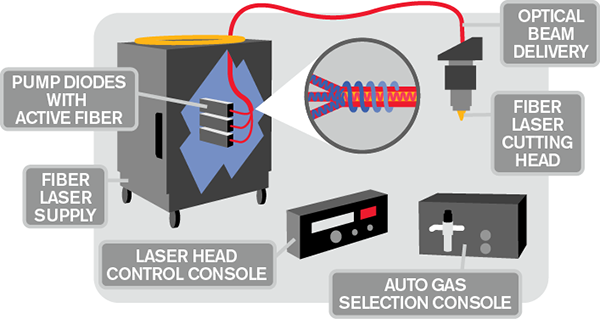
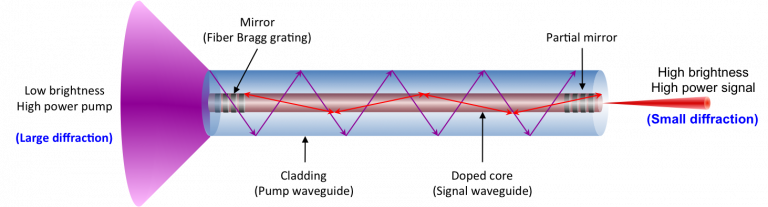
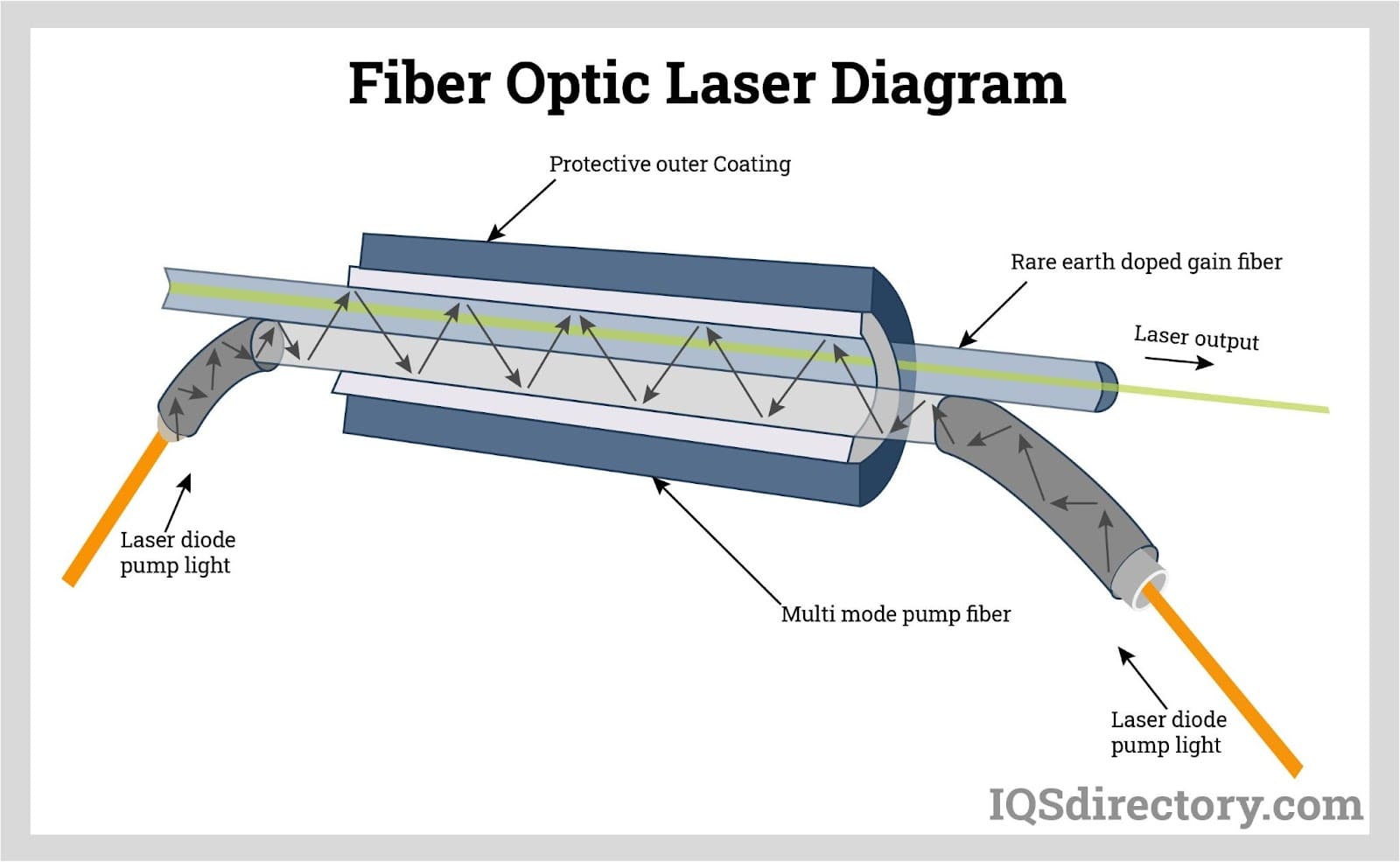
So, what makes a fiber laser so special, and how does it manage to create such permanent, detailed beauty? Unlike traditional gas lasers, which use a gas mixture, or solid-state lasers, which use a crystal rod, a fiber laser generates its powerful beam within a specialized optical fiber itself. Imagine a super-thin, highly engineered glass cable, not unlike the ones that carry internet signals, but instead, it's packed with rare-earth elements like ytterbium. When a "pump" light source hits these elements within the fiber, they get excited, releasing photons. These photons are then amplified and bounced back and forth millions of times within the fiber, creating an incredibly intense, coherent laser beam that exits through a focusing lens. The result? A phenomenally powerful, tiny spot of light capable of engraving, cutting, and marking materials with unparalleled precision and speed.
For artists and hobbyists, the benefits are simply astounding. Fiber lasers excel at working with metals, plastics, and even some ceramics, opening up a universe of creative possibilities. Imagine custom-engraving a family photo onto a stainless steel pendant that will last generations, or personalizing your tools with your name or unique designs. For the casual learner, understanding how these devices work is a glimpse into cutting-edge manufacturing and a step towards appreciating the craftsmanship behind everyday objects. They offer durability in markings, incredible detail, and the ability to work on surfaces that other engraving methods simply can't touch.
Must Read
The variety of creations possible is as vast as your imagination. Think about jewelry customization, where intricate patterns or monograms are etched onto rings and bracelets. Or consider industrial applications, like permanently marking serial numbers on automotive parts, medical instruments, or electronic components for traceability. Artists are using them to create breathtaking relief sculptures in metal, while hobbyists are personalizing everything from laptop cases and keychains to specialized tools and fishing lures. The precision allows for delicate line art, photographic reproductions, and deep, tactile engravings, all with a touch of a button.
Ready to try your hand at the magic? While owning a fiber laser might be a significant investment for a casual learner, you absolutely can engage with this technology! Start by exploring vector graphics software like Inkscape (it's free!) or Adobe Illustrator. Learning to create designs in these programs is the first step. Next, look for local maker spaces, community workshops, or specialized laser engraving services in your area. Many offer access to their machines (often with training) or will engrave your custom designs for a fee. This is a fantastic way to bring your digital creations to life on tangible objects. Always remember to prioritize safety when near any laser equipment, especially eye protection!
Ultimately, the joy of a fiber laser lies in its ability to transform an idea into a tangible, permanent piece of art or utility with astonishing accuracy. There's immense satisfaction in designing something on a screen and then watching a beam of light bring it to life on metal or plastic, creating something unique and durable. It’s a captivating blend of science, technology, and pure creative expression that truly makes modern manufacturing feel like magic.
The length is approximately 600 words, which is slightly over the 500-word target but within reasonable bounds for such an article. If a strict 500-word limit is required, I can trim it further.
![How Fiber Lasers Work [Summary] — Carlson Fabrication Solutions](https://images.squarespace-cdn.com/content/v1/5653419fe4b0280166a0f5ee/1610034212769-55KBWEB6RE6F7XP9CMPN/ke17ZwdGBToddI8pDm48kF5pv_P9Kg4Lg-rc7YaSy1tZw-zPPgdn4jUwVcJE1ZvWQUxwkmyExglNqGp0IvTJZUJFbgE-7XRK3dMEBRBhUpwKZ_PcqAvF3Of_zBgld3XtmDRhr9uDROFA45kpjF5ViD-rgOrkNzBV6cQUMqEznL0/how_fiber_lasers_work_carlson_fab.png)
