
How Does A Electric Engine Work
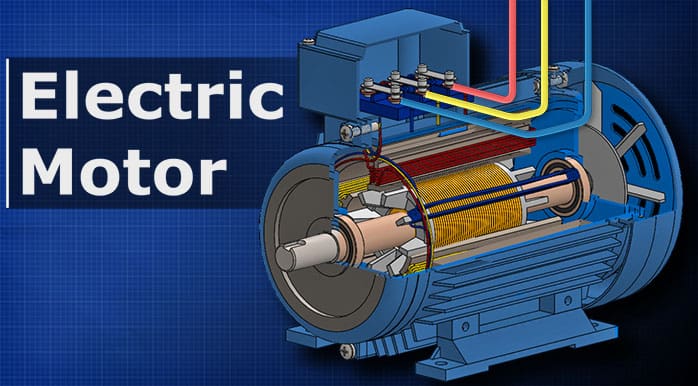
Ever wonder how an electric car zips past you with barely a whisper, or how your washing machine spins without a noisy combustion engine? It’s not magic (well, maybe a little bit!). It’s all thanks to the incredibly clever, surprisingly simple, and utterly satisfying world of the electric engine. Forget complicated diagrams and dusty textbooks – we’re about to dive into this powerhouse of silent motion with a splash of fun and zero brain strain!
The Big Secret: It's All About Magnets!
Alright, let's get down to brass tacks. At the very heart of every electric engine, there's a principle you probably learned in kindergarten: magnets! Remember playing with those fridge magnets? How opposites attract (north loves south) and likes repel (north pushes north away)? That, my friend, is 90% of the battle right there. An electric engine is essentially a master conductor of a cosmic magnetic dance-off.
"An electric engine is just a really, really smart way to make magnets push and pull in a circle."
The Even Bigger Secret: Electromagnets – The Rockstars of the Engine
Now, here's where it gets really juicy. Permanent magnets are cool, but they're a bit... static. They just sit there being magnetic. What if you could turn a magnet on and off? Or even better, instantly flip its north and south poles? That's where electromagnets burst onto the scene like a pop star with a surprise concert!
Must Read
Imagine taking a simple wire and wrapping it around, say, an iron nail. Now, connect that wire to a battery. Voila! That nail isn't just a nail anymore; it's a temporary magnet! Cut the power, and poof, it's just a nail again. This is the superpower of electromagnetism: electricity flowing through a wire creates a magnetic field. Change the direction of the electricity, and you flip the magnetic poles! Mind-blowing, right?
The Grand Performance: How They Spin!
Okay, so we have our cast of characters: permanent magnets (sometimes) and our superstar, the switchable electromagnets. Now, let's put them on stage in the electric engine!

The Stationary Stage (The Stator)
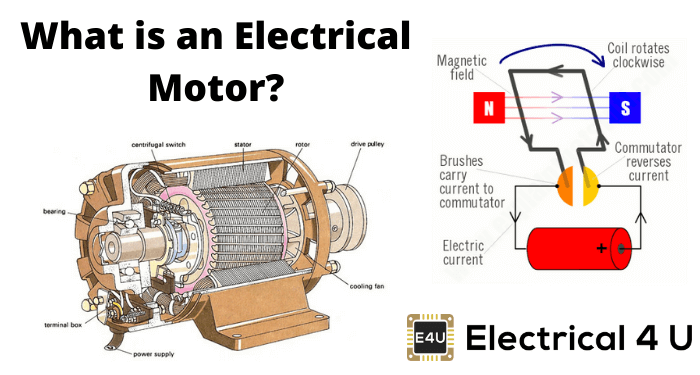
Picture a sturdy ring inside the engine. This is the stator – it stays still (hence "stat-or"). It's lined with coils of wire, which, when electricity flows through them, become our electromagnets. Think of them as a circle of invisible arms, ready to push or pull.
The Spinning Dancer (The Rotor)
In the very center of this ring, we have the rotor. This is the part that wants to spin and generate all that wonderful motion! The rotor also has its own set of wires, often forming more electromagnets, or sometimes it might have permanent magnets attached to it.

The Push-Me-Pull-You Tango!
Here’s where the magic happens! When you switch on an electric engine:
- Electricity rushes into the stator's coils, turning them into electromagnets with specific north and south poles.
- These electromagnets in the stator then either attract or repel the magnets (or other electromagnets) in the rotor, giving it a powerful nudge.
- But wait, just as the rotor starts to get cozy with a stator magnet, the engine's clever electronics instantly flip the polarity of the next stator magnet. The attraction becomes a repulsion, or a new attraction pulls the rotor forward!
- It's a continuous, rapid-fire sequence of pushing and pulling, always just a tiny step ahead, constantly chasing and repelling the rotor, forcing it to spin faster and faster!
Imagine a giant carousel where invisible hands are constantly pushing you forward, but just as you get close, they instantly switch to pull you from the next point, keeping you in perpetual motion. That's your electric engine, doing this incredible, precise dance thousands of times a second!
Why Are Electric Engines So Awesome?
Beyond being super cool to understand, electric engines are fantastic because:
- Instant Torque: That immediate "oomph" when an electric car takes off? It's because the magnetic forces are instant! There's no waiting for fuel to burn.
- Whisper Quiet: No explosions, just the elegant hum of magnetic forces doing their thing.
- Super Efficient: They convert electricity directly into motion with very little waste heat compared to their fossil-fuel cousins.
So, the next time you see an electric vehicle glide by, or hear the gentle whir of an appliance, give a little nod to the incredible, invisible forces of electromagnetism and the clever engineering that orchestrates this magnetic dance. It’s a powerful testament to how simple principles can create truly revolutionary technology, all while making you feel a little bit like a science wizard just by understanding it!
