
How Does A Boiler Heat A House
Okay, picture this. It’s a frigid Monday morning. You’ve just rolled out of bed, your toes are protesting the sudden exposure to the chilly floorboards, and you’re pretty sure your cat is judging your life choices from under three blankets. You stumble to the kitchen, shivering, and then… ahhh. That beautiful, inexplicable warmth starts to creep through the house. The radiators are humming, the air loses its bite, and suddenly, life doesn't seem so bleak anymore. Magic? Ancient spirits? A very diligent, invisible butler with a hairdryer? Nope, my friend. You can thank your house’s
For many of us, the boiler is this mysterious, often clunky, box lurking in the basement or utility closet. It makes some gurgling noises, occasionally whirs to life, and frankly, we just hope it keeps doing its job without exploding or making us call an emergency plumber at 3 AM. But have you ever actually stopped to wonder how this mechanical marvel takes a cold, dreary house and turns it into a cozy haven?
The Heart of the Heat: What’s a Boiler, Anyway?
First off, let’s clear up a common misconception. When we talk about boilers heating a house, we’re generally not talking about a giant kettle making tea for your entire street. (Though wouldn't that be something?) We’re talking about a system that heats water, often to very high temperatures, and then circulates that hot water through your home. It’s a closed-loop system, meaning the water just goes around and around, delivering warmth and then heading back to get reheated. Pretty smart, right?
Must Read
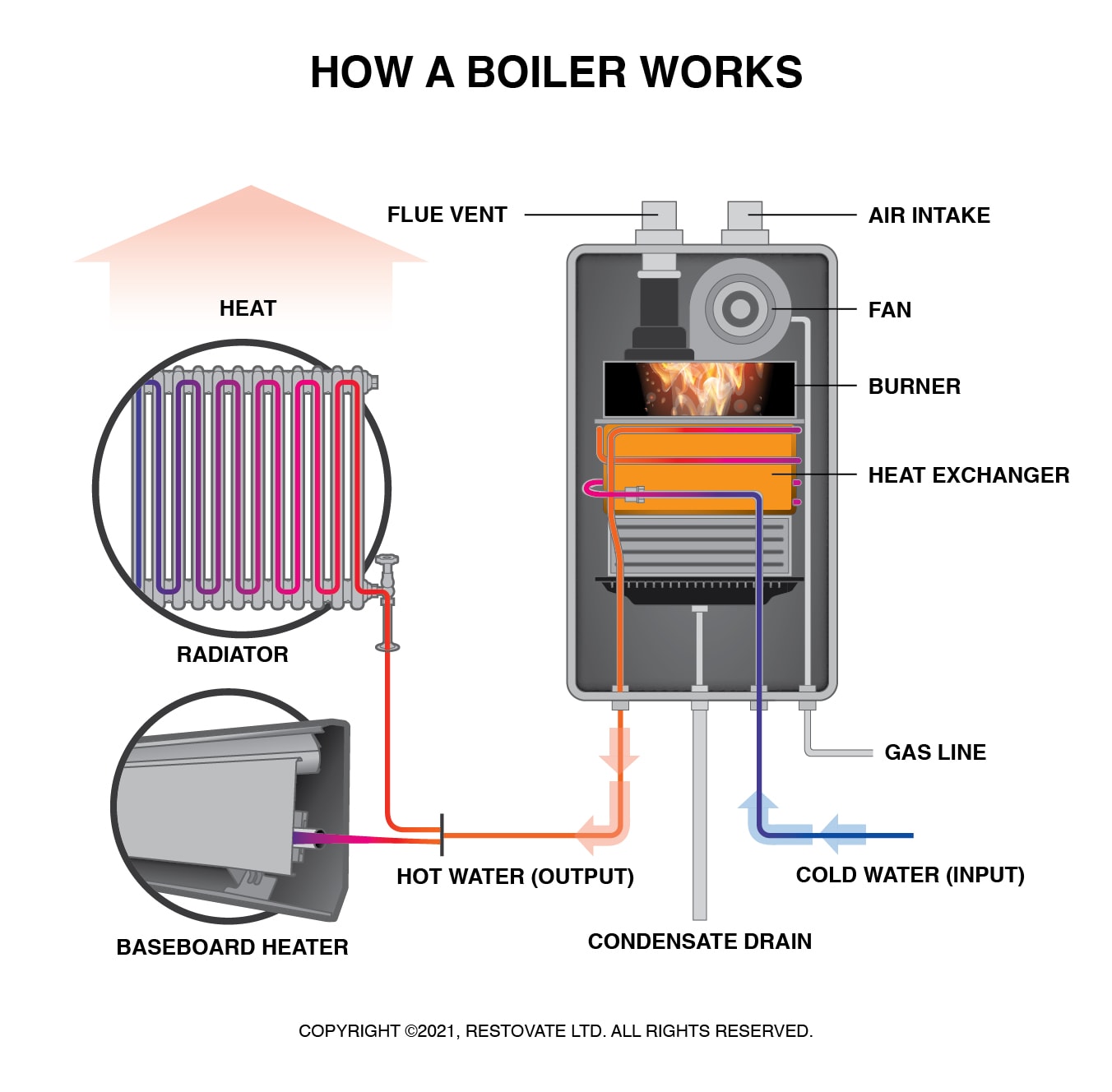
Think of it like this: your boiler is basically a super-efficient water heater with a really important job. It typically runs on natural gas, propane, or heating oil, though electric boilers exist too. The fuel is ignited in a combustion chamber, creating a seriously hot flame. This flame then heats up a component called a heat exchanger. And guess what’s inside or around that heat exchanger? You got it: water!
Water, Water Everywhere (And All the Warmth)
Water, you see, is a fantastic conductor and retainer of heat. It absorbs a lot of thermal energy and can carry it a long distance without losing too much of its warmth. Once the water inside the boiler gets hot enough (we’re talking anywhere from 120°F to 200°F, depending on the system), it needs a way to get out there and do its job.

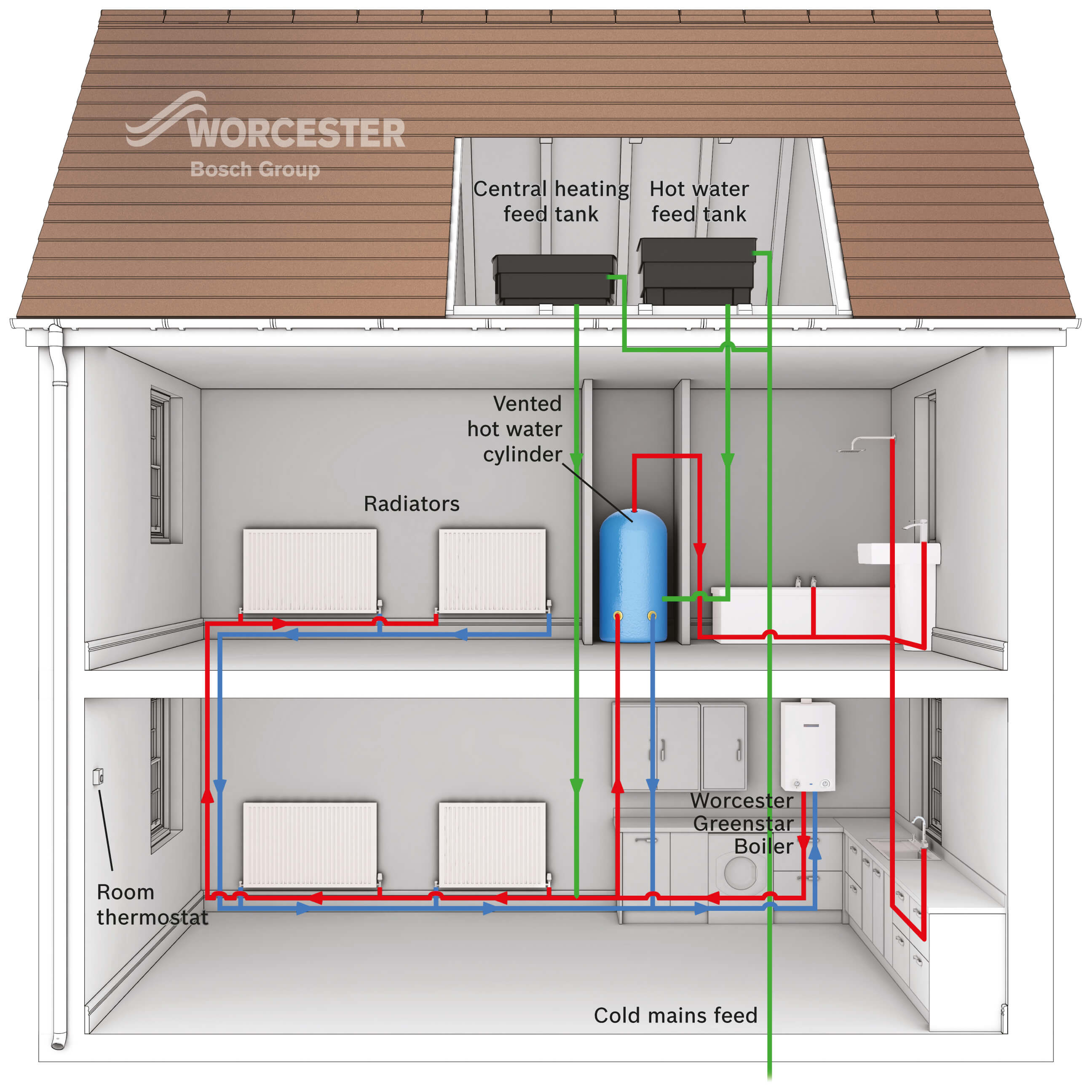
That’s where the circulator pump comes in. This unsung hero (seriously, give your pump a silent nod of appreciation next time) pushes the superheated water out of the boiler and into a network of pipes that crisscross your house. These pipes lead to your radiators, baseboard heaters, or even radiant floor heating systems. (Oh, the luxury!)
Radiators: Your House’s Personal Toasters
Once the hot water arrives at your radiators, it starts working its magic. Radiators aren't just decorative lumps of metal; they’re designed to efficiently transfer the heat from the water inside them into the room. They do this in two main ways:
- Convection: As the surface of the radiator heats up, it warms the air directly around it. This warm air becomes less dense and rises, pulling cooler air in from below to take its place. This creates a natural circulation of warm air throughout the room.
- Radiation: The radiator also emits infrared energy, which directly warms objects and people in the room. This is why you can feel the heat radiating off it, even if the air isn't super warm yet.
So, the hot water courses through your radiators, dumping its heat into your living space. As it cools down (because it’s literally given up its warmth to make you comfy), it flows back through another set of pipes, often called the return loop, straight back to the boiler. And what happens then? You guessed it! It gets reheated, and the whole glorious cycle begins again. It’s like a never-ending warm hug for your house!
The Brains of the Operation: The Thermostat
Of course, this whole process isn't just running willy-nilly. You don’t want your house to turn into a sauna, do you? That’s where your trusty thermostat plays its vital role. It’s the brain of your heating system. You set your desired temperature, and the thermostat monitors the ambient temperature in the house.
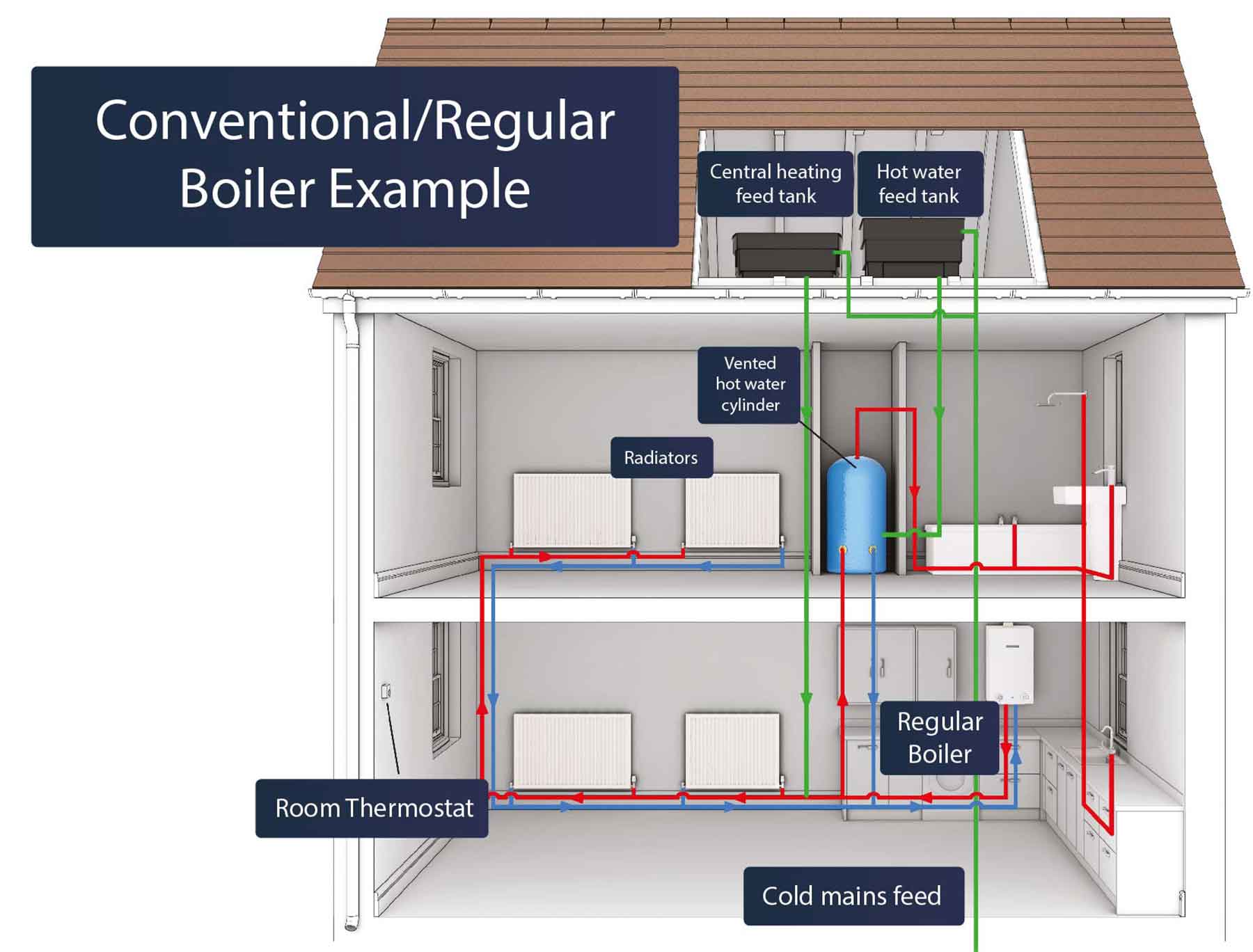
When the room temperature drops below your set point, the thermostat sends a signal to the boiler, telling it to fire up. Once the house reaches the desired warmth, the thermostat tells the boiler to take a break. Simple, elegant, and absolutely essential for both comfort and energy efficiency. It prevents your boiler from running constantly, saving you some precious pennies!
So there you have it. The next time you feel that glorious warmth spreading through your home on a chilly day, take a moment to appreciate the humble boiler. It's not just a noisy box in the basement; it's an intricate dance of combustion, water, pumps, and pipes, all working tirelessly to keep you toasty. And honestly, isn't that just a little bit magical?
