How Do You Measure The Coefficient Of Friction

Alright, let's talk about something that might sound intimidating – the coefficient of friction. But trust me, it’s way more relatable than you think. Ever tried sliding across a freshly waxed floor in your socks? Or watched someone try to ice skate in sneakers? That, my friend, is the coefficient of friction in action, or rather, inaction. It's all about how much things resist sliding against each other.
What Exactly Is This “Coefficient of Friction” Thingy?
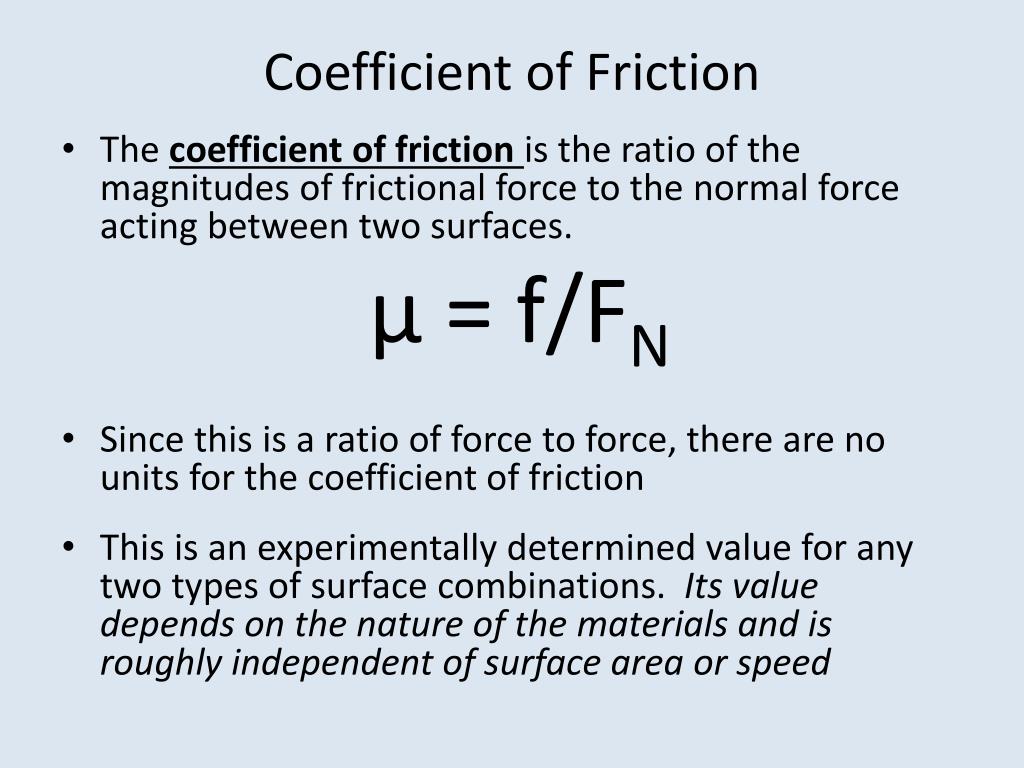
Think of it as a measure of "stickiness" between two surfaces. A high coefficient means lots of stickiness, like trying to push a brick across sandpaper. A low coefficient means very little stickiness, like that aforementioned sock-sliding-on-waxed-floor scenario. It's represented by the Greek letter mu (μ) and it's usually a decimal number, like 0.2 or 0.7. No units! Just a pure, unadulterated number that tells you how much force it takes to get something moving (or keep it moving) across something else.
The Super-Simple Sledding Analogy
Imagine you're pulling a sled loaded with, say, your mischievous little brother (or a sack of potatoes, we're not judging). If the snow is icy, it’s super easy to pull the sled. That's low friction! But if you're trying to pull that same sled across a gravel driveway (please don’t actually do this!), it’s going to be a Herculean effort. That's high friction! The coefficient of friction just puts a number on how easy or hard that pulling is.
Must Read
Okay, But How Do We Actually Measure It?
Now for the nitty-gritty, but don’t worry, we’ll keep it light. There are a few main ways to figure out that mu value, and they're all based on the same fundamental principle: force equals mass times acceleration (F=ma). Remember that from high school physics? Don't worry, we're not going to make you calculate anything.
The Inclined Plane Method: The "Ramp of Truth"
This is a classic. You’ve probably seen it in cartoons, or maybe even attempted it yourself with your toys as a kid. Basically, you put an object on a ramp. Slowly, you increase the angle of the ramp until the object just starts to slide. That angle, believe it or not, is directly related to the coefficient of static friction (that's the friction that keeps things from starting to move). It's like the object finally saying, "Okay, gravity, you win! I can't resist anymore!"
The formula for this is pretty straightforward: μs = tan(θ), where θ is the angle at which the object starts sliding. Don't panic about the math! The key takeaway is: steeper angle = higher friction.
The Horizontal Pull Method: The "Drag Race"
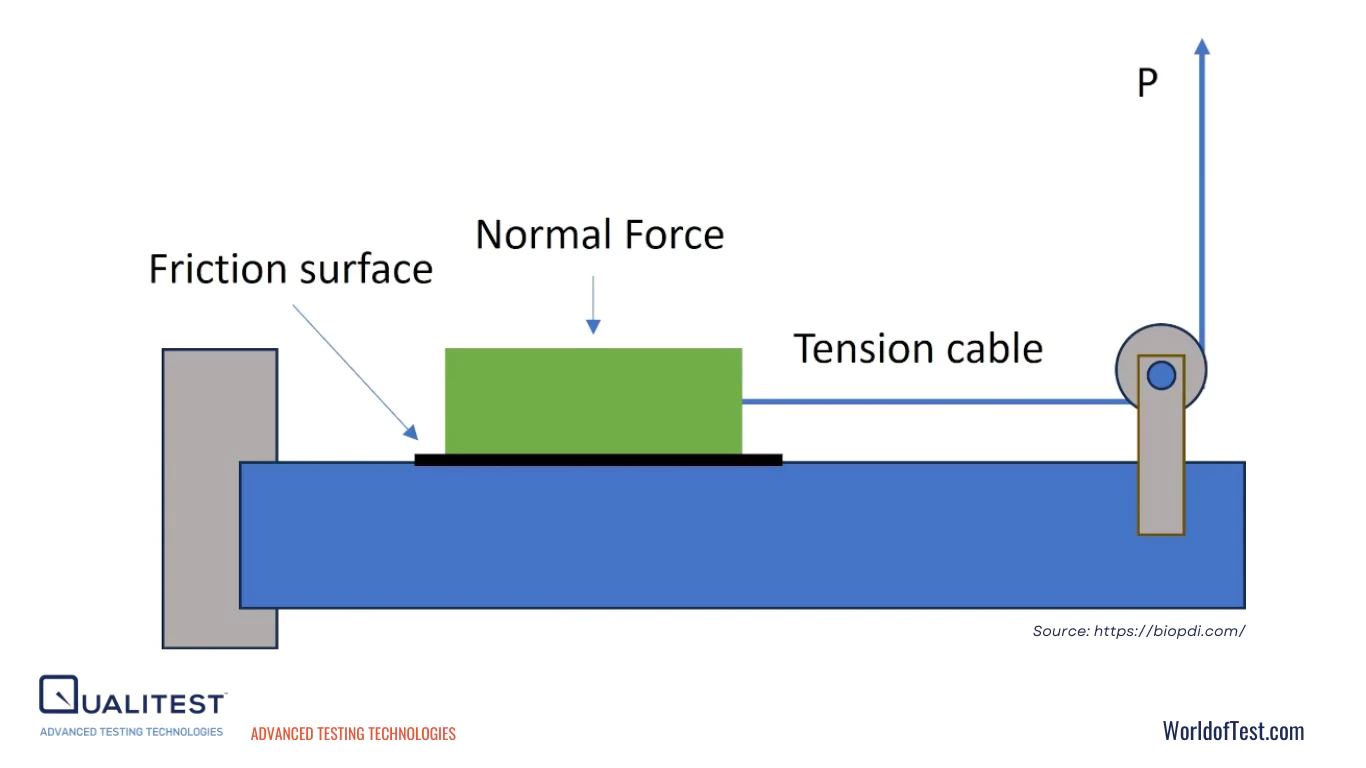
Another common way is to pull an object horizontally across a surface. You measure the force it takes to keep the object moving at a constant speed. This gives you the coefficient of kinetic friction (that's the friction that applies when something is already moving). Think of it like trying to push a couch across a carpet. You need to exert a certain amount of force just to overcome the friction.

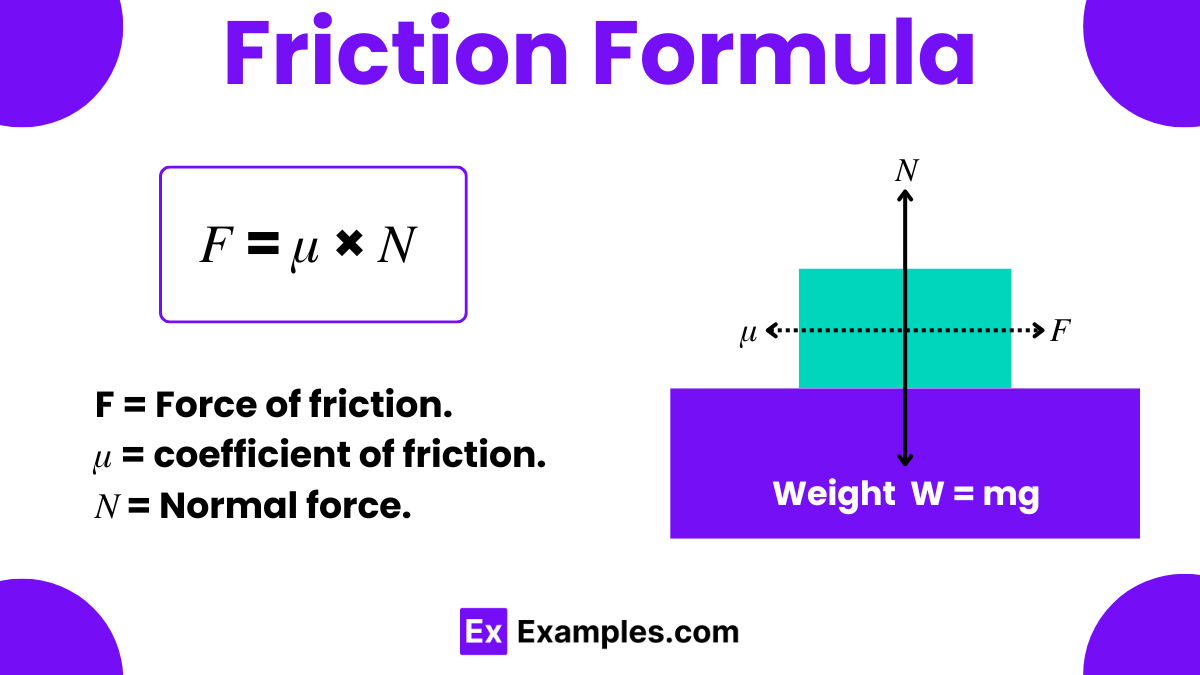
Here, μk = F/N, where F is the force you're applying and N is the normal force (which is usually just the weight of the object). Again, don't sweat the formula. Just remember, the harder you have to pull, the higher the friction.
Why Does Any Of This Matter?
Well, understanding friction is crucial in countless areas! Think about car tires (we want high friction for good grip), engine parts (we want low friction to reduce wear and tear), or even the soles of your shoes (again, high friction to avoid embarrassing slips). Engineers use these measurements all the time when designing things.
So, the next time you slip on ice, or struggle to push a heavy box, remember the coefficient of friction. It's the unsung hero (or villain) of everyday life, silently dictating how easily things slide, stick, and generally interact with each other. And now, you know how to roughly measure it!