How Do You Measure A Ceiling Fan
Ever found yourself gazing up at a spinning ceiling fan, perhaps on a lazy afternoon, and wondered, "How exactly do they measure that thing?" It might seem like a trivial question, but understanding how ceiling fans are measured is actually quite useful, and surprisingly, a little bit fun! It’s one of those everyday mysteries that once unveiled, makes perfect sense and helps you make smarter choices around your home.
The primary purpose of measuring a ceiling fan isn't just for kicks; it's crucial for ensuring optimal performance and comfort in any given space. The main benefit to you, the consumer, is selecting a fan that perfectly matches your room's dimensions. Too small, and you might as well be waving a hand fan; too large, and it could create an unnecessary whirlwind or look disproportionate in your room. Getting the size right directly impacts the fan's ability to circulate air efficiently, providing that much-needed breeze and potentially saving on your energy bills by reducing the need to constantly crank up the AC.
This knowledge comes in handy in several aspects of daily life. When you're shopping for a new fan, whether online or at a big-box store, you'll notice they're all listed with a specific size – typically in inches. Knowing how this measurement is derived allows you to confidently choose a fan that will effectively cool your living room, bedroom, or patio. It’s also useful if you're undertaking a home renovation or simply replacing an old, sputtering fan; you can assess if your current setup is adequate or if a different size would provide better cooling or visual balance. Even in a more educational context, understanding fan measurements touches upon basic principles of geometry and physics, relating to how blade length and span affect air displacement and overall efficiency.
Must Read
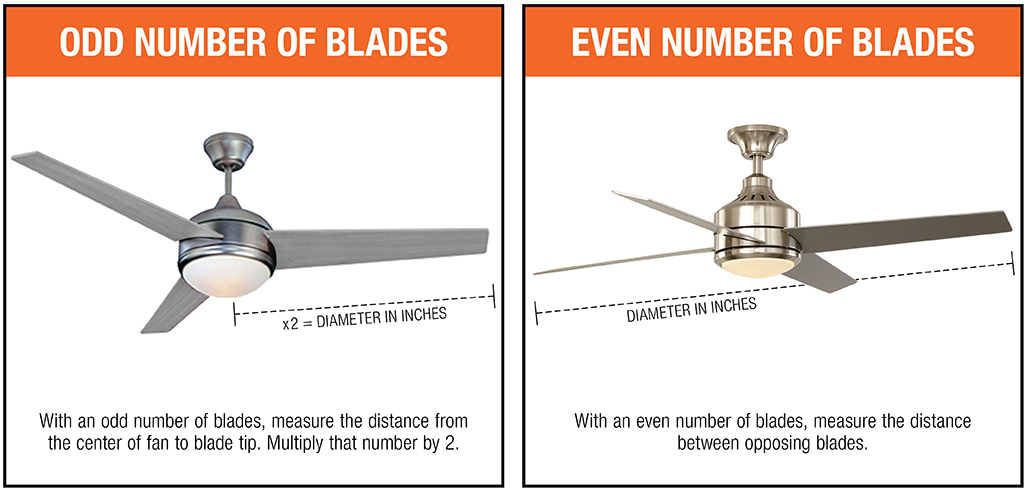
So, how do you actually measure a ceiling fan? It’s simpler than you might think, but there’s a common misconception. You don't measure just one blade! Instead, the measurement refers to the fan’s span or sweep, which is essentially its total diameter when in operation. Here’s the trick:
- For fans with an odd number of blades (like 3 or 5), you’ll measure from the very center of the fan’s motor housing to the tip of one of the blades. Then, you simply multiply that measurement by two to get the total span.
- For fans with an even number of blades (like 4 or 6), it’s even easier! You measure straight from the tip of one blade to the tip of the exact opposite blade. This gives you the fan's diameter directly.
Typical fan sizes range from smaller 36-inch models perfect for cozy nooks or bathrooms, to expansive 72-inch fans designed for large great rooms or outdoor patios. As a rule of thumb, a 42-inch fan suits rooms up to 100 square feet, while a 52-inch fan is ideal for spaces up to 225 square feet. Why not take a moment to look up at your own ceiling fan? Grab a tape measure (carefully, of course, with the fan off!) and see if you can determine its true span. You might be surprised by what you learn, and suddenly, that everyday fixture above your head will seem a little less mysterious and a lot more understandable!