How Do You Convert Kwh To Kw
Ever found yourself staring at an electricity bill, eyes glazing over at terms like "kWh," while your trusty hairdryer proudly boasts its "kW" rating? You're not alone! For many, diving into the world of energy units feels like trying to decipher an ancient scroll. But what if I told you that understanding the difference between kilowatts (kW) and kilowatt-hours (kWh) isn't just for electricians? It's actually a fascinating key to unlocking savings, making smarter choices, and feeling a whole lot more in control of your energy destiny.
Think of it like this: If you're buying fuel for your car, you're not just interested in how fast the pump dispenses fuel (that's like kW, the rate of power). You're interested in how much fuel you actually get (that's like kWh, the total energy). Understanding this distinction serves a crucial purpose in our everyday lives. It helps you grasp exactly what you're paying for on that utility bill. Your electricity company charges you for the total amount of energy consumed, which is measured in kWh, not the instantaneous power draw of your appliances. Knowing this helps you pinpoint energy hogs, appreciate the impact of leaving lights on, and truly become an energy-savvy consumer.
So, how does this energy language apply in the wild? You see it everywhere! When you're looking at an electric kettle, its label will likely state its power in kW – perhaps 1.5 kW or 2 kW. This tells you how much power it demands when it's actively boiling. Your monthly electricity bill, however, tallies up the total energy these appliances consumed over time, presenting it as kWh. Another common example is electric vehicles: their battery capacity is measured in kWh (how much energy it can store), while the charging station's speed is measured in kW (how quickly it can deliver that energy).
Must Read
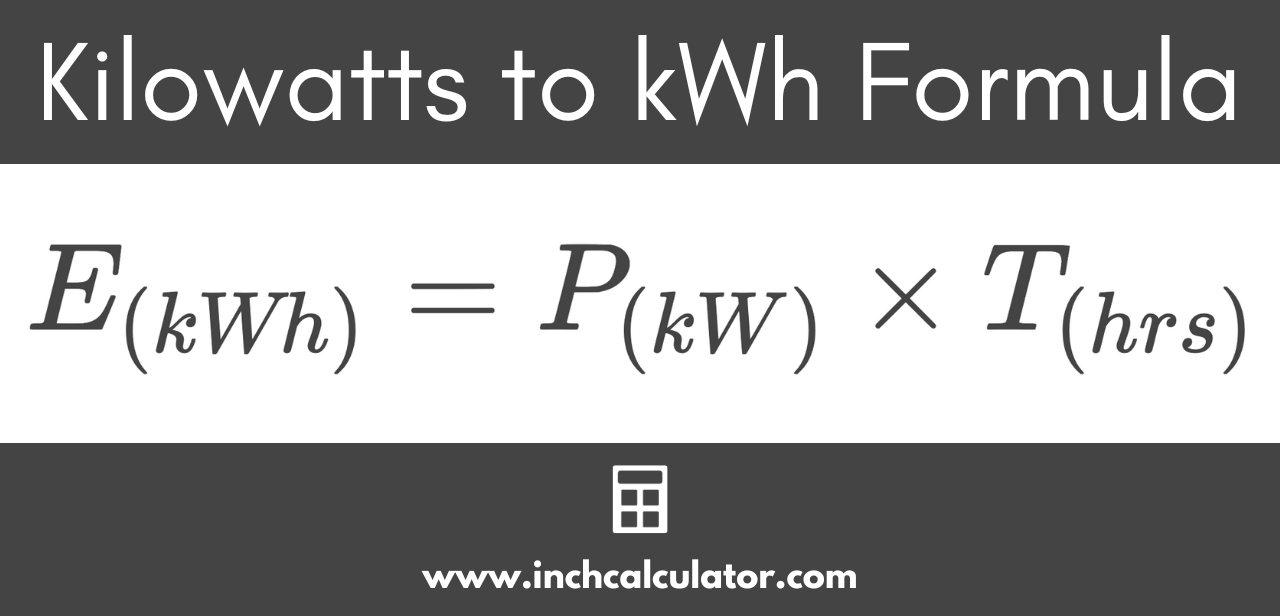
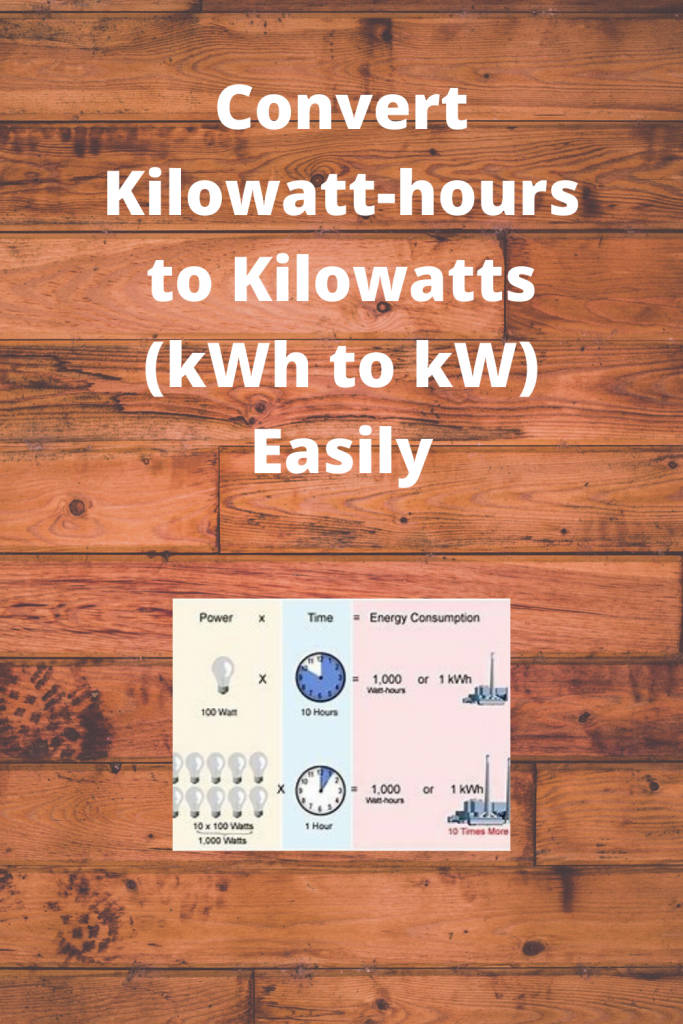
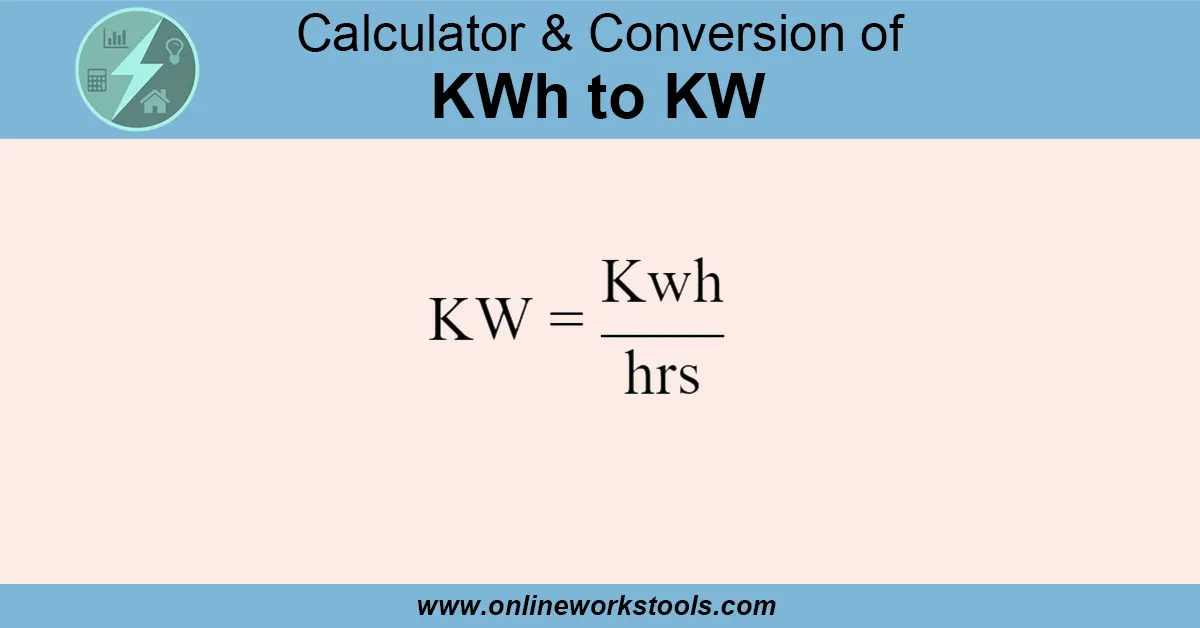
Now, for the million-dollar question: How do you convert kWh to kW? The secret lies in understanding that time is the crucial ingredient linking the two. kWh is simply kW multiplied by the number of hours an appliance runs. So, to convert kWh back to kW, you simply divide the kWh by the number of hours of operation. It’s that straightforward! The fundamental formula is: kWh = kW × hours. Therefore, to find kW, you rearrange it: kW = kWh / hours.
Let’s put it into practice. Imagine your smart plug tells you your desktop computer consumed 1.5 kWh over a 3-hour gaming session. To find out its average power draw (in kW) during that time, you'd do the math: 1.5 kWh / 3 hours = 0.5 kW. Simple, right? To truly enjoy becoming an energy wizard, start by looking at your appliance labels. Most will clearly state their power consumption in watts (W) or kilowatts (kW). Remember that 1000 W equals 1 kW. Then, track how long you use them. A simple stopwatch or a smart plug can be your best friend. Don't just focus on big appliances; those small chargers left plugged in add up over time. By understanding that kW is the rate and kWh is the total amount consumed, you’re not just converting numbers; you’re converting confusion into clarity, and that's a powerful tool for a more efficient and economical life!