
How Do You Calculate Amps From Volts And Watts
Electricity! It's the invisible force that powers our lives, making toast, playing our favorite tunes, and keeping the internet humming. But sometimes, all those numbers – volts, watts, amps – can feel like a confusing jumble.
Fear not, intrepid energy explorer! We're about to demystify one of the most common conversions: figuring out those elusive amps from the more familiar volts and watts.
The Power Trio: Volts, Watts, and Amps Explained (Kind Of)
Think of electricity as water flowing through a pipe. Volts are like the water pressure – how hard the water is being pushed.
Must Read
Watts represent the total amount of water flowing – the overall power. And Amps? They're like the size of the pipe itself, determining how much water can flow.
Okay, maybe that's a slight oversimplification, but it gets the idea across, right? Think of your favorite water park for maximum excitement!
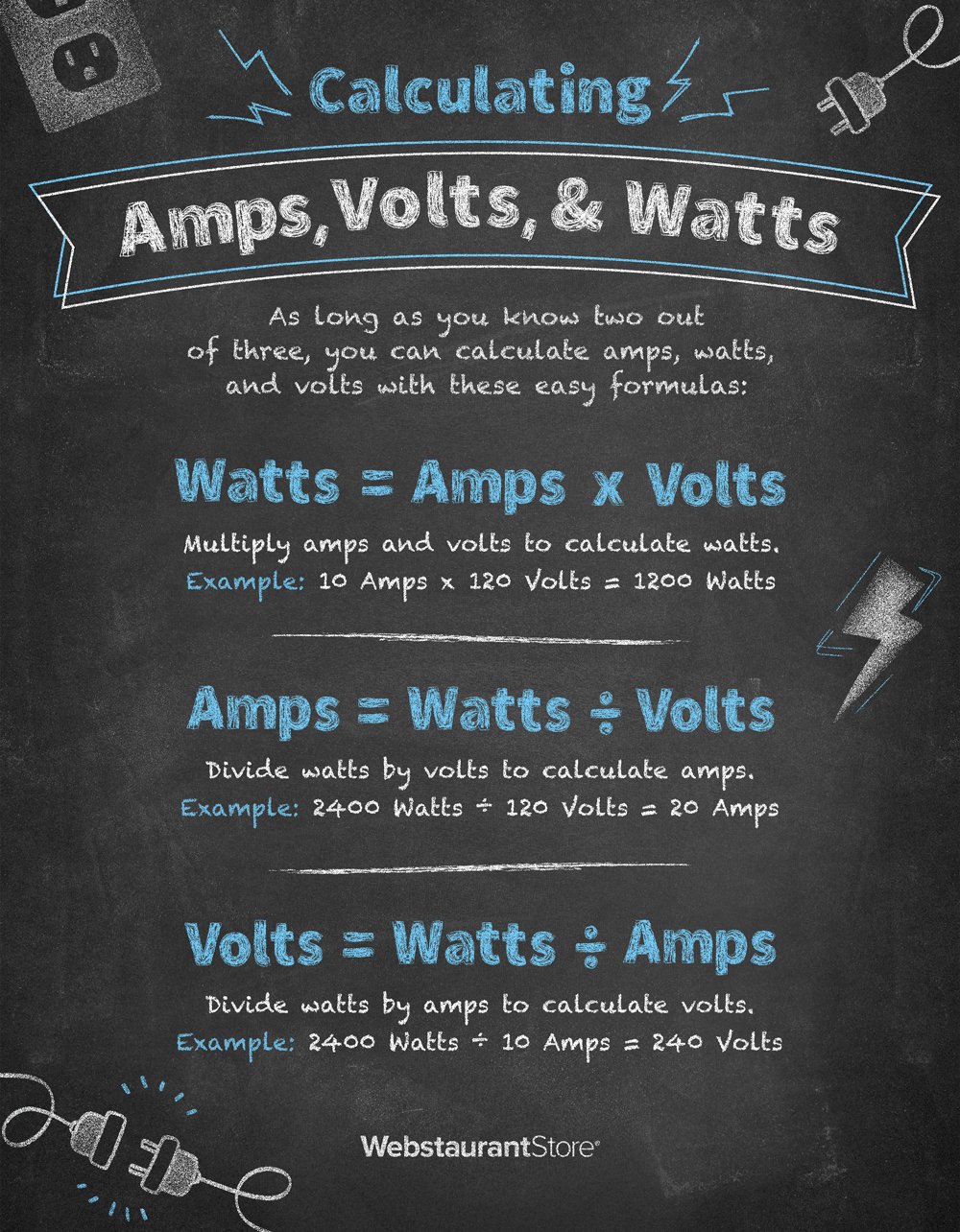
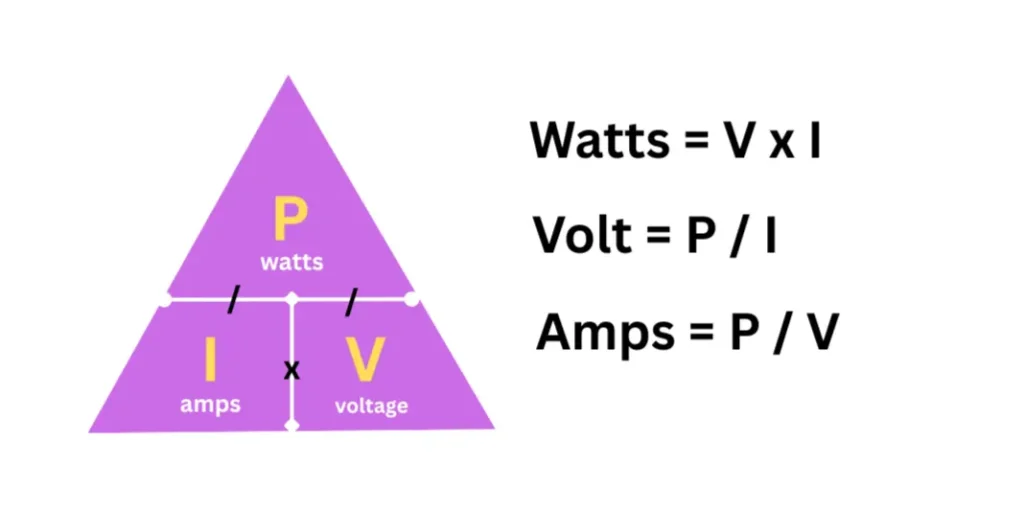
The Magic Formula: Watts = Volts x Amps
Here's the secret sauce, the key to unlocking the mystery: the formula Watts = Volts x Amps. This is your new best friend!
It's like a super-simple recipe that tells you how these three electrical amigos are related. Memorize it, tattoo it on your arm (just kidding... mostly!), because it's going to come in handy.
Imagine this formula is like a secret code! We use it to understand how much power our devices are using.
Solving for Amps: Unveiling the Mystery
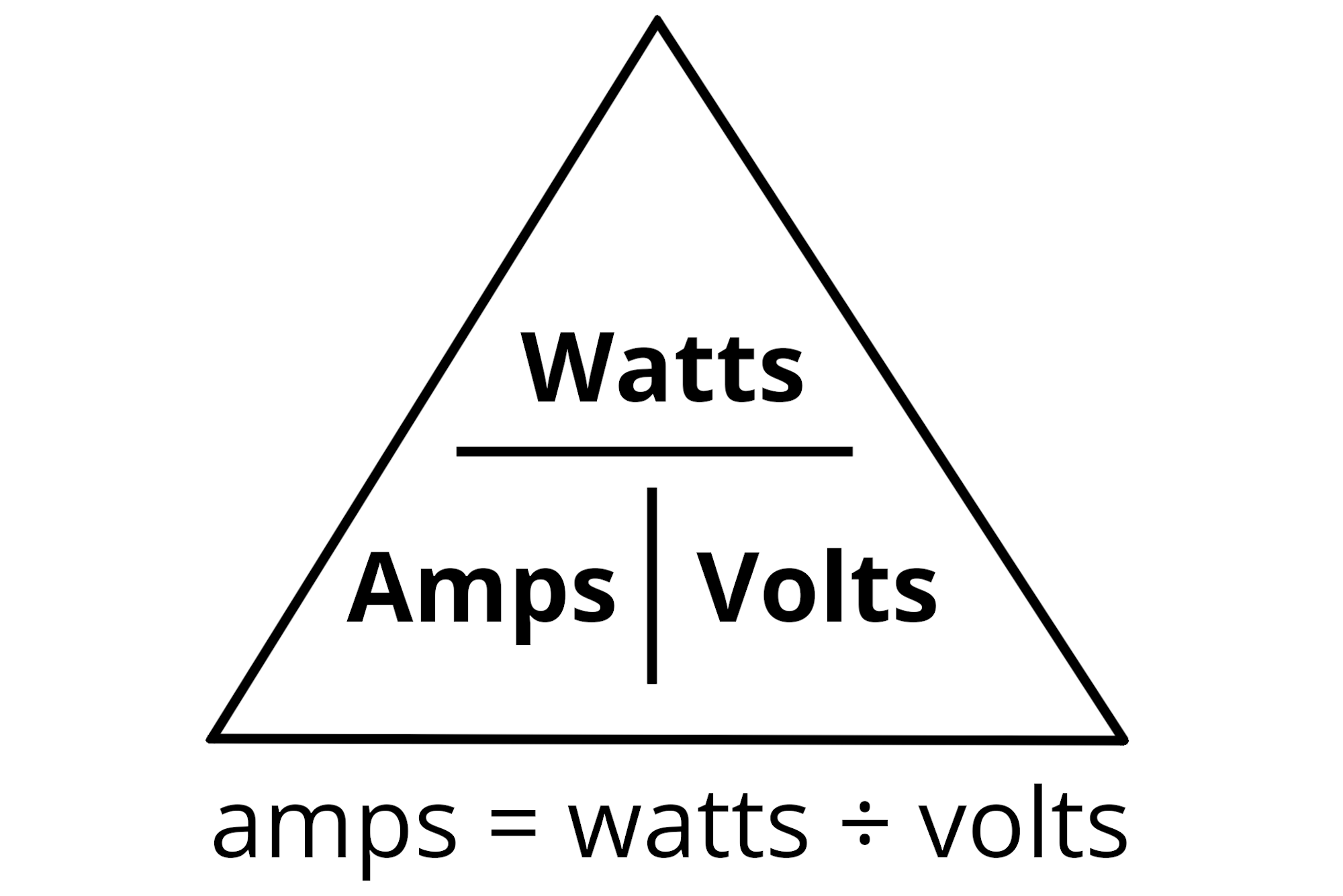
Alright, let's get down to brass tacks. We want to find the amps, right? To do that, we need to rearrange our magic formula.
Instead of Watts = Volts x Amps, we need to isolate amps on one side. This gives us: Amps = Watts / Volts.
Boom! There it is. Now we're cooking with electrical fire (safely, of course!).
Examples: Let's Put This into Action!
Let's say you have a lightbulb that's rated at 60 watts and operates on a standard 120-volt circuit. How many amps does it draw?
Using our formula: Amps = Watts / Volts, we get Amps = 60 / 120.
That's 0.5 amps! So, that lightbulb is sipping a gentle half-amp of electricity.
Hair Dryer Power! A More Electrifying Example
Now, let's crank things up a notch! What about a hair dryer? Those things are power-hungry beasts.
Suppose your hair dryer is rated at 1500 watts and, again, runs on 120 volts. How many amps is that sucking up?
Amps = 1500 / 120. That equals 12.5 amps! See? That's a lot more than our little lightbulb.
Checking the Breaker: Why This Matters
Knowing how to calculate amps is crucial for safety. Why? Because electrical circuits have limits!
Your home's circuits are protected by circuit breakers, which are like tiny electrical bouncers, preventing overloads. These breakers are rated for a certain number of amps.

Let's say a circuit breaker is rated for 15 amps. If you plug in too many devices that collectively draw more than 15 amps, BAM! The breaker trips, cutting off the power to prevent a potential fire hazard.
Overloading is a No-No!
Imagine trying to force a firehose amount of water through a garden hose. Not gonna work, right? The hose will burst!
Same with electricity. Overloading a circuit is like stuffing too much electrical juice through too small a pipe. It's a recipe for disaster!
So, knowing how to calculate amps helps you avoid tripping breakers and, more importantly, keeps you safe.
Watts, Volts, and Amps on Appliances
Here's a fun little homework assignment: Go on a scavenger hunt around your house! Look at the labels on your appliances.
You'll usually find the wattage (W) and voltage (V) listed. Practice calculating the amps (A) for each appliance using our trusty formula!
It's like being an electrical detective, uncovering the secrets of your appliances.
Power Tools: A Word of Caution!
Power tools, like saws and drills, often draw a significant amount of current. This is very important when working in the garage!
Always check the wattage and voltage ratings to calculate the amps they require. This will keep your work area safe.
Be sure not to overload the breaker or extension cords with several power tools!
Advanced Topics (But Still Easy!)
Okay, feeling brave? Let's briefly touch on a couple of slightly more advanced, but still manageable, topics.
We're talking about things like power factor and three-phase power. Don't worry, we'll keep it simple!
Knowledge is power, right? So let's get a little more!
Power Factor: The Efficiency Factor
Some electrical devices, especially those with motors (like refrigerators or air conditioners), have something called a "power factor." This affects the actual current drawn.
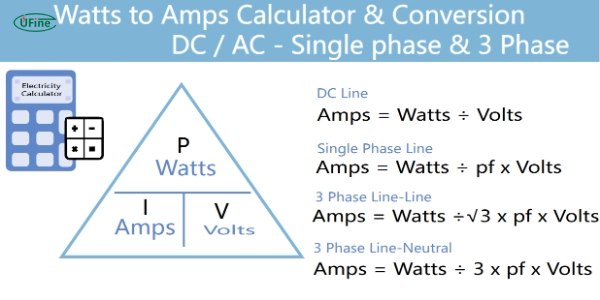
The power factor is a number between 0 and 1 (usually around 0.8 or 0.9). It represents how efficiently the device uses electricity. The formula becomes: Amps = Watts / (Volts x Power Factor).
Don't worry too much about the intricacies. Just know that if a device has a power factor listed, you need to include it in your calculation for a more accurate result.
Three-Phase Power: For the Big Boys
Most homes have single-phase power, which is what we've been talking about so far. But large industrial buildings often use three-phase power.
The calculations for three-phase power are a bit more complex, involving the square root of 3 (approximately 1.732). The formula looks like this: Amps = Watts / (Volts x Power Factor x √3).
Unless you're dealing with industrial equipment, you probably won't encounter three-phase power in your daily life. But now you know it exists!
Safety First! A Final Reminder
Working with electricity can be dangerous. Always take precautions!
If you're unsure about anything, consult a qualified electrician. It's better to be safe than sorry.
Remember to stay dry! Water and electricity don't mix and avoid DIY projects when in doubt.
Congratulations! You're an Amp-Calculating Ace!
So there you have it! You've conquered the world of volts, watts, and amps, and emerged victorious.
You now possess the knowledge to calculate amps from volts and watts, empowering you to make smarter decisions about your energy usage and stay safe.
Go forth and illuminate the world with your newfound electrical wisdom! And remember, always be responsible with your electrical powers!