
How Do We Obtain Solar Energy
Hey there, coffee's on! Ever looked up at that giant, fiery ball in the sky and thought, "Man, if only I could just… tap into that"? Well, spoiler alert: we totally can! And it’s actually way cooler and less sci-fi than it sounds. So, how exactly do we grab a piece of that sunshine pie and turn it into something useful? Let’s break it down, super casually, like we’re just chatting about it.
At its core, obtaining solar energy is about converting sunlight into either electricity or heat. Yep, two main ways to skin this sun-cat! No, not literally skin a cat, that's just an expression. Phew! It’s all about harnessing those tiny, energetic packets of light. Ready?
The Main Event: Solar Panels (Photovoltaics!)
This is probably what first pops into your head, right? Those sleek, dark panels you see on rooftops or in vast fields. They're called photovoltaic (PV) panels. "Photo" for light, "voltaic" for electricity. Pretty straightforward when you break it down!
Must Read
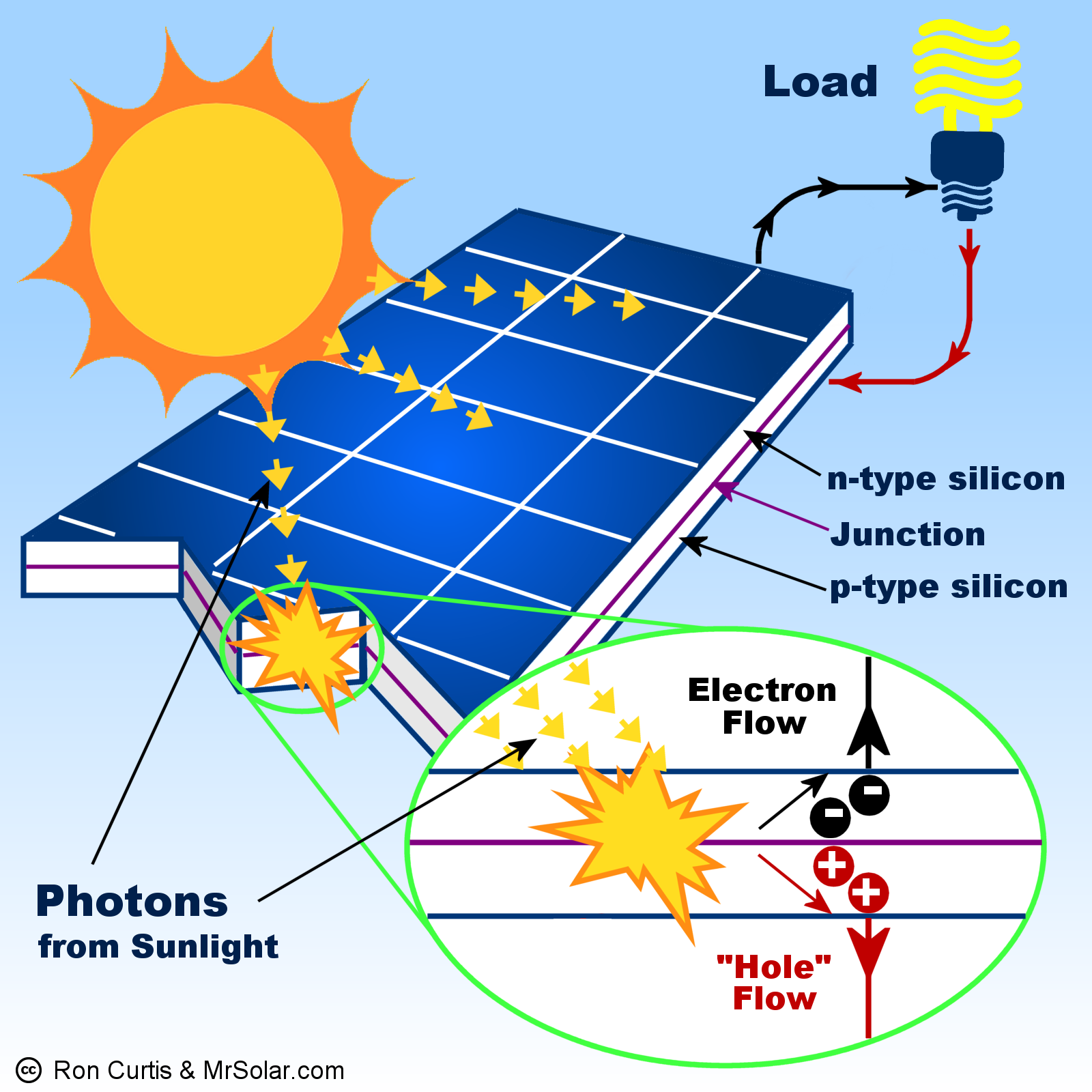
So, how do they work their magic? Imagine tiny, invisible packets of light, called photons, constantly raining down from the sun. These photons are little energy messengers. When they hit the material in a solar panel – usually silicon, a common semiconductor – they get real busy.
Think of it like this: the silicon in the panel is specially designed with two layers, one with a slight positive charge and one with a slight negative charge. When a photon smacks into one of these silicon atoms, it literally knocks an electron loose. It’s like a tiny, subatomic billiard ball game!
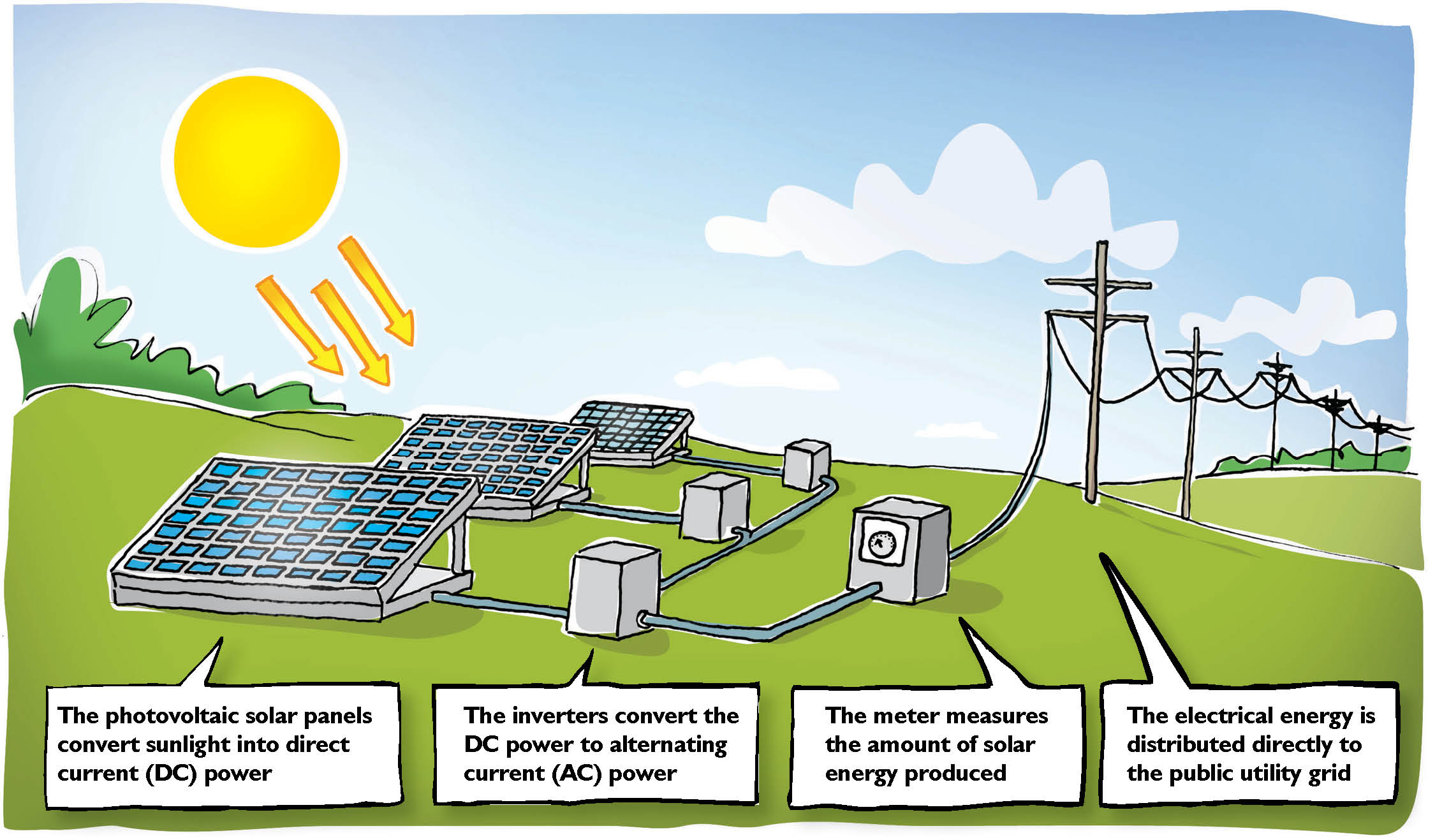
Once those electrons are knocked free, they don't just wander off. Oh no, the magic of the silicon structure creates an electric field that pushes them in a specific direction. This directed flow of electrons? That’s electricity, my friend! We're talking direct current (DC) electricity at this stage, similar to what you’d find in a battery.
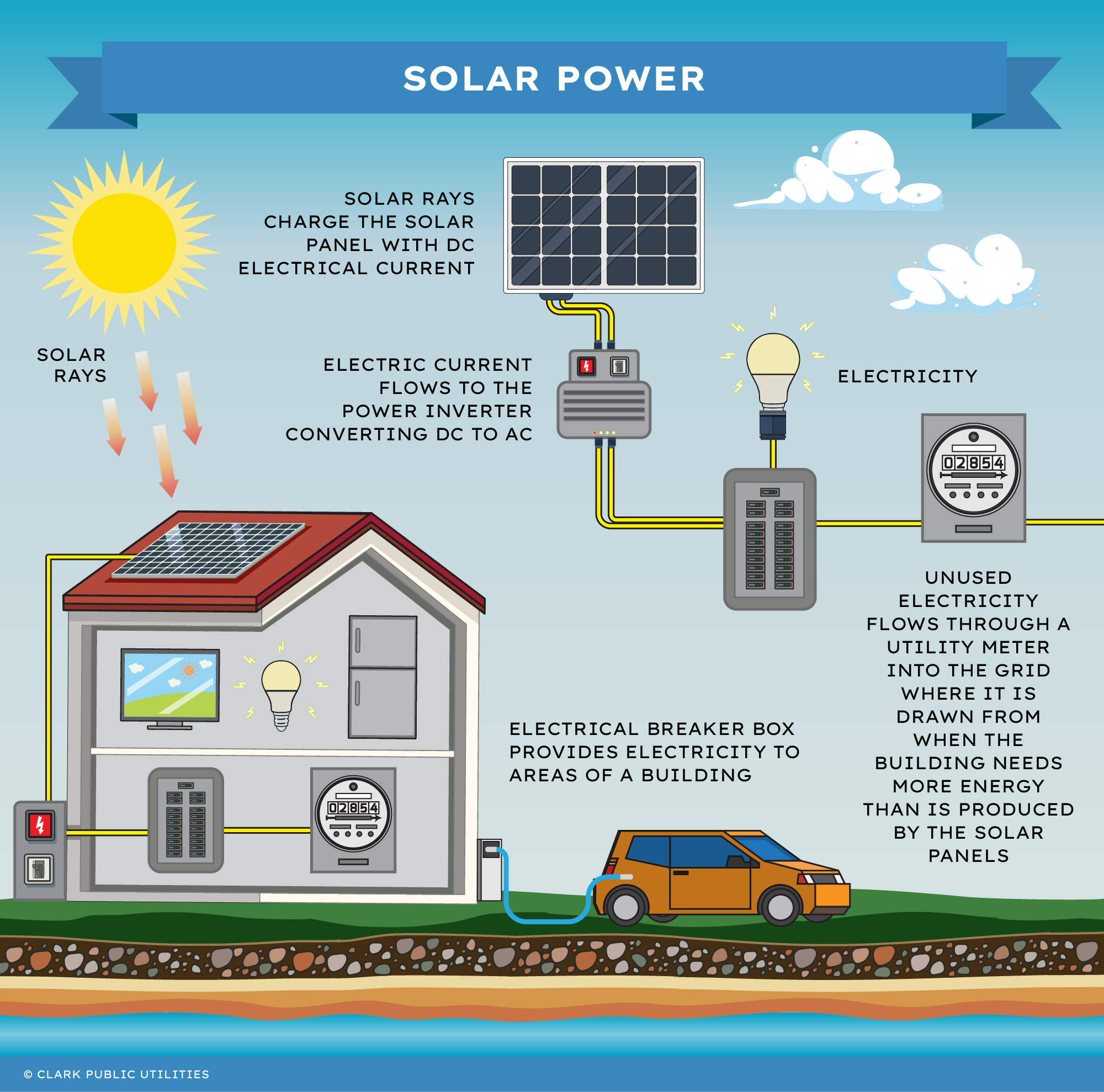
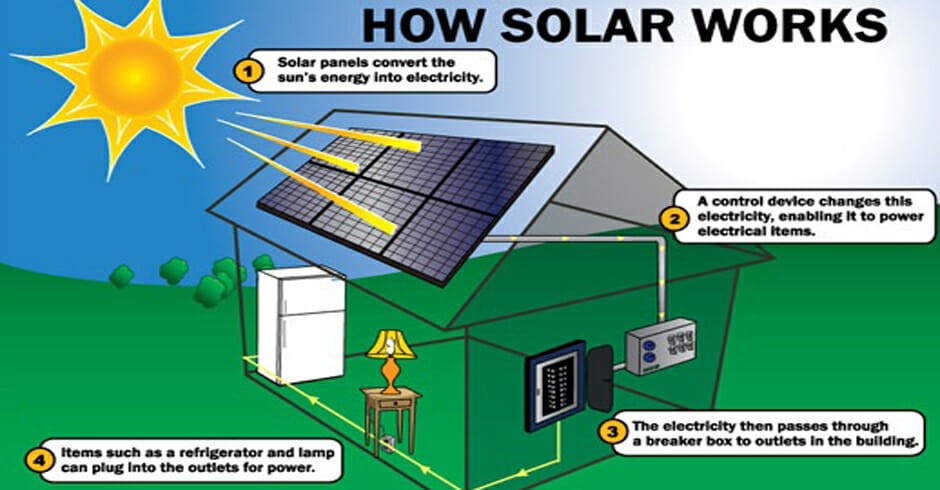
But wait, most of our home appliances run on alternating current (AC). That's where a little hero called an inverter comes into play. This clever box takes that DC electricity from the panels and flips it into AC, making it perfectly usable for your toaster, your TV, your phone charger – you name it! Pretty neat, right?
This converted AC electricity can then either power your home directly, be stored in batteries for later use (hello, power during a blackout!), or even be sent back to the main power grid. Talk about being a good energy neighbor!

The Other Cool Kid: Solar Thermal Energy
Okay, so that's PV. But there’s another awesome way to harness the sun's power, and it's less about electrons and more about, well, heat! This is called solar thermal energy, and sometimes you’ll hear about Concentrated Solar Power (CSP) plants.
Instead of converting light directly into electricity, these systems focus sunlight to generate intense heat. Imagine using a magnifying glass to burn a leaf (don’t actually do this, okay?). CSP plants do something similar, but on a massive scale!
They use huge arrays of mirrors – sometimes dish-shaped, sometimes long trough-shaped, or even a field of flat mirrors all pointing at a central tower – to concentrate the sun’s rays onto a small area. This concentrated sunlight heats up a fluid to extremely high temperatures, sometimes even molten salt!
What do you do with super-hot fluid? You use it to boil water, of course! This creates steam, and that steam is then used to spin a turbine, which is connected to a generator. And voilà! A generator spinning means electricity is being produced. It's essentially a conventional power plant, but instead of burning fossil fuels to boil water, it's using the sun's free heat.
It’s like the sun is making a giant pot of tea, and the steam from that tea powers your city. A bit of an oversimplification, but you get the picture! The cool thing about some CSP systems is they can store that heat in the molten salt for hours, meaning they can still generate electricity even after the sun has set. Talk about thinking ahead!
So, Which One's Better?
Honestly? Neither is "better" in all situations; they just do different things! PV panels are fantastic for individual homes, businesses, and distributed power generation. They're getting cheaper and more efficient all the time. Solar thermal is often more suited for large-scale utility power, especially in areas with consistently strong sunshine, and its ability to store heat is a big plus.
Both methods are incredible feats of engineering that let us tap into the ultimate renewable resource. We're literally capturing the sun's endless energy, turning it into power for our lives, and reducing our reliance on stuff dug out of the ground. Pretty inspiring, don't you think?
So, next time you see a solar panel or hear about a huge solar farm, you'll know a little more about the amazing science behind how we're literally grabbing sunshine and putting it to work. It’s a pretty bright future, if you ask me!