
How Do Nuclear Power Plants Generate Energy
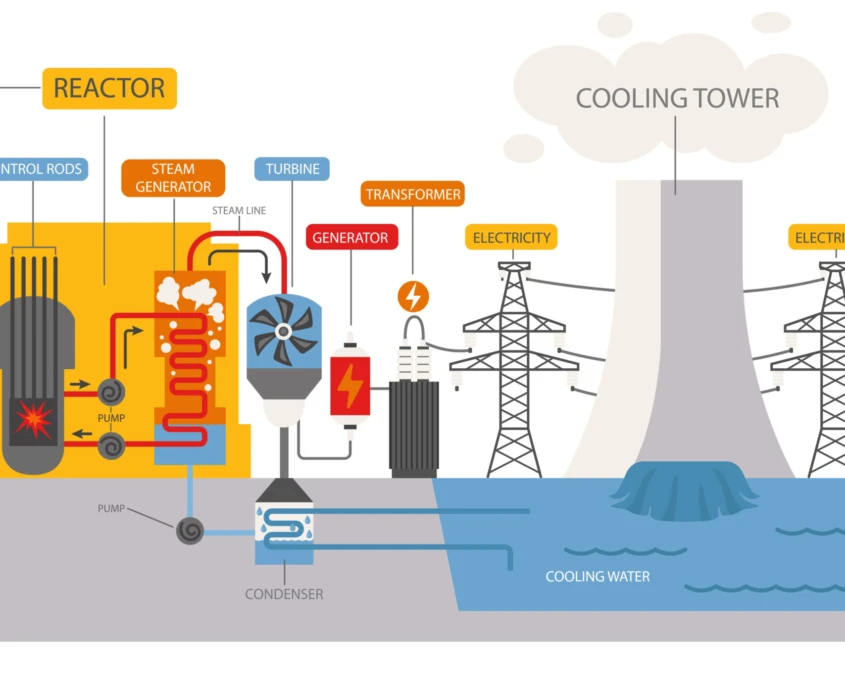
Ever wondered how those mysterious nuclear power plants conjure up electricity? It's not magic, though it can feel like it when you think about it! Buckle up, because we're about to dive into the amazing world of atoms and energy, explained in a way that even your pet goldfish could (probably) understand.
The Amazing Atomic Oven: It's Not Cooking, It's Power!
Imagine a giant, super-powered oven. Instead of baking cookies, this oven is "baking" uranium atoms to release tremendous amounts of energy.
This process is called nuclear fission. Think of it like this: you have a plate of cookies (uranium atom). You chuck a tiny marble (neutron) at the plate, and the cookies shatter into smaller pieces, releasing energy in the process!
Must Read
Those "cookie pieces" are more neutrons and other atomic bits, plus a LOT of heat. The released neutrons go on to shatter more uranium atoms, creating a chain reaction. It's like a never-ending cookie-shattering party, but instead of crumbs, we get power!
Controlling the Cookie Chaos
Now, we don't want this "cookie-shattering party" to get out of control and explode. That's where control rods come in.
These are like the bouncers at the cookie party. They absorb some of those stray neutrons, keeping the chain reaction at a manageable level. More bouncers, fewer shattered cookies, less heat.
Less bouncers, more shattered cookies, more heat! The operator carefully adjusts control rods to maintain just the right amount of fission, and the just right amount of generated heat for electricity generation.
Water, Water Everywhere: Turning Heat into Electricity
So, we've got a super-hot atomic oven. Now what? This is where water comes in, playing a crucial role in transforming that atomic heat into usable electricity. It’s like turning a scorching desert into a refreshing oasis – except instead of quenching thirst, it’s powering your phone!
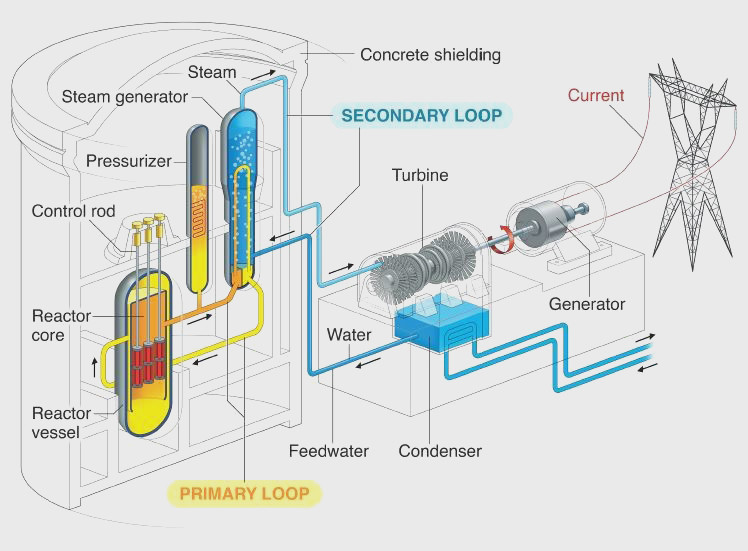
The heat from the fission reaction boils water, creating steam.
This high-pressure steam is then piped into a turbine, which is basically a giant fan connected to a generator. It spins the turbine blades like a hurricane in a teacup, but with much greater control.
Spinning for Power: The Turbine's Tale
As the turbine spins, it turns the generator. Inside the generator, magnets and coils of wire work together to create electricity, thanks to something called electromagnetic induction – fancy, right?
Think of it like this: you're pedaling a bicycle. Your legs turn the pedals, which turn the wheels, and that motion somehow creates electricity to power a tiny lightbulb. The turbine and generator do the same thing, just on a massively larger scale.
The generator then pumps electricity out to homes and businesses, ready to power everything from toasters to TikTok. It's like a giant atomic-powered battery sending energy across the grid, illuminating our world.
Keeping it Cool: The Condenser's Crucial Role
After the steam has spun the turbine, it needs to be cooled back into water so it can be used again. This is where the condenser comes in.
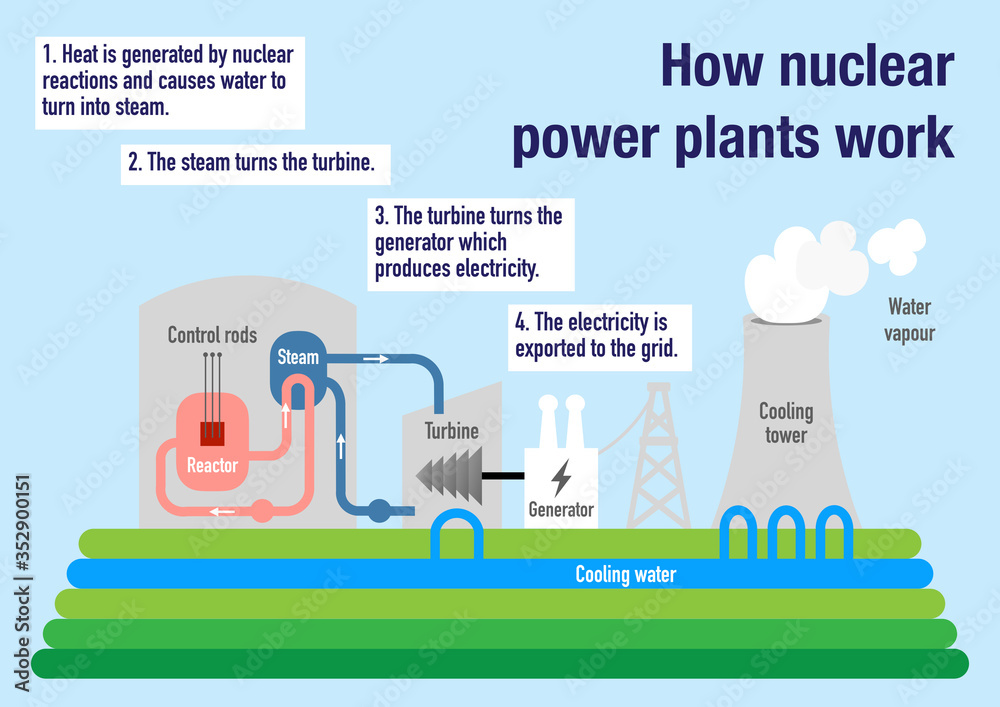
The condenser is like a giant radiator. It cools the steam, turning it back into liquid water. This water is then pumped back to the reactor to be heated again, creating a closed-loop system. It is a cycle!
This entire process is super efficient. The clever engineers that built this system figured out how to extract the most amount of electrical energy out of a single atom of Uranium.
The Cooling Tower: A Majestic Marvel
Those big, curvy towers you often see at nuclear power plants? Those are often cooling towers.
They help to dissipate the heat from the condenser. Some of the water evaporates, creating those iconic plumes of "smoke." It's mostly water vapor, like the steam from your shower.
It's like the power plant is exhaling after a hard workout, releasing excess heat into the atmosphere. The majestic structure does so much to generate electricity, it deserves to breathe!
Safety First: A Fort Knox for Atoms
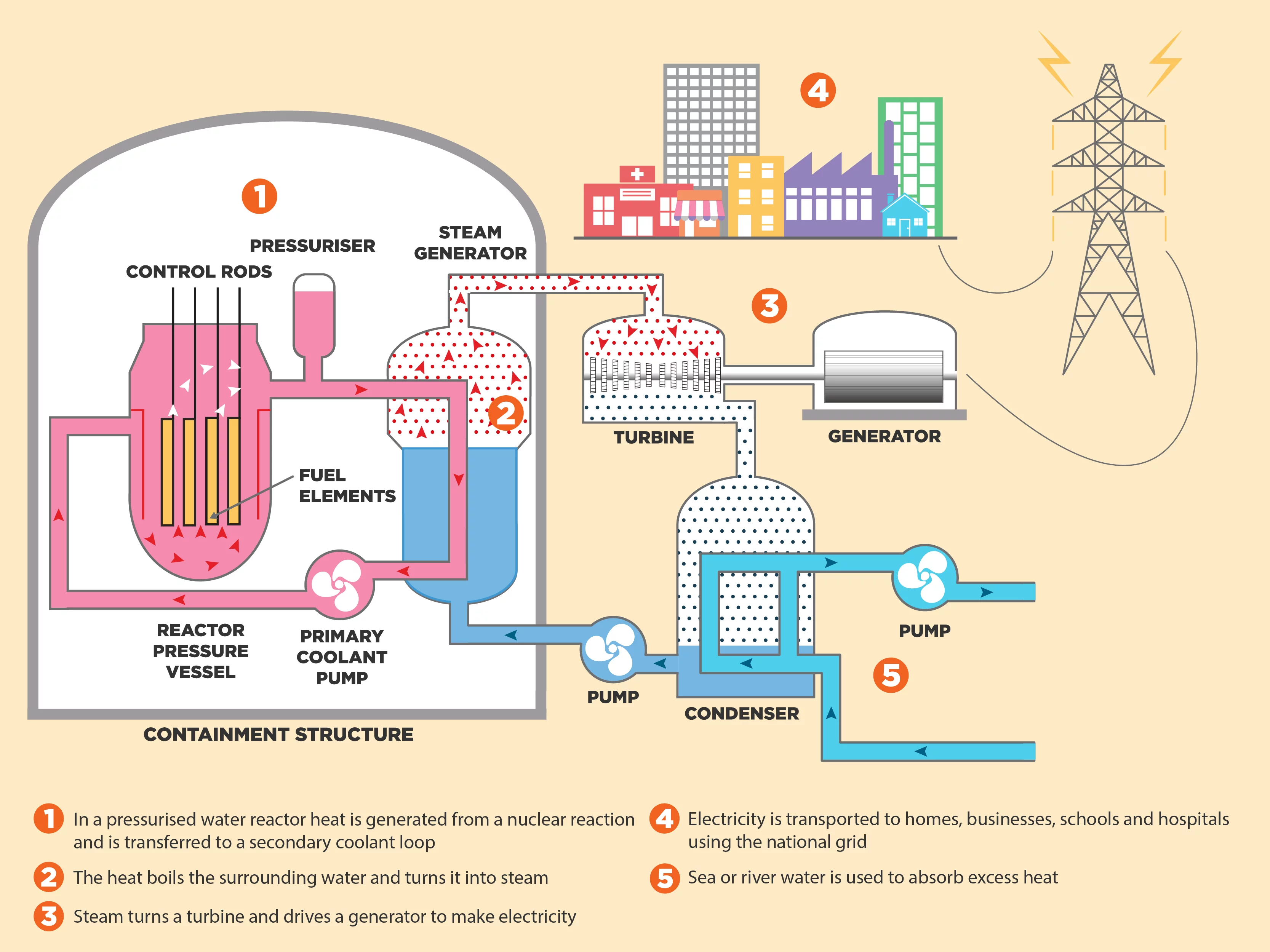
Nuclear power plants are designed with multiple layers of safety to prevent accidents and protect the environment. It's like a Fort Knox for atoms.
The reactor core is housed inside a massive steel-reinforced concrete containment structure. This structure is designed to withstand even the most extreme events, like earthquakes or even a direct airplane hit.
Plus, there are multiple backup systems and safety features in place to prevent any problems from escalating. It’s a bit like having a safety net, a backup parachute, and a team of expert ninjas guarding your atoms.
Spent Fuel: Handling the Leftovers
After the uranium fuel has been used in the reactor, it becomes what's called "spent fuel." While it is no longer efficient for generating electricity in the reactor, the spent fuel contains radioactive products, that require very special handling.
The most common method is that spent fuel is stored underwater in special pools. This water cools the fuel and also shields workers from radiation.
Other long term storage method are in development. Scientist and engineers are researching innovative ways to recycle or permanently dispose of spent nuclear fuel.

The Nuclear Advantage: Powering the Future?
Nuclear power has some significant advantages. It's a reliable source of energy that doesn't produce greenhouse gasses during electricity generation. This is important as we try to combat climate change.
It also doesn't depend on the weather, like solar and wind power. This means it can provide a consistent and steady source of electricity.
And, get this, a small amount of uranium can produce a massive amount of energy. It's like having a tiny, incredibly potent battery that can power an entire city.
Challenges and Considerations
Of course, nuclear power also has its challenges. The risk of accidents and the need to safely store spent fuel are major concerns. These are important questions that scientist, engineers, policymakers, and the public should engage in.
But with continuous innovation and improvements in reactor design, nuclear power may play an increasingly important role in meeting our growing energy needs in a sustainable way. It’s an ongoing quest for cleaner, safer, and more efficient energy sources.
So, there you have it! That's how nuclear power plants turn atoms into electricity. It's a fascinating, complex, and powerful process that keeps our lights on and our world humming. Now you can impress your friends with your newfound knowledge of atomic cookie-shattering and steam-powered turbines!