
How Do I Find A Ground Fault
Okay, picture this: It's a gorgeous Saturday morning, birds are chirping, coffee is brewing, and you're just about to settle in for some well-deserved relaxation. You reach for your trusty toaster, slide in a couple of bread slices, and BAM! Not a toast explosion, thankfully, but that unmistakable, gut-wrenching POP from the breaker box. The kitchen goes dark. Your coffee machine? Dead. Your dreams of golden-brown toast? Utterly, tragically, metaphorically burnt to a crisp.
You know the feeling, right? That sudden plunge into electrical mystery. You flip the breaker back on, maybe with a hopeful prayer, and then five minutes later, POP! Again. Or maybe it's not the toaster, maybe it's that outdoor string light that mysteriously trips the GFCI every time it rains. What you've got on your hands, my friend, is quite likely a ground fault. And trust me, it’s like an electrical scavenger hunt where the prize is not getting electrocuted and having your power back on. Fun!
What Even IS a Ground Fault?
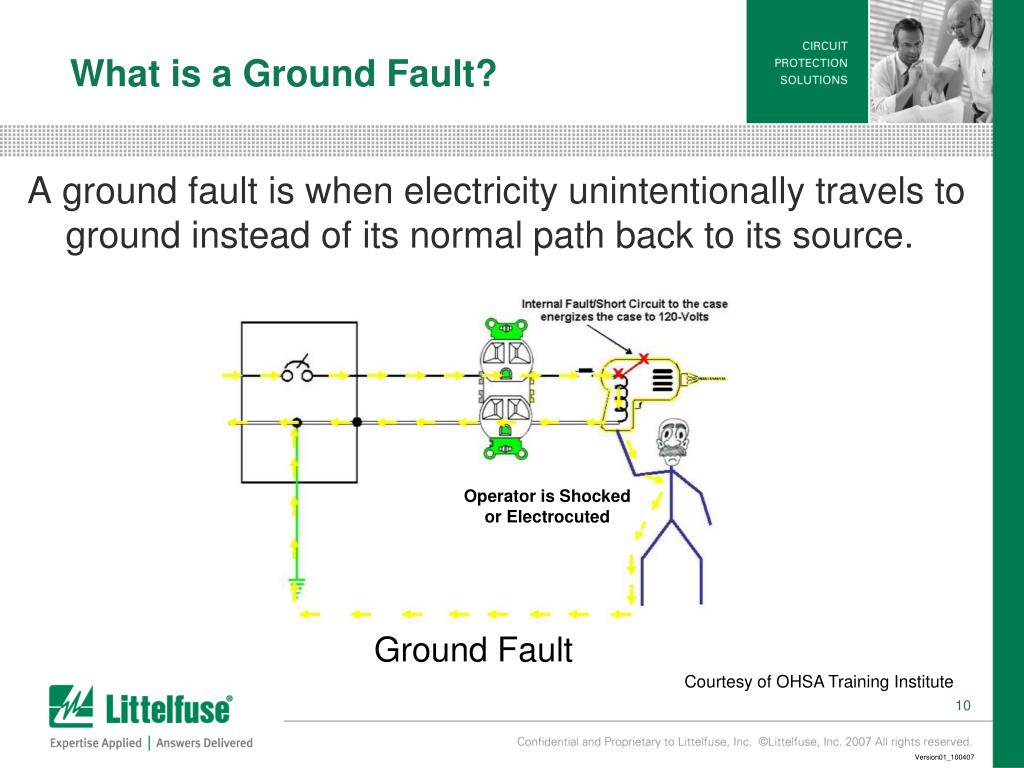
Before we dive into the nitty-gritty of hunting these sneaky little devils down, let's briefly touch on what we're actually looking for. Imagine your electricity as water flowing through pipes. The "hot" wire is like the main supply line, the "neutral" wire is the drain pipe taking the used water away, and the "ground" wire? That's your emergency overflow. A ground fault happens when some of that electricity, instead of happily flowing back through the neutral, decides to take a shortcut directly to the ground – perhaps through a damaged wire, faulty appliance, or even, heaven forbid, you. Not good. Your circuit breaker or GFCI (Ground Fault Circuit Interrupter) is designed to detect this shortcut and shut things down fast to prevent shock or fire. They're your electrical superheroes, really.
Must Read
Step 1: The Panic (Optional, But Understandable)
First, take a deep breath. No need to immediately declare war on your entire electrical system. The first step in finding a ground fault is often the simplest: isolation. If the breaker tripped, chances are it's protecting a specific circuit. Look at your breaker panel. See which one decided to take a nap. Now, before you flip it back, unplug everything on that circuit. Seriously, every lamp, every charger, every little gadget. Unplug it all. If it's a dedicated circuit for something big like a fridge, try unplugging just that. If it's your outdoor GFCI, unplug those lights.
Once everything's unplugged, try resetting the breaker. Did it hold? If yes, great! You've successfully isolated the circuit, and the fault is in one of the devices you just unplugged. If it tripped again immediately, even with everything unplugged, then the fault is likely in the wiring itself, an outlet, or a permanent fixture on that circuit. That's when things get a little more... adventurous.

Step 2: The Process of Elimination (AKA The "Plug-In-One-By-One" Game)
If the breaker held after unplugging everything, congratulations! You've narrowed down the culprit to an appliance. Now for the fun part: plugging things back in one at a time. Reset the breaker, plug in one device, wait a minute, and if it holds, unplug it (or leave it, your call). Repeat with the next device. The moment that breaker trips again, you've found your offender! Bingo! You can then choose to repair or replace that specific item. Easy peasy, right?
Step 3: When the Wiring Itself is Suspect (Time for a Multimeter!)
This is where things get a touch more technical, but don't sweat it. You don't need to be an electrician, just careful. For this part, you'll want a multimeter. They're not expensive, and they're incredibly handy for all sorts of DIY electrical projects. Always, always, ALWAYS turn off the power at the breaker before working on any wiring or outlets. I can't stress this enough. Safety first, folks!

If the breaker tripped even with everything unplugged, the fault is in the permanent wiring, outlets, or light fixtures. Here’s a basic approach:
- Visual Inspection: With the power off, carefully inspect all outlets and switches on the faulty circuit. Look for burn marks, melted insulation, loose wires, or anything that looks "off." Sometimes a rodent has chewed through a wire, or a nail has pierced one during a renovation project.
- Outlet Check: You can use your multimeter to check for continuity between the hot and ground wires in an outlet (with the power OFF, remember?). If you get continuity, you've found a short, which is often related to a ground fault. Sometimes it's just a loose wire touching the metal box.
- Fixture Fun: If the fault seems to be coming from a light fixture, remove it (again, power OFF!) and inspect the wiring inside. Often, a tiny stray strand of wire can bridge the hot and ground, causing issues.
- The Circuit Split: If the circuit covers multiple rooms, you might have to disconnect sections of the wiring at junction boxes to further isolate the problem area. This is getting into more advanced territory, and if you're not comfortable, that's okay.
When to Call a Pro (Because Not Everything is a DIY Project)
Look, I'm all for empowering the DIY spirit, but there's a point where it's smarter, safer, and frankly, more efficient to call in the cavalry. If you've gone through the unplugging game, checked your visible outlets, and the fault is still playing hide-and-seek within your walls, it might be time for a qualified electrician. They have specialized tools (like a megohmmeter or circuit tracer) that can pinpoint these hidden faults without tearing your house apart. Plus, they know the codes and can ensure everything is up to snuff.
Finding a ground fault can be a bit like detective work – frustrating at times, but incredibly satisfying when you finally crack the case. Remember to stay calm, be systematic, and above all, prioritize safety. Good luck with your hunt, and may your toast be perpetually golden!

