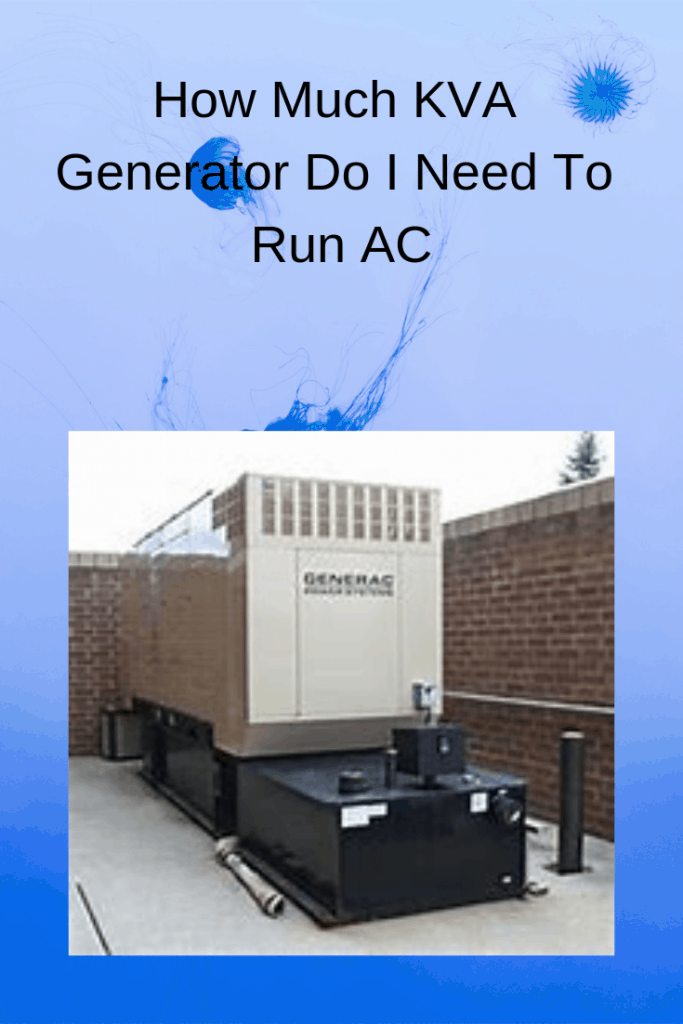
How Big Of A Generator To Run Ac

Ever found yourself dreaming of a cool breeze when the power goes out? Or perhaps you're planning a fantastic camping trip and the thought of a little air conditioning in your RV or tent sounds like pure bliss. It’s a common fantasy, right? And it often leads to a wonderfully practical question: how big of a generator do I actually need to run an AC unit? It’s a subject that might sound a bit technical at first, but it’s actually incredibly fun and empowering to understand, opening up a world of comfort and independence!
The core purpose of figuring out generator sizing for an AC is simple: to ensure you have enough portable power to stay cool when the grid isn't an option. The benefit? Oh, they're immense! Imagine weathering a summer power outage without resorting to ice baths, or extending your RV season into those hotter months without being tethered to expensive campgrounds with hookups. It means you can bring comfort to outdoor events, provide a safe, cool space during emergencies, or even just keep a small workshop bearable on a hot day. It’s about taking control of your climate, wherever you are.
So, where does this knowledge come into play in daily life or even offer a little educational spark? In daily life, it’s a lifesaver during those unexpected blackouts. Instead of just lights and a fridge, you could keep a critical room cool, preventing heatstroke for vulnerable family members or just making life a whole lot more pleasant. For RVers, it’s the difference between "roughing it" and truly enjoying the open road in comfort. Picture tailgating with a cool zone, or running a remote pop-up shop with a bit of AC for your customers. From an educational perspective, understanding generator sizing gives you a fantastic hands-on grasp of electrical loads, watts, and amps – it’s a practical application of physics that makes abstract concepts feel very real.
Must Read
Ready to dive into the practical side? The biggest secret to remember when powering an AC unit with a generator is the difference between running watts and starting watts. Your AC unit's compressor needs a massive, brief surge of power when it first kicks on – this is its starting wattage. Once it's running smoothly, it settles down to a lower running wattage. Most generators are rated by their running watts, but their surge capacity (or peak watts) is what you need for AC. Always check the label on your AC unit (or its manual) for these numbers. You'll usually see something like "X running watts / Y starting watts."
A simple way to explore this is to look at your own home AC unit or a window unit you might own. Find its label and note the wattage. Then, hop online and browse a few generators. Compare their "running watts" and "surge watts" (sometimes called "peak watts"). You'll quickly see that for an AC, you generally need a generator whose surge watts exceed your AC's starting watts, and whose running watts exceed your AC's running watts. A good rule of thumb? If in doubt, go a little bigger! Also, consider an inverter generator; they're often quieter and more fuel-efficient, especially when managing fluctuating loads like an AC compressor. Happy cooling, no matter where you roam!
![Will A 3000 Watt Generator Run A RV Air Conditioner? [Size]](https://lodgescout.com/wp-content/uploads/2022/10/what-size-generator-to-run-rv-ac.jpeg)