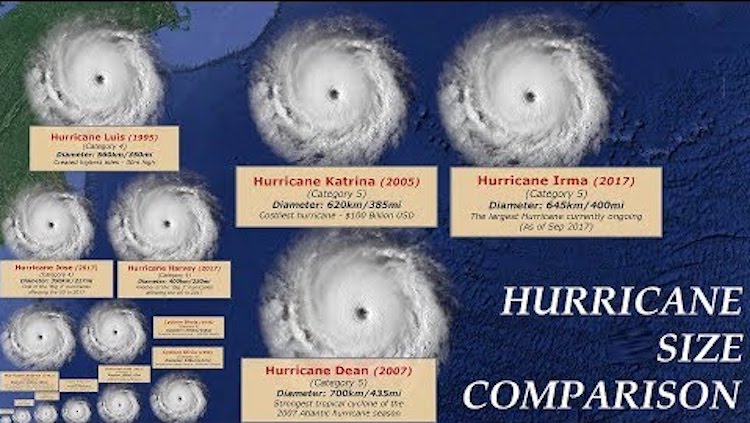
Hurricanes. Just the word itself conjures images of swirling winds, crashing waves, and maybe even Dorothy being whisked away to Oz! But have you ever stopped to think about just how HUGE these storms can get? We're not talking about a little summer shower here. We're talking about behemoths of weather!
So, Just How Big Are We Talking?
Okay, let's get down to brass tacks. When we talk about the "size" of a hurricane, we're usually talking about its diameter. Think of it like measuring across a pizza. That's the diameter! For hurricanes, it's the distance from one edge of the storm to the other.
Most hurricanes aren't exactly petite. A "typical" hurricane can easily have a diameter of 300 miles. That's like driving from New York City to Boston! But "typical" is boring, right? We want to talk about the record-breakers!
Brace yourselves because the biggest hurricane ever recorded was absolutely mind-blowing. Get ready for this name: Typhoon Tip. Yes, Tip. Not exactly intimidating, but trust us, this storm was a monster.
Typhoon Tip, back in 1979, boasted a diameter of a staggering 1,380 miles! Can you even picture that? That's bigger than the distance from Los Angeles to Dallas! You could practically fit half the United States inside this one storm.
Hurricane Size Comparison | Hurricane Size Comparison by NASA - YouTube
Imagine staring up at the sky and seeing a cloud system that stretches from coast to coast. Spooky, right?
Why Does Size Matter?
You might be thinking, "Okay, it's big. So what?" Well, the size of a hurricane can tell us a lot about its potential impact. A larger hurricane generally means a wider area affected by strong winds, heavy rainfall, and storm surge. Think of it as a ripple effect – the bigger the stone you throw in the pond, the bigger the ripples spread.
Even if the wind speeds aren't as intense as a smaller, more concentrated hurricane, a huge storm can still cause widespread damage simply because it covers so much ground. More area, more potential for destruction. Yikes!
How Big Do Hurricanes Get? - YouTube
And let's not forget the sheer volume of rain these giants can unleash. Think biblical proportions! Flooding becomes a major concern with these super-sized storms. Plus, they take so long to move, compounding the effects of wind and rain.
What Makes a Hurricane Grow So Big?
That's the million-dollar question! A lot of factors influence how big a hurricane gets. Things like:
A Comparison of Hurricane Sizes Over the Years
Sea Surface Temperatures: Warm water is the fuel for hurricanes. The warmer the water, the more energy available for the storm to grow.
Atmospheric Conditions: Things like wind shear (changes in wind speed and direction with height) can either help or hinder a hurricane's development. Low wind shear is generally better for growth.
Location: Where the storm is located in the ocean can play a role, as well as its interaction with land.
It's a complex dance of weather patterns and ocean conditions, all working together to determine the ultimate size and strength of these incredible storms.
The Majesty and the Danger
While hurricanes can be incredibly destructive, there's also something undeniably awe-inspiring about them. They are a powerful reminder of the forces of nature, and understanding them is crucial for protecting ourselves and our communities.
So, the next time you hear about a hurricane brewing, take a moment to appreciate the sheer scale of these meteorological marvels. And maybe keep an eye out for the next Typhoon Tip – hopefully from a safe distance! Stay safe out there!