
How Bad Is Category 4 Hurricane
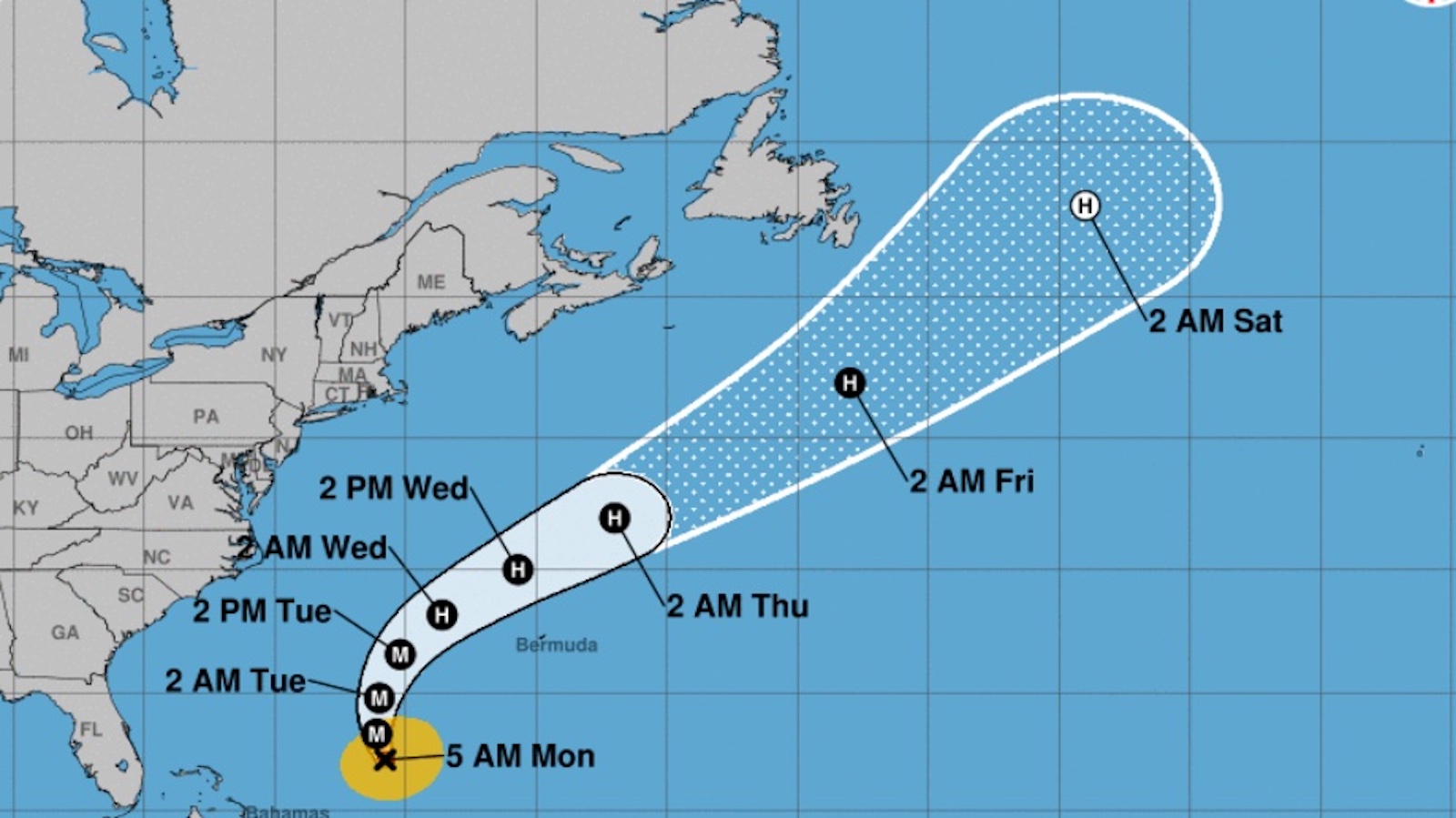
Okay, let's talk hurricanes. Specifically, the Category 4 kind. Now, before you picture scenes from every disaster movie ever made, let's approach this with a cool head and a modern-day guide vibe. Think of it less as a doomsday forecast and more like a very serious weather advisory that, with a little prep, you can absolutely navigate.
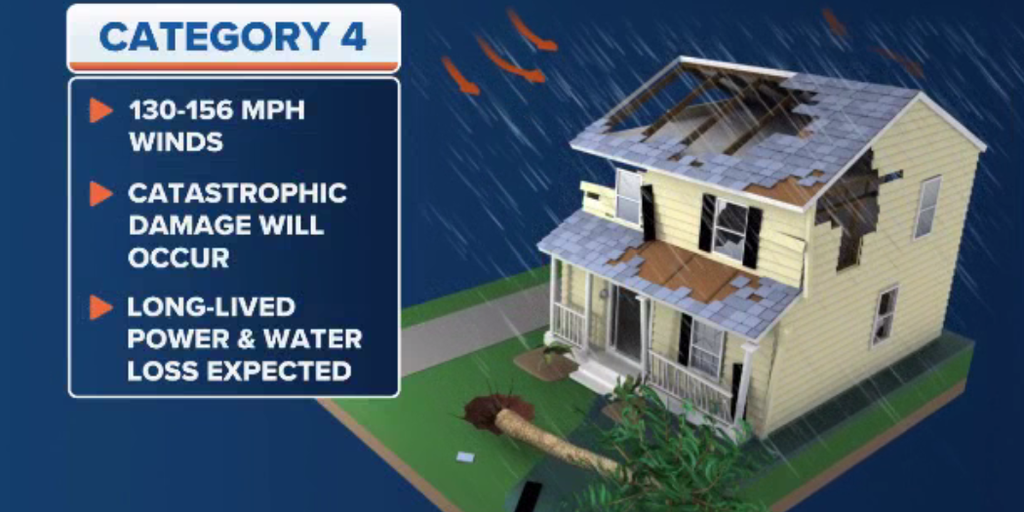
So, what exactly are we dealing with when the weather gurus drop the "Category 4" bomb? On the famous Saffir-Simpson Hurricane Wind Scale, a Category 4 packs a punch with sustained winds between 130 to 156 miles per hour (that's 209-251 km/h for our metric friends). To put that into perspective, imagine a high-performance sports car not just driving past, but driving through your house. Repeatedly. Yeah, it's that kind of wind. These aren't just breezy gusts; they're sustained, relentless forces of nature.
The Nitty-Gritty: What a Cat 4 Really Means
A Category 4 hurricane is no joke. It means extensive damage. We're talking about well-built framed homes experiencing severe damage to roofs, siding, and even structural components. Trees? Snapped like twigs. Power poles? Down, leading to widespread and potentially long-duration power outages. Think days, even weeks, without your Wi-Fi, AC, or fridge. It's an enforced digital detox, whether you like it or not.
Must Read
But here's the kicker: the wind, while terrifying, often isn't the only (or even the worst) threat. Enter storm surge. This is where the ocean essentially gets a major attitude adjustment and pushes a wall of water ashore. For coastal areas, this can be catastrophic, causing massive flooding and making entire neighborhoods disappear under water. It's often responsible for the majority of hurricane-related fatalities. "Turn around, don't drown" isn't just a catchy phrase; it's a life-saving mantra.
Then there's the rain. Tropical systems, especially strong ones, dump incredible amounts of water. This leads to inland flooding, even far from the coast. Roads become rivers, and underpasses become swimming pools. Your usual commute route might just become a no-go zone.
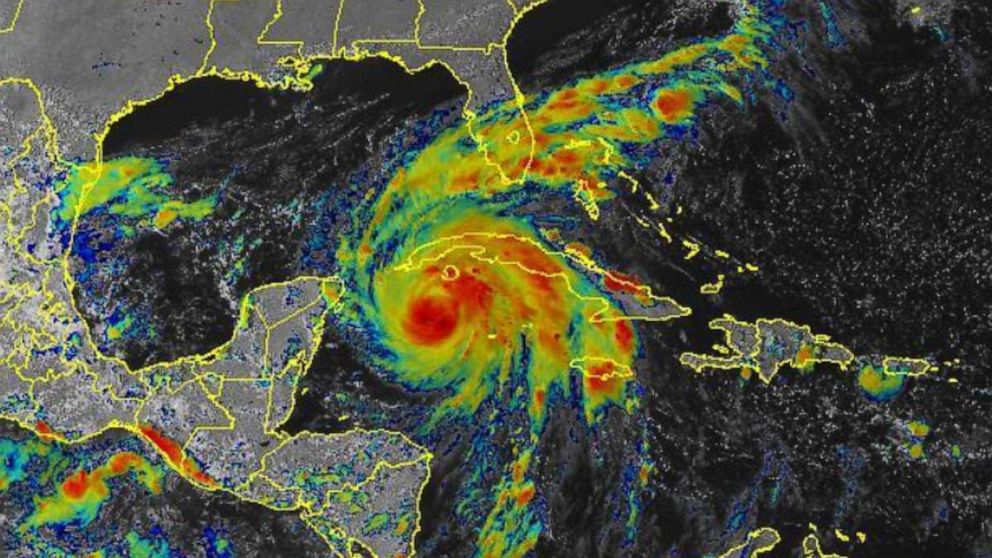
Your Playbook: Smart Prep, Not Panic Prep
Okay, so it sounds intense. It is. But here's the good news: we live in an age of information, and preparedness is your superpower. Here are some actionable, lifestyle-friendly tips:
- Know Your Zone: Are you in an evacuation zone? If authorities say go, you go. Think of it as a mandatory, albeit unplanned, road trip. Your life is worth more than your stuff.
- The Go-Bag: Assemble a "grab-and-go" kit. This isn't just for doomsday preppers; it's smart living. Include water (one gallon per person per day for at least three days), non-perishable food, a first-aid kit, medications, a battery-powered radio, flashlights, batteries, cash, and important documents. Think of it as your survival chic accessory.
- Communication Plan: How will you contact loved ones if cell towers are down? Designate an out-of-state contact person. Everyone checks in with them. Old school, but effective!
- Home Hardening: If you're staying put (and it's safe to do so), secure loose items outside. Trim trees. Consider hurricane shutters or plywood for windows. Think of it as giving your home a tough, protective hug.
- Insurance Check: Seriously, when was the last time you reviewed your home and flood insurance policies? Don't wait until the clouds gather. Make sure you're covered. Future you will thank present you.
Fun Fact & Cultural Tidbits
Ever wonder why hurricanes have names like "Hurricane Sally" or "Hurricane Ian"? The World Meteorological Organization maintains lists of names, alternating between male and female, used in alphabetical order each season. If a hurricane is particularly destructive (like Katrina or Andrew), its name is retired out of respect. It’s like a Hall of Fame for powerful weather events!
Also, coastal communities have an incredible spirit of resilience. After a storm, you often see neighbors helping neighbors, communities rebuilding stronger, and a deep sense of camaraderie. It's a testament to the human spirit in the face of nature's fury.
Bringing It Back Home
At the end of the day, a Category 4 hurricane is a force to be reckoned with. It demands respect and serious preparation. But it doesn't have to incite panic. By understanding the risks, taking proactive steps, and listening to emergency officials, you're not just preparing for a storm; you're investing in your own peace of mind and the safety of those you care about.
Life is full of unexpected twists and turns, whether it's a looming deadline at work or a hurricane on the horizon. The best we can do is stay informed, stay prepared, and remember that even in the face of powerful forces, our ability to plan and adapt is one of our greatest strengths. So, check your emergency kit, make that communication plan, and know that you're ready for whatever the weather (or life) throws your way.

