
How Are Nonrenewable And Renewable Resources Similar
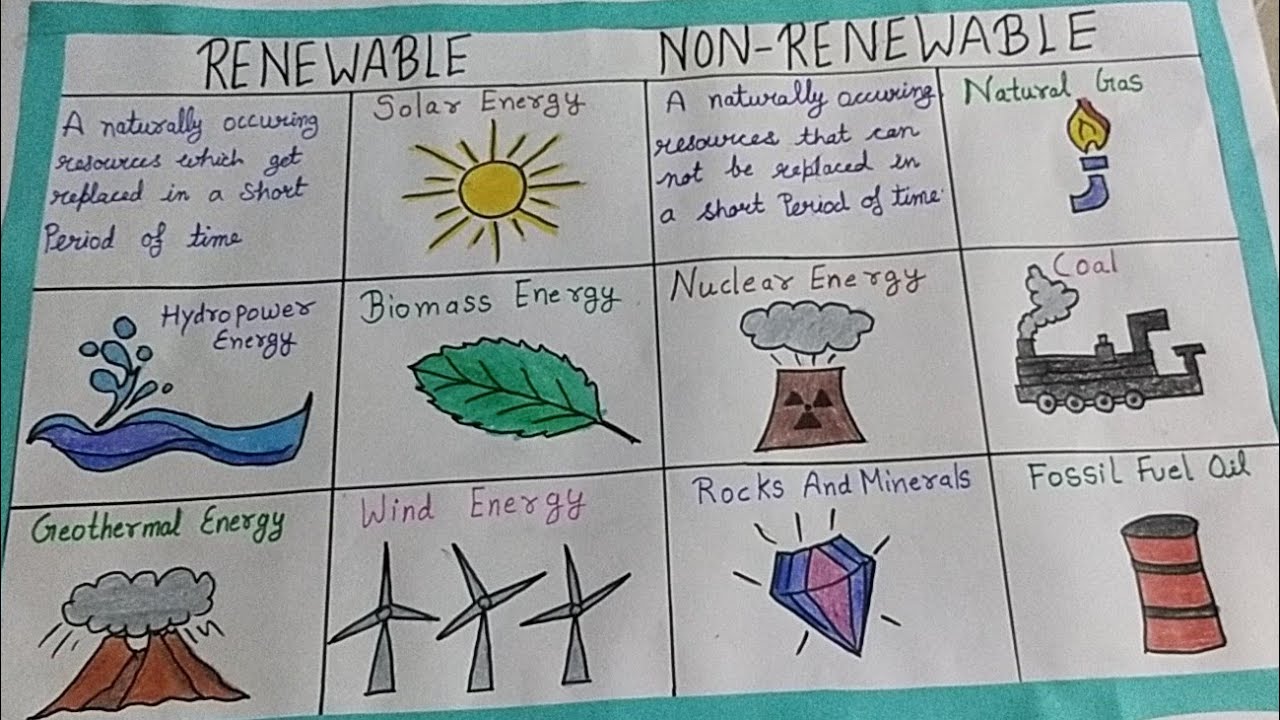
Hey there! Ever wonder what renewable and nonrenewable resources have in common? I mean, besides being, you know, resources? Grab your coffee (or tea, no judgment!), and let's dive in.
Okay, so on the surface, these two seem like polar opposites. We’re constantly being told renewable is good, nonrenewable is bad. But dig a little deeper, and you'll find some surprisingly common ground. Prepare to be amazed... or at least mildly entertained!
Shared Purpose: Meeting Our Needs
First things first: both renewable and nonrenewable resources exist to serve a purpose. Groundbreaking, right? Stick with me!
Must Read
Whether it's powering our homes, fueling our cars (vroom vroom!), or manufacturing the latest gadget (shiny!), both types of resources are used to fulfill our energy and material needs. Think about it: solar panels (renewable) and oil (nonrenewable) both provide energy, just in totally different ways.
It's like they're both trying to win the same race, but one's got a super speedy electric car, and the other… well, a gas guzzler. Both get you to the finish line, though, right?

Origin Story: Earthly Beginnings
This one's kinda cool. Both renewable and nonrenewable resources originate from our planet. Yep, Mother Earth provides! From the sun's rays beaming down (renewable) to fossil fuels buried deep underground (nonrenewable), they all come from this big blue marble we call home.
It's a bit like having two kids - both from the same family (Earth!), but with completely different personalities. One's the sunshiney, always-there type (renewable), and the other's a bit more… elusive (nonrenewable). You gotta dig for the second one!
Extraction and Processing: Getting to the Goods
Here’s another similarity: both resource types typically require some form of extraction and processing. We have to get them from their natural state to a usable form. Think mining for coal (nonrenewable) or building a wind farm (renewable). Both require energy and effort to harness.
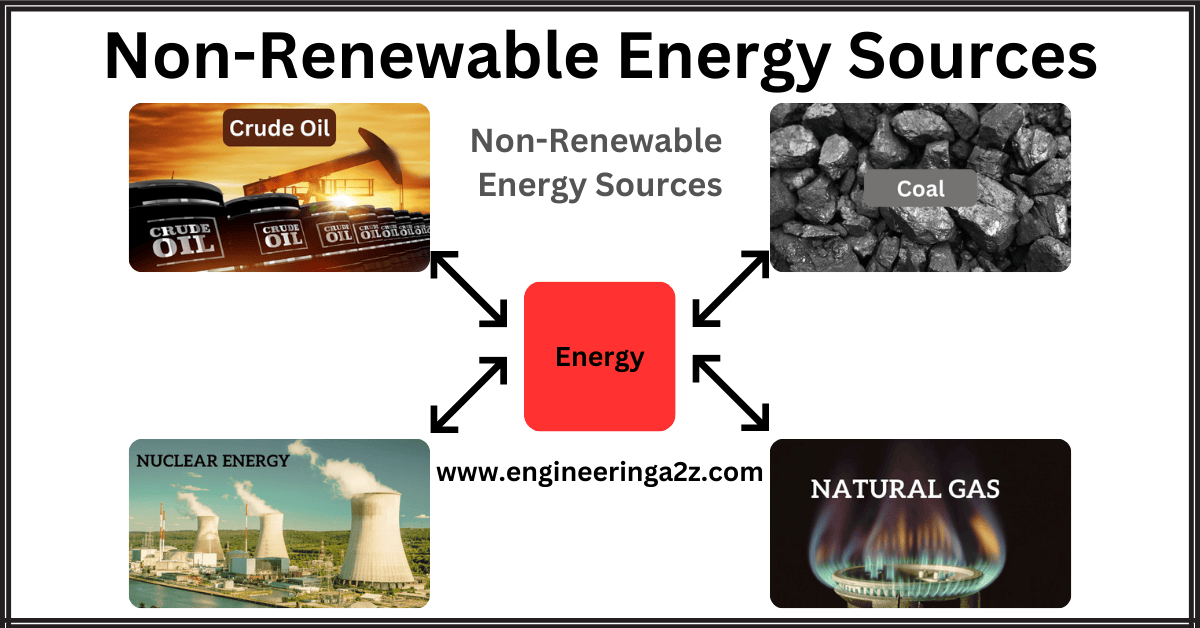
Sure, maybe catching a sunbeam feels easier than fracking for oil (and it is!), but even renewable energy requires some infrastructure and technological know-how. It’s not just magically appearing in your wall socket, is it?
Economic Impact: The Money Factor
Both renewable and nonrenewable resources play a significant role in the global economy. The fossil fuel industry is HUGE (we all know that!), but the renewable energy sector is also booming. Think about all those solar panel manufacturers, wind turbine technicians, and geothermal energy developers. Cha-ching!
They create jobs, stimulate innovation, and contribute to national economies. It's a whole ecosystem of businesses and industries built around accessing and utilizing these resources. So, even though they operate differently, they both contribute to the financial pie. Who doesn't love pie?

Environmental Considerations: The Common Concern
Okay, I know what you're thinking: "Wait a minute! Isn't the whole point that nonrenewable resources are terrible for the environment?" And yeah, you're not wrong. BUT, the environmental impact is still a shared consideration.
Even renewable energy sources aren't completely free of environmental consequences. Building wind farms can impact bird populations, and hydroelectric dams can alter river ecosystems. So, regardless of the resource type, we need to carefully consider the environmental impact and strive for sustainability.
Ultimately, responsible management is key, whether we're talking about conserving oil or carefully planning the placement of solar farms. We need to be smart about how we use all resources, because, let's face it, there’s no planet B!

Depletion: A Shared (But Different) Fate
Finally, both types of resources face the risk of depletion, albeit in drastically different ways. Nonrenewable resources, by their very definition, are finite. Once we use them up, they're gone (at least in our lifetimes!).
Renewable resources, while theoretically replenishable, can still be depleted if they're not managed sustainably. Overfishing can deplete fish stocks, deforestation can reduce the availability of timber, and so on. So, even the resources that are supposed to keep on giving can disappear if we don't treat them right.
So, there you have it! Renewable and nonrenewable resources aren't as different as you might think. They both serve our needs, originate from Earth, require extraction and processing, impact the economy, and demand responsible environmental consideration. The big difference, of course, is their renewability. But understanding their similarities helps us to make smarter, more informed choices about how we use them. Now, refill your coffee, you’ve earned it!