
Heatsink For A Dell Sas 6/ir Adapter Controller
Okay, picture this. You're running a marathon. You're feeling good, maybe even a little cocky. The sun is blazing, but you're a machine! You're going to crush this thing!
Then, mile 20 hits. Your feet are screaming. Your muscles are cramping. You feel like you're melting into the asphalt. This, my friends, is what happens to your Dell SAS 6/iR Adapter Controller without a proper heatsink.
The Little Chip That Could (But Shouldn't Have To)
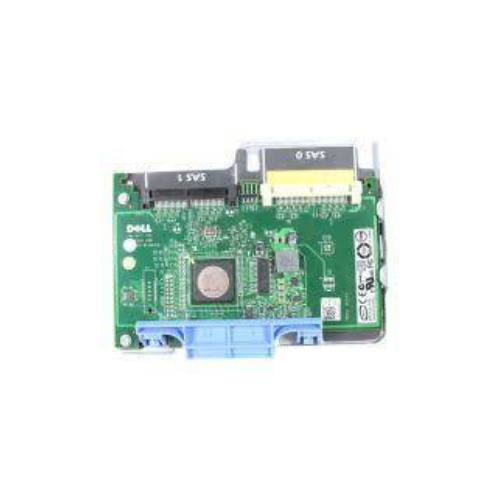
That tiny little chip on your SAS 6/iR card is a workhorse. It's managing all that lovely data flowing in and out of your system.
Must Read
It's like the conductor of a data orchestra, making sure everything stays in perfect harmony.
But conducting an orchestra of ones and zeros generates heat. A LOT of heat. Enough heat to bake cookies on, probably.
And nobody wants their server room smelling like burnt cookies (unless, of course, you do want that, in which case, carry on!).
Why Does My Server Care About Burnt Cookies (and Overheating)?
Think of your server as a very delicate flower. It needs the right temperature to thrive.
Too cold, and it sulks. Too hot, and it throws a tantrum (in the form of system crashes and data corruption!).
An overheated SAS 6/iR controller can lead to all sorts of nasty problems.
We're talking dropped drives, slow performance, and even complete system failures. Basically, your data is held hostage by a grumpy, overheated chip.
That's why a good heatsink is essential. It's like giving that little chip a refreshing ice bath after a hard workout.
The Amazing Adventures of Heatsink: Heat's Nemesis!
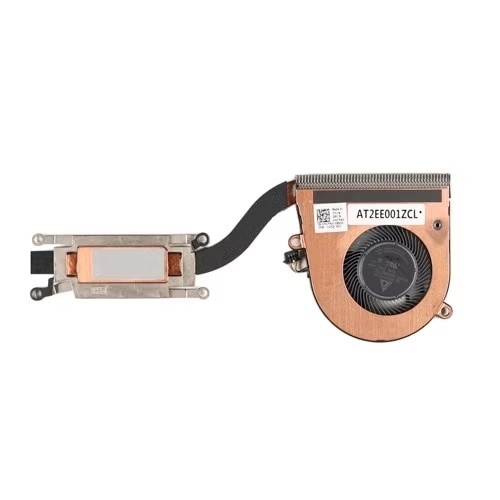
A heatsink is essentially a chunk of metal, usually aluminum or copper, designed to draw heat away from the chip it's attached to.

Think of it as a tiny metal superhero, constantly battling the villainous Heatwave that threatens your system's stability.
It does this by increasing the surface area available for heat dissipation.
More surface area means more opportunity for the heat to escape into the surrounding air. It's physics, baby!
It's like wearing a giant, ridiculously oversized hat on a sunny day. More hat equals less sun on your head. More heatsink equals less heat on your chip.
Choosing the Right Heatsink: Size Matters (But So Does Style!)
When choosing a heatsink for your Dell SAS 6/iR, there are a few things to consider.
First, make sure it's compatible. Not all heatsinks are created equal, and you need one that's designed to fit your specific card.
Second, consider the size. A larger heatsink will generally provide better cooling, but you also need to make sure it fits within your server's case without blocking anything important.
Think of it like buying shoes. You wouldn't buy a size 15 if you wear a size 9, and you wouldn't buy a heatsink that's so big it prevents you from closing your server case!
And third, consider the design. Some heatsinks have fins, while others have heat pipes. Some are passive, while others have fans.
A passive heatsink relies on natural convection to dissipate heat, while an active heatsink uses a fan to force air over the fins. Active heatsinks are generally more effective, but they can also be louder.
So, it's a balancing act between performance and noise. Do you want your server to run cool and quiet, or cool and slightly more… enthusiastic?
Installation: A Piece of Cake (Probably)
Installing a heatsink is usually a pretty straightforward process. But, just to be safe, always unplug your server before you start poking around inside.
You don't want to accidentally electrocute yourself and end up looking like you stuck your finger in a light socket (trust me, it's not a good look!).
First, remove the old heatsink (if there is one). Be gentle! You don't want to damage the SAS 6/iR controller.
Clean the surface of the chip with a lint-free cloth and some isopropyl alcohol. This will remove any old thermal paste and ensure good contact between the chip and the new heatsink.
Apply a small amount of thermal paste to the center of the chip. Don't overdo it! A pea-sized amount is usually sufficient.
Too much thermal paste can actually insulate the chip and make things worse.
Carefully attach the new heatsink to the chip. Make sure it's securely fastened and that it's making good contact with the chip's surface.

Some heatsinks use screws, while others use clips. Follow the instructions that came with your heatsink.
Once the heatsink is installed, double-check everything to make sure it's secure. Then, plug your server back in and power it on.
Congratulations! You've just given your Dell SAS 6/iR controller a new lease on life.
Testing, Testing, 1, 2, 3… Is This Thing Cool?
After installing your new heatsink, it's a good idea to monitor the temperature of your SAS 6/iR controller to make sure it's running cooler.
There are several software tools you can use to monitor your server's temperature.
If the temperature is still too high, you may need to consider a larger heatsink or an active heatsink with a fan.
It's like going to the doctor after taking some medicine. You want to make sure the medicine is working and that you're feeling better.
Heatsinks: Not Just for Chips Anymore! (Okay, Mostly for Chips)
While heatsinks are primarily used for cooling computer chips, they can also be used in other applications where heat dissipation is important.
For example, you might find heatsinks in power amplifiers, LED lighting, and even some types of batteries.

The basic principle is the same: to draw heat away from a heat-generating component and dissipate it into the surrounding environment.
So, the next time you see a heatsink, remember that it's not just a chunk of metal. It's a tiny metal superhero, fighting the good fight against the forces of heat!
A Cool Controller is a Happy Controller (and a Happy Server!)
Investing in a good heatsink for your Dell SAS 6/iR adapter controller is a simple and effective way to improve the reliability and performance of your server.
It's like buying insurance for your data. It might not be the most exciting thing in the world, but it can save you a lot of headaches down the road.
So, go forth and conquer the heat! Your server (and your data) will thank you for it.
And remember, a cool controller is a happy controller, and a happy controller means a happy server, and a happy server means a happy you!
Now, if you'll excuse me, I'm going to go put on a giant, ridiculously oversized hat. Just in case.
Happy computing!