Heat Pump Vs Ac Monthly Cost

Ever wonder why your energy bill seems to have a mind of its own, leaping skyward in the dead of winter or the dog days of summer? We all do! It's a common household mystery, especially when you're simply trying to keep your living space cozy without emptying your wallet. Today, let's pull back the curtain on two main characters in this energy drama: your good old Air Conditioner (AC) and the increasingly popular Heat Pump. It might sound like technical jargon, but understanding their basic differences, especially regarding your monthly cost, can be surprisingly fun and empowering.
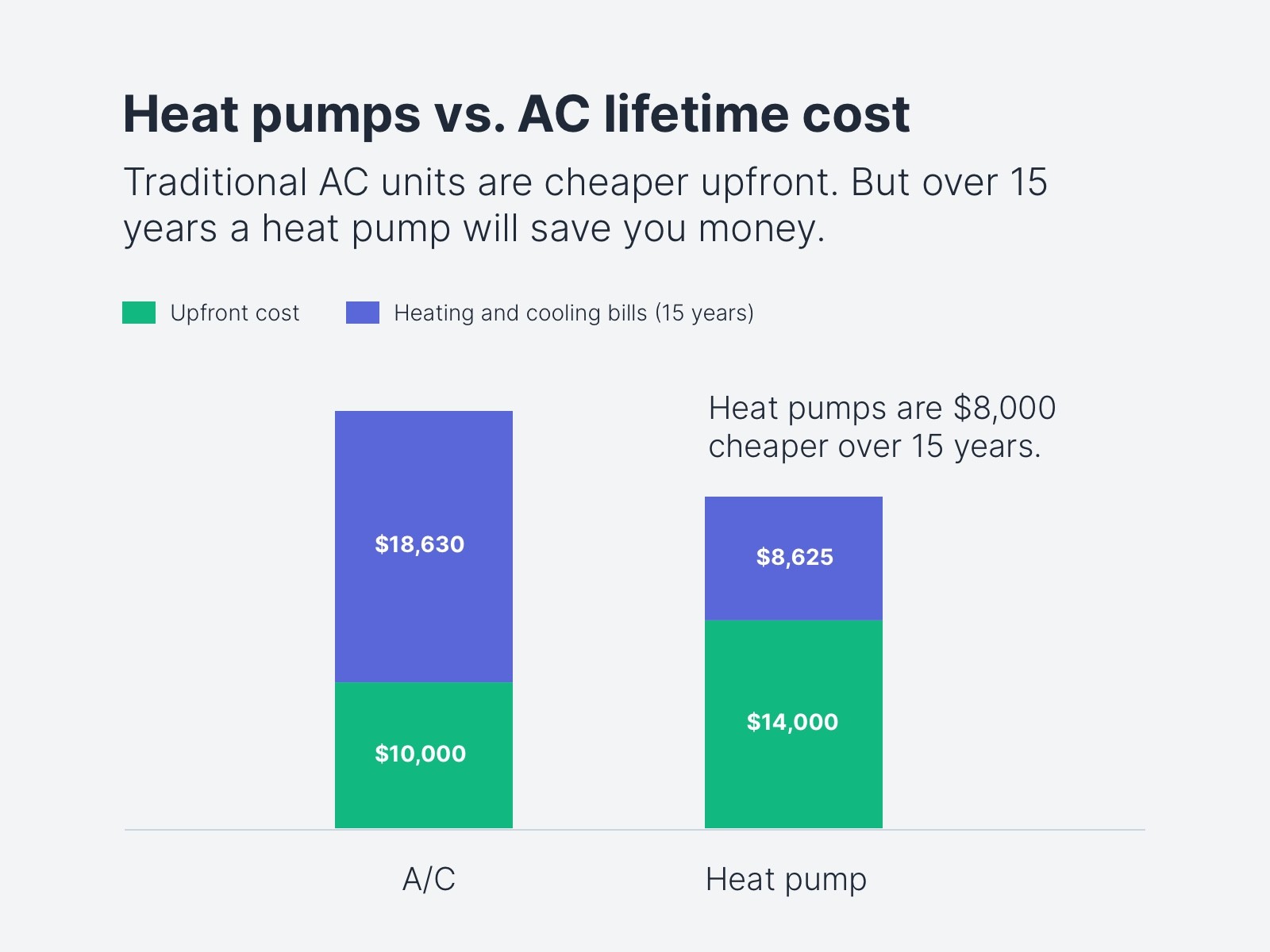
At its core, an AC's purpose is pretty straightforward: it makes your indoor space cooler by kicking heat out. Great for those scorching summer days! But what about when the temperatures drop? That's where the heat pump steps in as a versatile superhero. Unlike an AC, a heat pump doesn't just cool; it can also heat your home by moving heat from one place to another. In summer, it extracts heat from inside and releases it outside, just like an AC. In winter, it reverses the process, drawing warmth from the outside air (yes, even cold air has heat!) and bringing it inside. The main benefit? Its remarkable energy efficiency. Because it's moving heat rather than burning fuel to create it, heat pumps can often provide both heating and cooling at a significantly lower monthly operating cost compared to separate furnaces and AC units, especially in milder climates. This efficiency not only saves you money but also lessens your environmental footprint, which is a win-win.
You see heat pumps at play all around, perhaps without even realizing it. In daily life, they're becoming the go-to for many new homes or renovations, offering year-round comfort from a single system. Imagine one unit handling all your temperature needs! Even in commercial buildings, heat pumps are gaining traction for their dual functionality and energy savings. From an educational standpoint, understanding heat pumps is a fantastic way to grasp basic physics principles like thermodynamics and heat transfer. It highlights how innovative engineering can harness natural processes for practical, sustainable solutions, making it a great topic for science classes exploring renewable energy or energy conservation.
Must Read
Curious to explore this more yourself? It's easier than you think! A simple first step is to check your utility bills – do you see big spikes during heating or cooling seasons? This can tell you a lot about your current system's efficiency. Next, do a quick online search for 'heat pump rebates' in your area. Many utility companies and governments offer incentives to switch to these energy-efficient systems, significantly reducing the upfront cost. Don't be shy about chatting with local HVAC professionals; they can assess your home's specific needs and provide tailored cost comparisons. You can also play around with online calculators that estimate potential savings based on your current heating fuel and electricity rates. Remember, while the initial installation cost for a heat pump might be higher than a traditional AC, the potential for long-term monthly savings, especially when heating, is where they truly shine. It's about looking at the bigger picture for comfort and your wallet!