Gas Prices Per Therm In Georgia
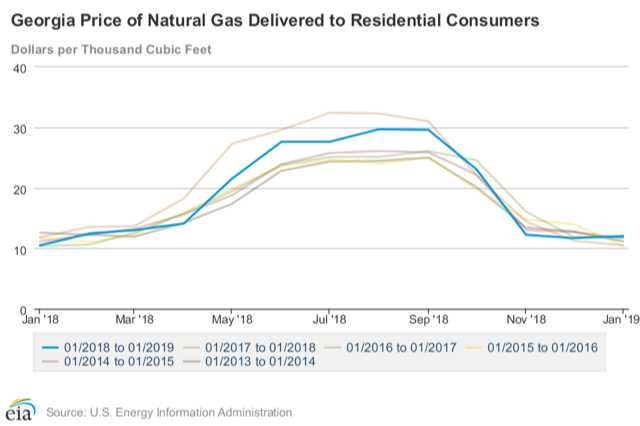
Ever gazed at your natural gas bill and felt a tiny flicker of confusion? You're not alone! Many of us just pay the amount due without really diving into the details. But what if I told you that understanding "gas prices per therm in Georgia" isn't just about utility bills, it's about empowerment, smart savings, and even a little bit of fun? Think of it as gaining a secret superpower for your household budget!
This topic is incredibly useful because natural gas is a staple in most Georgia homes, powering everything from your cozy heating system to that delicious dinner simmering on the stove, and even your hot showers. Knowing how its price is calculated means you can make informed decisions that can genuinely lighten your financial load. It's popular because, let's face it, who doesn't love to save a buck, especially when it comes to essential services?
So, what exactly is a therm? Simply put, a therm is a unit of measurement for the amount of heat energy produced by natural gas. Instead of measuring gas by volume (like gallons of gasoline), we often measure it by the energy it provides. One therm is roughly equivalent to 100,000 BTUs (British Thermal Units). When your bill shows a price "per therm," it's telling you how much you're paying for a specific amount of energy. Understanding this is the first step to becoming a true energy guru!
Must Read
The purpose of digging into these prices is twofold: first, to demystify your natural gas bill, transforming it from a cryptic document into a transparent breakdown of costs. Second, and perhaps more importantly, it's to unlock the benefits of Georgia's unique deregulated natural gas market. Unlike some states, Georgia allows you to choose your natural gas provider. This means competition, and competition means options for you!
The benefits are tangible: by comparing prices per therm from different providers, you can potentially secure a lower monthly bill. You can opt for fixed-rate plans, giving you predictable payments, or variable rates that might offer savings during certain seasons. This knowledge helps you budget more effectively, reduce energy waste by understanding the cost implications of high usage, and ultimately, gain greater control over your household expenses. It’s about being proactive rather than reactive with your money. So, next time you get that bill, remember: you're not just paying for gas, you're investing in your comfort and your wallet, and now you have the tools to make those investments smarter.