
Flux Core Welding Wire Sizes
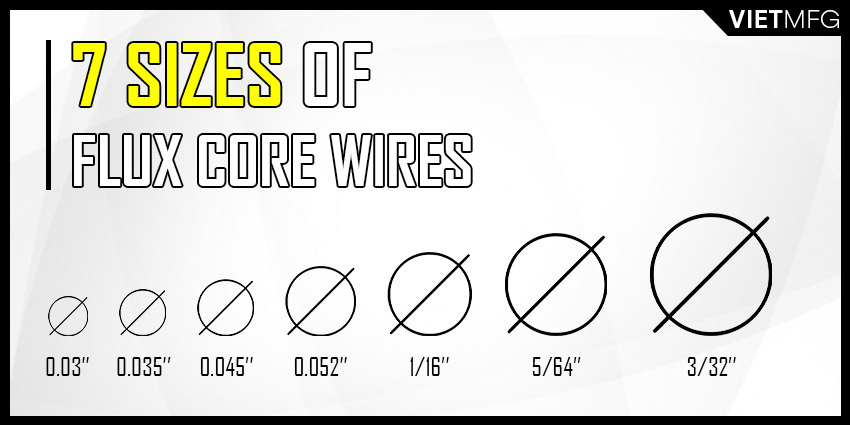
Hey there, my fellow sparks-and-steel aficionado! Ever found yourself staring blankly at a wall of welding wire, feeling like you’re trying to pick a winning lottery ticket? "0.030? 0.035? 0.045? What even are these numbers?!" Don't sweat it! Today, we're going to dive into the wonderfully straightforward world of flux core welding wire sizes. Think of me as your friendly, slightly-greasy guide, ready to demystify it all.
Flux core welding is already pretty cool because it doesn't need gas (hello, outdoor projects in a breezy garage!). But choosing the right wire size for your project can make all the difference between a beautiful, strong bead and... well, a bit of a bird's nest. And trust me, nobody wants a bird's nest unless it comes with actual baby birds!
Why Does Wire Size Even Matter? (Spoiler: It Does!)
You might be thinking, "A wire's a wire, right?" Wrong! (Said with playful emphasis, of course.) Imagine trying to cut a steak with a butter knife, or spreading butter with a chainsaw. You'd get the job done eventually, but it wouldn't be pretty, efficient, or particularly safe. Welding wire works on a similar principle.
Must Read
The size of your wire dictates a few things: how much amperage it can handle, how much heat it generates, and how deep it can penetrate your metal. In short, it affects the strength and appearance of your weld. Choose wisely, and your project will thank you!
The Usual Suspects: Common Flux Core Wire Sizes
While there are a few less common sizes out there, you'll mostly be bumping into these three. They’re like the power trio of a rock band – each with their own specialty, but all crucial to the show!
0.030" (The Finesse King)
Ah, the 0.030" wire. This is your go-to for delicate operations. Think thin sheet metal, car bodywork, or anything where you're trying to avoid blowing a hole bigger than your thumb through the material. It runs at lower amperages, produces less heat, and gives you more control. It's like using a fine-tipped pen for intricate drawing.
If you're working on something thinner than your patience on a Monday morning, this is probably your best friend. It’s excellent for those smaller, less demanding projects where precision is key. Just don't expect it to weld together a battleship!
0.035" (The All-Rounder Hero)
And now, for the champion, the crowd favorite, the Goldilocks of welding wire: 0.035"! If you're only going to buy one spool of flux core wire for general use, make it this one. It’s incredibly versatile, handling everything from thin-ish material up to a decent thickness without too much fuss. It strikes a fantastic balance between penetration and heat input.
Most home welders and DIY enthusiasts find themselves reaching for the 0.035" because it's so forgiving and capable. It’s like the perfectly seasoned chef who can whip up a gourmet meal or a quick, delicious snack. For general repairs, fence mending, or building that awesome workbench, this is your guy!
0.045" (The Heavy Hitter)
When you mean business, and by "business" I mean serious, thick, structural-level metal, you reach for the 0.045" wire. This bad boy is designed to deliver deep penetration and lay down a lot of material quickly. It runs at higher amperages and brings the heat, literally!
Working on thick steel beams, heavy equipment repairs, or anything that needs to withstand serious stress? The 0.045" is your fearless warrior. It's not for the faint of heart (or thin metal), but when the job calls for brute strength and deep fusion, accept no substitutes. This is your industrial-grade, heavy-duty option for when you're going full superhero on some serious steel!
Choosing Your Champion: How to Pick the Right Wire Size
So, how do you decide which superhero to deploy? It boils down to a few key factors:
-
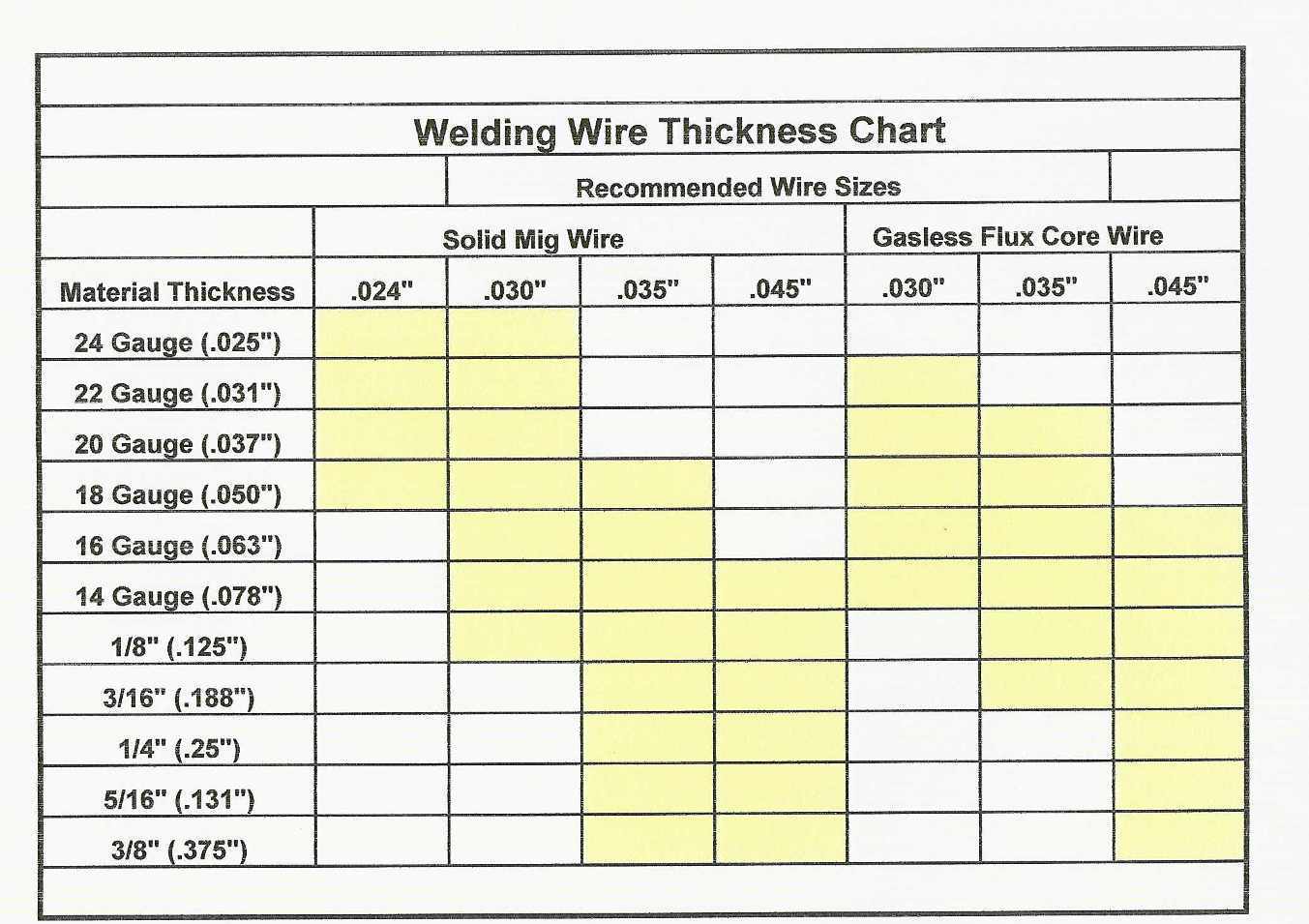
Metal Thickness: This is the number one rule. Match your wire to your metal, like matching your socks – usually a good idea! Thinner metal, smaller wire (0.030"). Thicker metal, larger wire (0.045"). Medium stuff, you guessed it, 0.035".
-
Welder Capacity: Check your machine's manual! Every welder has limits on what wire sizes it can effectively run. Don't try to run a monster truck tire on a bicycle – it just won't work efficiently, or safely.
-
Welding Position: Sometimes, thinner wires are easier to control for out-of-position welds (overhead, vertical-up), as they create a smaller puddle that's less likely to sag. But don't let that stop you from trying bigger wires if the job demands it!
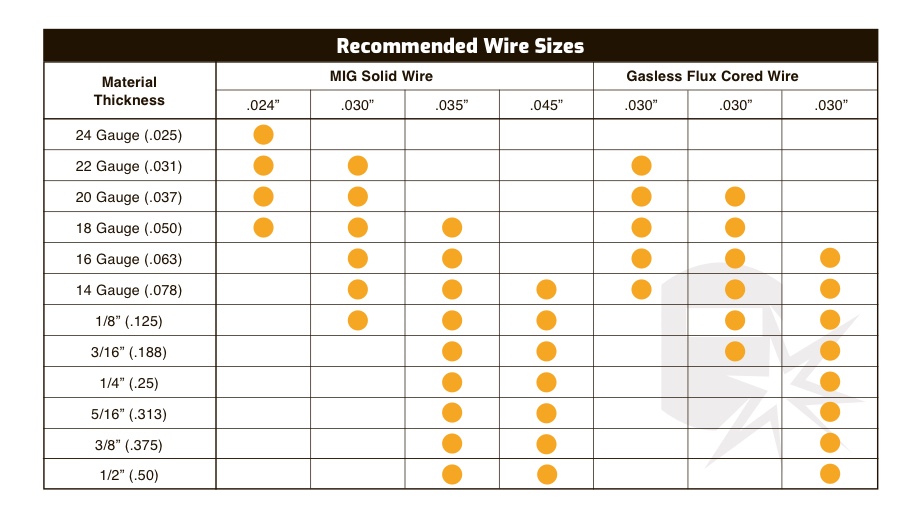
MIG & Flux Core Welding Wire Types & Specification (with Chart) - Weld Guru
Quick Tips from Your Welding Buddy
Always remember to adjust your voltage and wire speed settings based on the wire size you're using and the metal you're welding. A little experimentation on scrap metal is always a good idea before you hit your actual project. It's like a dress rehearsal for your welding masterpiece!
Don't be afraid to try different sizes within your welder's capabilities. Each project is a new adventure, and finding that "sweet spot" of settings and wire can be incredibly satisfying.
There you have it! The not-so-secret secret to understanding flux core welding wire sizes. It's less about memorizing complex charts and more about understanding the basic principle: match your tools to the task. Just like you wouldn't use a sledgehammer to hang a picture, you wouldn't use a 0.045" wire for delicate sheet metal.
So go forth, my magnificent metal magician! Grab that spool with confidence, dial in those settings, and create something awesome. With a little practice, you'll be laying down beautiful beads like a pro. Keep those sparks flying, and remember to always weld safely and with a smile!