
Finding The Equation Of Parabola

Hey friend! Ever stared at a parabola and thought, "Wow, that's a really neat curve... but how do I actually describe it?" Yeah, me too. Turns out, finding the equation of a parabola isn't as scary as it looks. Think of it like giving directions to your favorite pizza place – you just need the right landmarks and a little practice.
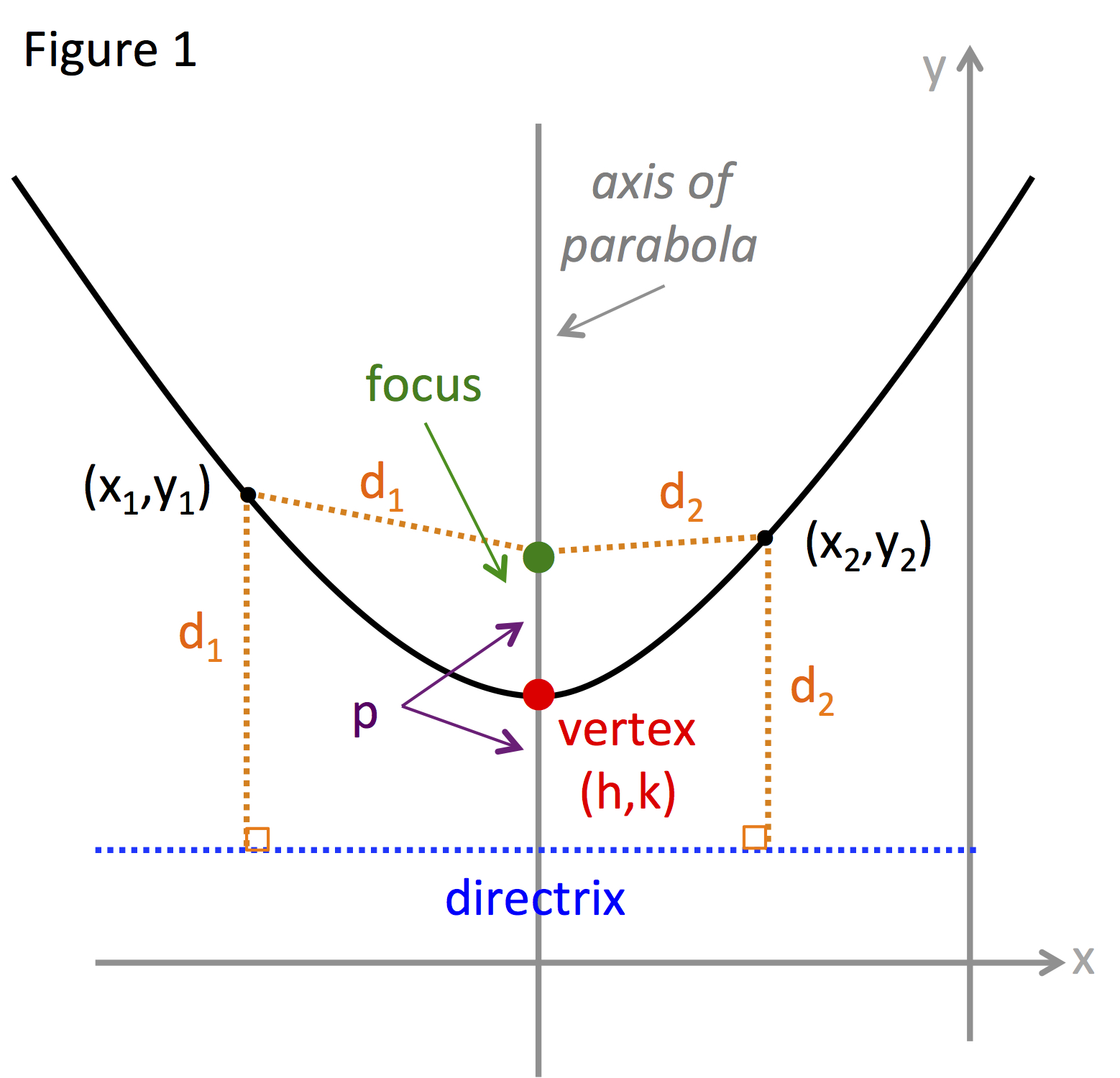
So, let's dive in! What's a parabola, anyway? Well, it's that U-shaped curve you see when you throw a ball (ignoring air resistance, because who has time for that?). Or, you know, the shape of a satellite dish trying to catch all those sweet, sweet signals. In mathematical terms, it's a curve where any point on the curve is the same distance from a fixed point (the focus) and a fixed line (the directrix). Sounds intimidating? Don't worry, we’ll break it down.
The Vertex Form: Your Parabola's Best Friend
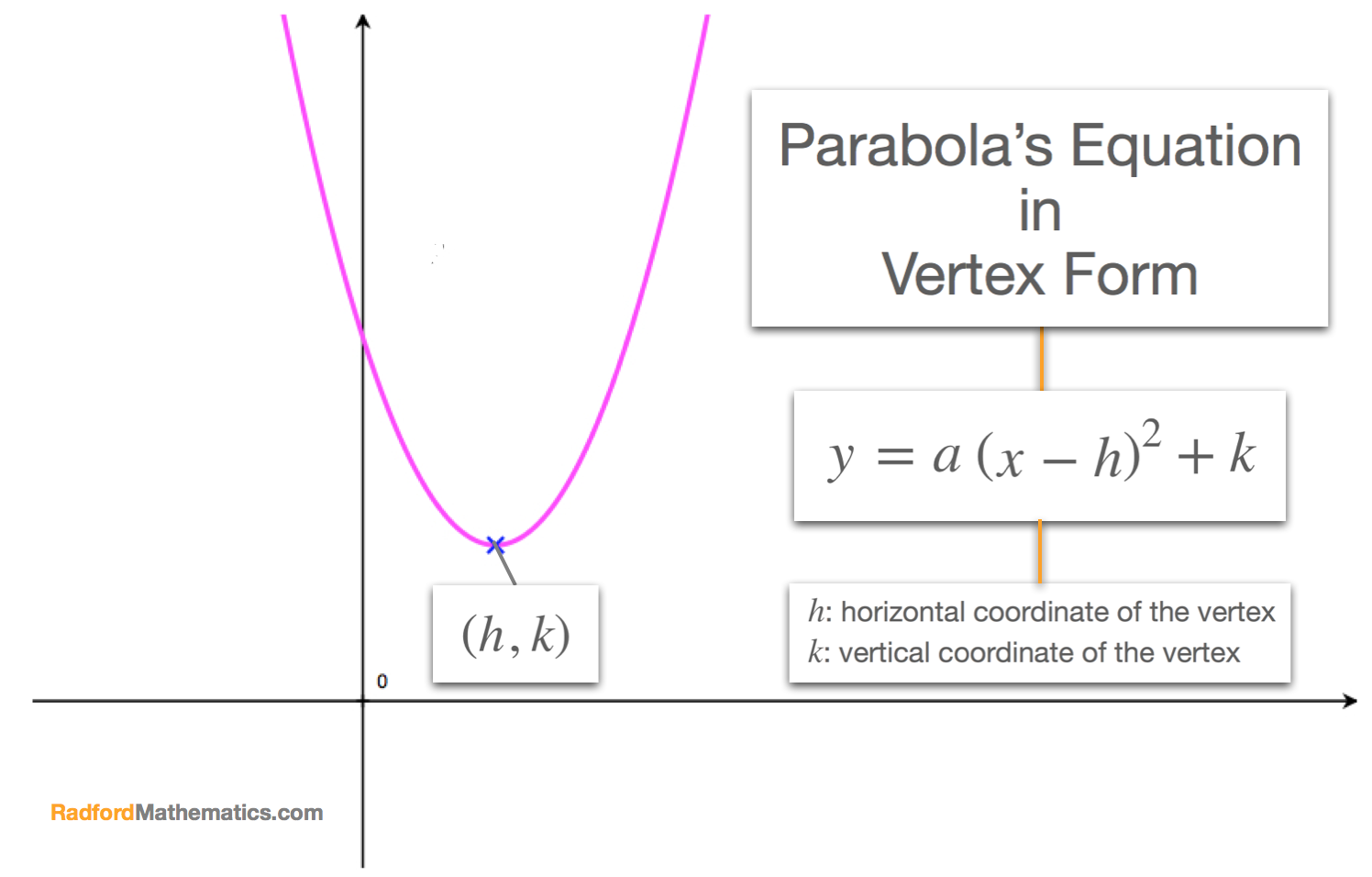
The easiest way to tackle the equation of a parabola is often through the vertex form. It's like the friendly, approachable cousin of all the other forms. The equation looks like this:
Must Read
y = a(x - h)² + k
Okay, okay, symbols! But trust me, they're not as scary as they seem. Here's the breakdown:
- (h, k) is the vertex of the parabola. The vertex is that pointy bit at the very bottom (or top, if it's upside down) of the U. Think of it as the parabola's home base.
- a tells you two things: whether the parabola opens upwards (if 'a' is positive) or downwards (if 'a' is negative). It also tells you how "wide" or "narrow" the parabola is. A large 'a' means a narrow parabola; a small 'a' means a wider one. Basically, 'a' is the parabola's personality!
So, how do you use this magical formula? Let’s say you know the vertex of your parabola is at (2, 3), and you know another point on the parabola is (4, 5). Easy peasy!
- Plug in the vertex (h, k): y = a(x - 2)² + 3
- Plug in the other point (x, y): 5 = a(4 - 2)² + 3
- Solve for 'a': 5 = a(2)² + 3 => 5 = 4a + 3 => 2 = 4a => a = 1/2
- Now, put it all together! y = (1/2)(x - 2)² + 3
Voila! You've found the equation of your parabola. Pat yourself on the back; you deserve a cookie!
The Standard Form: A Different Perspective
Another way to represent a parabola is in standard form:
y = ax² + bx + c
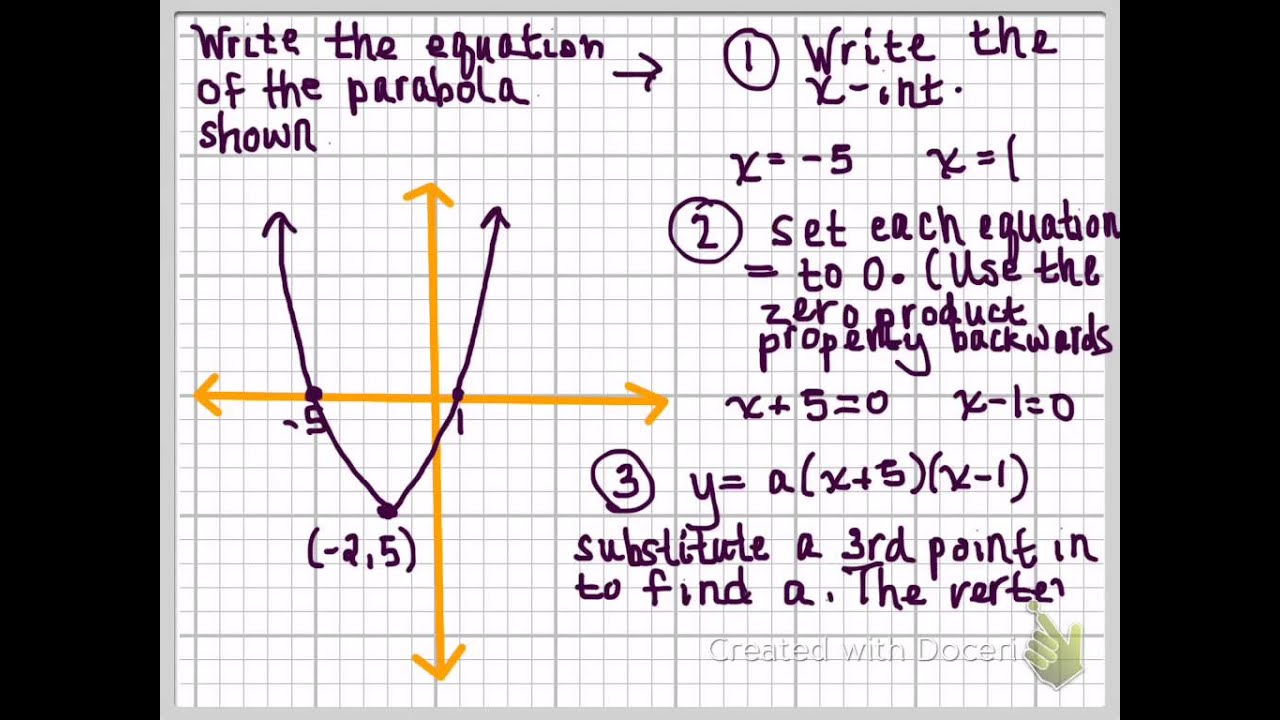
This form is useful because the 'c' value directly tells you the y-intercept (the point where the parabola crosses the y-axis). However, finding the vertex from this form requires a little more work. The x-coordinate of the vertex (h) is given by: h = -b / 2a. Once you have 'h', you can plug it back into the equation to find 'k' (the y-coordinate of the vertex).
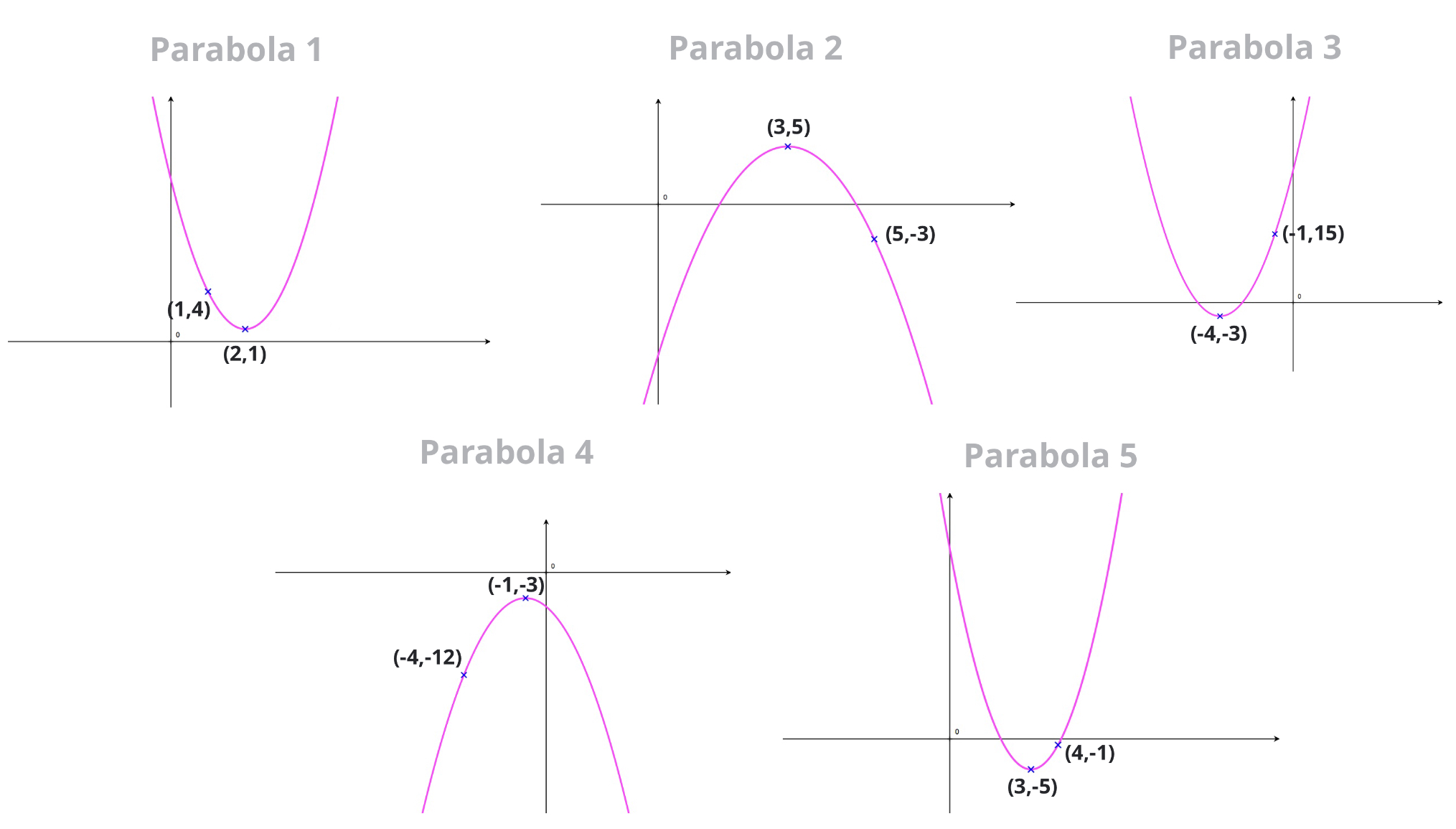
Let's say you have the equation y = x² + 4x + 5. Then:
- a = 1, b = 4, c = 5
- h = -4 / (2 * 1) = -2
- k = (-2)² + 4(-2) + 5 = 4 - 8 + 5 = 1
So the vertex is (-2, 1). You can also convert standard form to vertex form (and vice-versa) using a bit of algebraic manipulation (completing the square – but let’s not go there right now!).
Focus and Directrix: The Parabola's DNA
Remember how we said a parabola is defined by its focus and directrix? Well, there's an equation that directly relates these elements. For a parabola that opens upwards or downwards with vertex (h, k), the equation is:
4p(y - k) = (x - h)²
Where 'p' is the distance from the vertex to the focus and the distance from the vertex to the directrix. If you know the coordinates of the focus and the equation of the directrix, you can find 'p' and the vertex, and then plug everything into this equation.
Finding the equation of a parabola might seem daunting at first, but with a little practice and the right tools (vertex form, standard form, and the focus/directrix relationship), you'll be a parabola pro in no time! Don’t worry if you don’t get it right away. Keep practicing, and remember that even mathematicians make mistakes! It's all part of the learning process.
Now go forth and conquer those curves! You've got this! And remember, even if you never need to find the equation of a parabola again, you learned something new today. Isn't that awesome?