Fans Clockwise Or Counterclockwise In Summer

Summer. The season of sunshine, sundresses, and…sticky situations. Let's be honest, sometimes that sunshine feels a little too intense, and that sundress? Well, it’s sticking to you in all the wrong places. Luckily, there’s a simple, often overlooked weapon in our fight against summer swelter: the ceiling fan.
But are you using it right? That’s the million-dollar question. We're diving into the age-old debate: clockwise or counterclockwise for summer comfort?
The Counterclockwise Conquest: Your Summer Savior
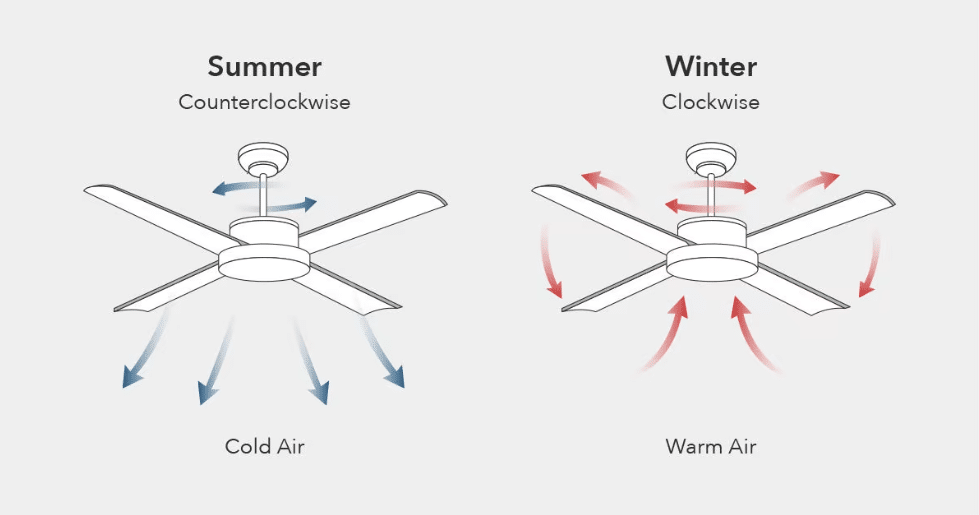
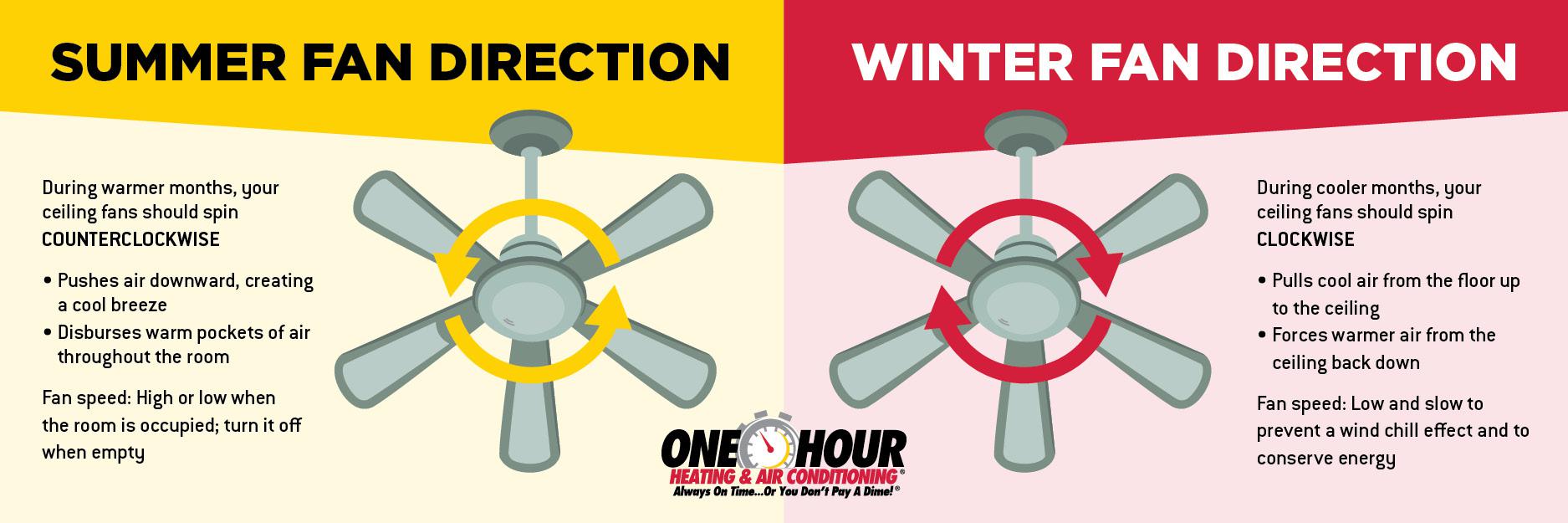
Here's the deal: in the summer, your ceiling fan should be spinning counterclockwise. Why? Think of it as creating your own personal breeze machine. When the fan spins counterclockwise, it pushes air downwards. This creates a downdraft that you feel as a cooling breeze on your skin. It's like standing on a mountaintop, but without all the hiking.
Must Read
This “wind chill effect” is what makes all the difference. It evaporates moisture from your skin, leaving you feeling cooler and more comfortable. It's basic physics meets everyday life. And it's glorious.
Pro Tip: Stand directly under your fan and feel the air movement. If you don't feel a noticeable breeze, it's probably time to switch directions.
Fine-Tuning Your Fan Game: Beyond the Spin
Okay, so you know the direction. But there’s more to maximizing your fan’s cooling power. Here are a few extra tips to elevate your summer comfort:
- Speed Matters: Experiment with different speeds. Sometimes, a lower speed is all you need for a gentle breeze. Crank it up on those extra sweltering days.
- Teamwork Makes the Dream Work: Combine your ceiling fan with your air conditioner. The fan helps circulate the cool air, allowing you to set your thermostat a few degrees higher. This can save you money on your energy bill! Think of it as a beautiful, cost-effective synergy.
- Don't Forget the Height: For optimal performance, your fan blades should be about 7-9 feet above the floor. This ensures adequate airflow without being too close for comfort.
A Cultural Breeze: Fans Through Time
Ceiling fans aren't just modern marvels; they have a rich history. From the elaborate punkahs in ancient India, hand-operated fans used to cool royalty, to the electric fans we know and love today, the quest for comfortable air has always been a human endeavor. Think of yourself as continuing a long and storied tradition every time you flip that switch!
![Ceiling Fan Directions for Summer vs Winter [Infographic]](https://airflowacademy.com/wp-content/uploads/2021/06/Ceiling-fan-direction-768x384.jpg)
And let’s not forget their iconic status in films. From the sultry atmosphere of a Southern Gothic drama to the quirky charm of a Wes Anderson film, ceiling fans often add a subtle layer of character and ambiance. They’re practically cinematic set dressing 101.
Fun Fact: Did you know that the first electric ceiling fan was invented in 1882 by Philip Diehl? It was actually based on an electric sewing machine motor! Talk about innovation!
![Ceiling Fan Directions for Summer vs Winter [Infographic]](https://airflowacademy.com/wp-content/uploads/2021/06/Ceiling-fan-directions-infographic-828x1536.jpg)
Beyond the Seasons: A Year-Round Companion
While we're focused on summer cooling, don't forget that your ceiling fan is a year-round asset. When winter rolls around, switch the direction to clockwise. This will gently pull cool air up and push warm air down, helping to distribute heat more evenly. It’s like a cozy hug for your entire room.
Quick Tip: Most ceiling fans have a small switch on the motor housing to change the direction. Consult your fan’s manual if you're unsure how to do it.
Let’s face it; finding comfort is more than just about a fan’s rotation. It's about creating an environment where you can relax, recharge, and truly enjoy your space. Whether it’s the gentle hum of a counterclockwise spin on a hot summer day or the subtle warmth distributed during the winter months, your ceiling fan is a quiet, consistent contributor to your daily well-being.