
Fan Turns Which Way In Summer
Ah, summer! The sun is shining, the days are long, and we’re all looking for those sweet spots of coolness. Whether it’s a frosty drink, a dip in the pool, or just the gentle hum of a fan, we embrace anything that chases away the heat. But have you ever paused, looked up at your ceiling fan, and wondered, "Which way should this thing actually be turning to help me chill out?"
It sounds like a simple question, right? But trust me, it’s a little secret weapon in the battle against sticky summer days, and understanding it is surprisingly cool. It’s not just about pushing air around; there’s some neat physics at play, and once you get it, you’ll feel like a comfort-controlling genius!
The Great Ceiling Fan Mystery
Let's be honest, we often just switch on the fan and hope for the best. We feel some air moving, and that’s good enough, right? But what if I told you there’s an optimal direction that can make a world of difference to your comfort and even your energy bill? It’s true! And it all comes down to how air behaves.
Must Read
Imagine standing under your ceiling fan right now. Is it blowing air directly down on you, creating a noticeable breeze? Or is it sort of… gently circulating the air upwards, almost imperceptibly? This isn't just a random whim of the fan; it's a deliberate design feature, and knowing which way it should spin for which season is key.
Summer Breeze: Pushing Downwards, Feeling Fine
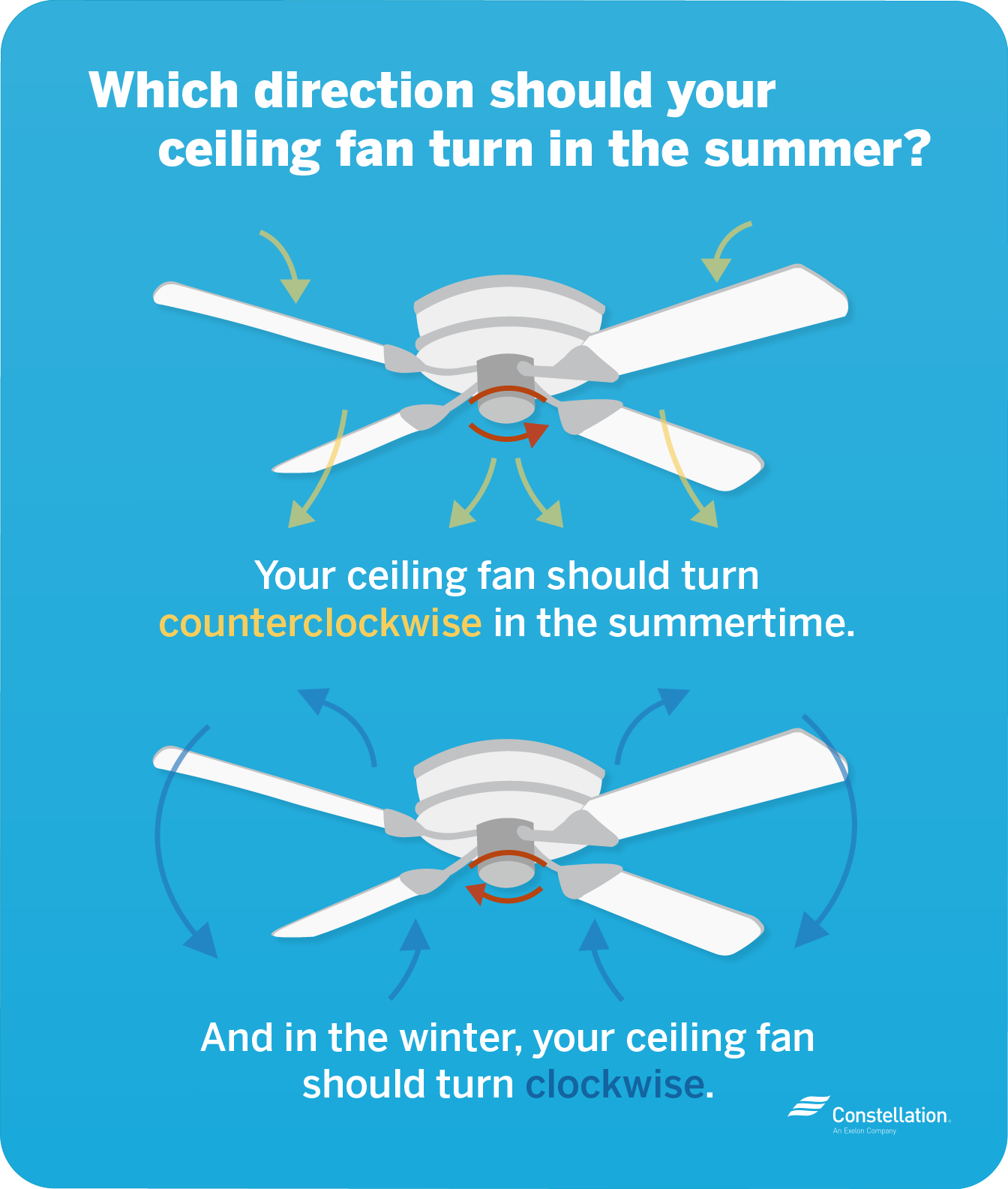
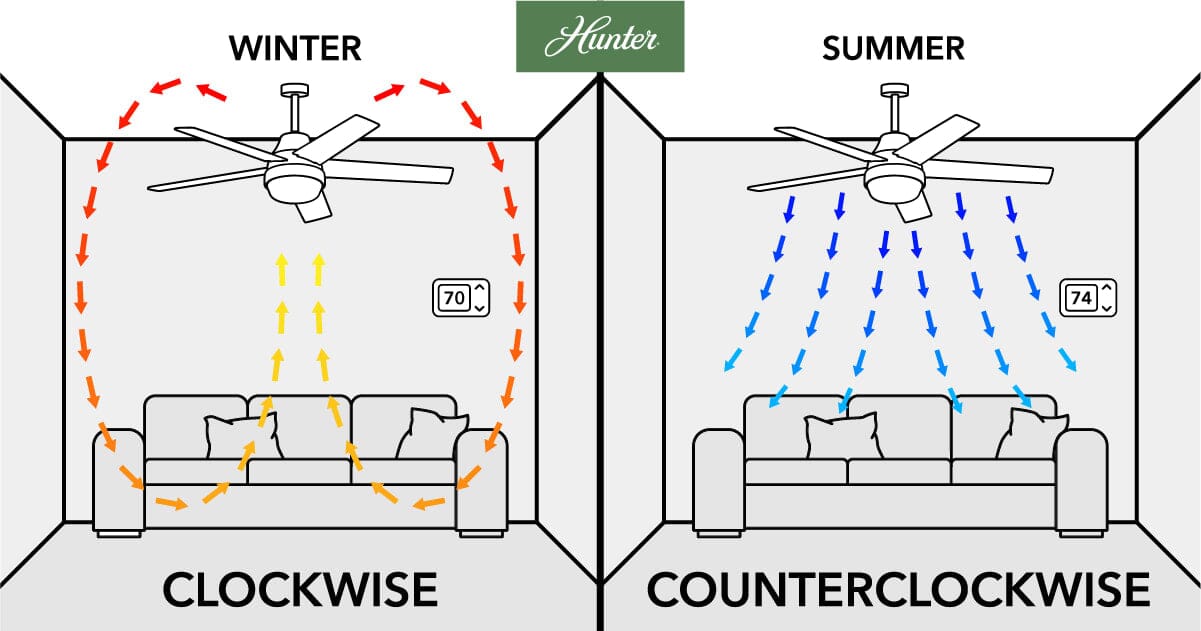
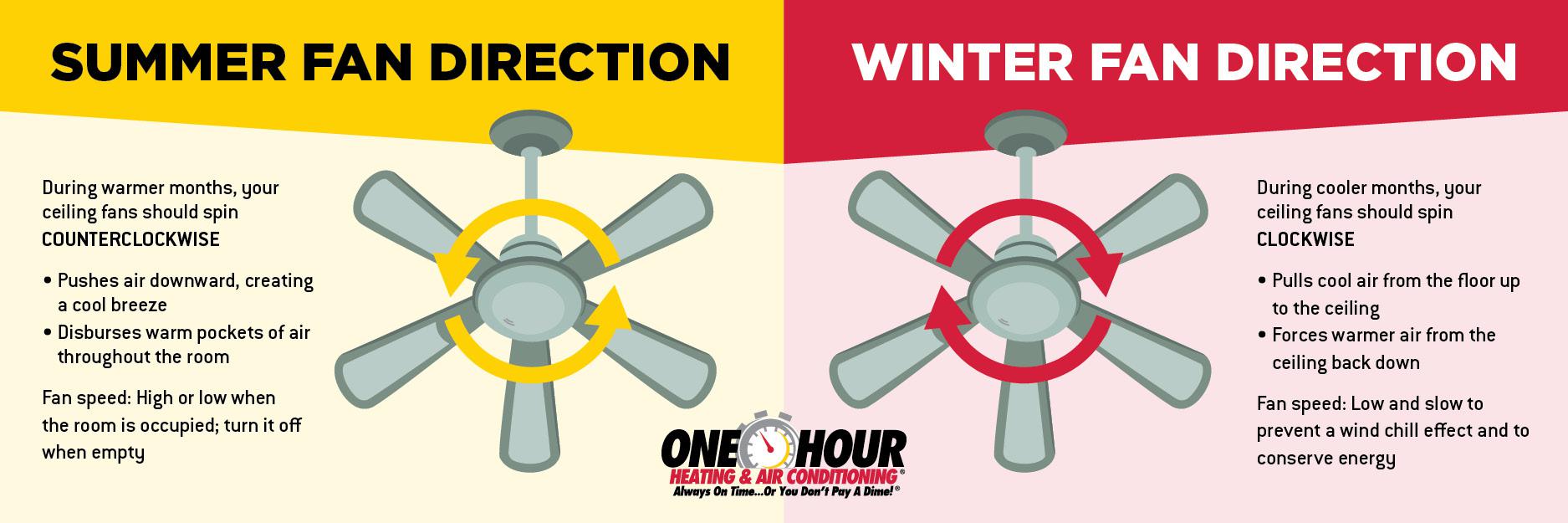
When those temperatures start climbing, what we really want is a nice, cooling breeze. Think of it like a natural air conditioner, but without the massive energy drain. For summer, your ceiling fan blades should be spinning in a counter-clockwise direction. Go ahead, look up at your fan. If you're standing beneath it and the blades appear to be moving to your left, then you're golden!
Why counter-clockwise? Because this rotation pushes air straight down, creating a direct downdraft. This downward airflow creates a wonderful sensation called the wind chill effect. It doesn't actually lower the room's temperature, but it makes you feel significantly cooler by helping evaporate sweat from your skin. It’s like stepping out of a hot shower and feeling that immediate cool blast, but happening all the time while you relax on your sofa. Pretty neat, huh?
![Ceiling Fan Directions for Summer vs Winter [Infographic]](https://airflowacademy.com/wp-content/uploads/2021/06/Ceiling-fan-direction.jpg)
You can often turn down your thermostat by a few degrees when a fan is running this way, simply because you'll feel just as comfortable at a slightly higher temperature. That’s a win for your wallet and the planet!
Wait, There's a Winter Mode Too?!
Yep, you read that right! While our focus is summer, it's worth knowing that ceiling fans aren't just for cooling. They have a brilliant winter function too, and it involves spinning the other way. For winter, your fan should rotate clockwise, and on a slower speed.
When the blades spin clockwise, they gently draw cool air up towards the ceiling. This might sound counter-intuitive, but here's the clever bit: it pushes the warmer air (which naturally rises and collects near the ceiling) down along the walls and back into the living space. It's like gently stirring a giant pot of warm soup, distributing the heat evenly without creating a chilly draft. This process, known as convection, helps warm up the room more efficiently, reducing your heating costs. How smart is that?
How Do You Flip the Switch (Literally)?
So, you’ve checked your fan, and it’s spinning the wrong way for summer. Don't sweat it (pun intended)! Most ceiling fans have a small switch on the motor housing – that's the main part of the fan that attaches to the ceiling. It's often a little toggle switch that's fairly easy to find.
Before you go fiddling with it, remember a key safety tip: always turn the fan off completely and let the blades come to a full stop before you switch the direction. Then, just flip the switch, turn the fan back on, and watch those blades for their new direction. You'll instantly feel the difference!
Beyond the Ceiling: Other Fans Just Push!
What about your trusty box fan, the sleek tower fan, or that oscillating pedestal fan by your bed? Do they have secret reverse settings too? Nope! For these types of fans, it’s much simpler. They are designed to push air forward, and that’s pretty much all they do. There’s no magical switch to reverse their airflow.

However, you can still be clever with their placement! Positioning a box fan in a window facing outwards can help draw hot air out of a room. Or, place one near an open door, facing inwards, to draw cooler air in. It's all about strategic air movement, even with the simpler models.
Why This Is More Than Just Hot Air (Pun Intended!)
Understanding which way your fan turns in summer isn't just a quirky piece of trivia. It's genuinely useful! First, it's about maximizing your comfort without cranking up the AC to Arctic levels. Who doesn't want to feel cooler on a hot day without breaking the bank?
Second, it’s a brilliant example of everyday physics at work. You're leveraging the principles of wind chill and convection to make your living space more comfortable. It’s a little bit of science that you can literally feel. Isn’t it cool to understand how something so simple can have such a profound impact?
And finally, it's about being an informed, empowered homeowner or renter. Knowing these little tricks means you're not just passively living in your space; you're actively optimizing it for comfort and efficiency. It's a small adjustment that leads to a noticeable improvement, making those dog days of summer just a little bit more bearable.
So, What's the Takeaway?
The next time you’re feeling a little too warm, take a moment to look up at your ceiling fan. Is it spinning counter-clockwise, creating that lovely downward breeze? If not, you now know the secret to unlocking its full summer potential!
It’s a tiny tweak that delivers a big dose of comfort and can even save you some energy. So go ahead, be curious, investigate your fans, and enjoy a smarter, cooler summer. You've got this!