Explanation Of The Law Of Conservation Of Energy

Alright, gather 'round, folks! Let me tell you about something so mind-bendingly simple, yet so utterly fundamental, it governs the entire universe. I’m talking about the Law of Conservation of Energy. Don't let the fancy name scare you. It's way less intimidating than your mother-s-in-law's pot roast recipe.
Basically, it boils down to this: Energy can’t be created or destroyed, only transformed. Think of energy like that one friend who always shows up at parties, but somehow always with a different outfit. Same friend, different look. It's the same amount of energy, but it's just showing up in a different form. Got it?
So, What's the Big Deal?
Well, imagine a world without this law. We could just conjure energy out of thin air! Need to power your car? Poof! Energy! Want to launch a rocket to Mars? BAM! Energy! Unfortunately, or maybe fortunately (depending on how you feel about Elon Musk), that's not how it works. This law is the ultimate cosmic killjoy to free energy schemes everywhere. It's physics equivalent of saying, "Sorry, no refunds."
Must Read
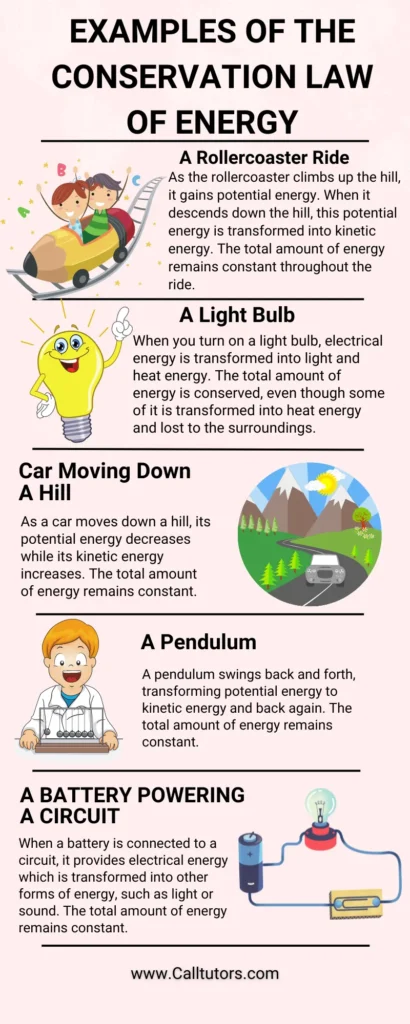
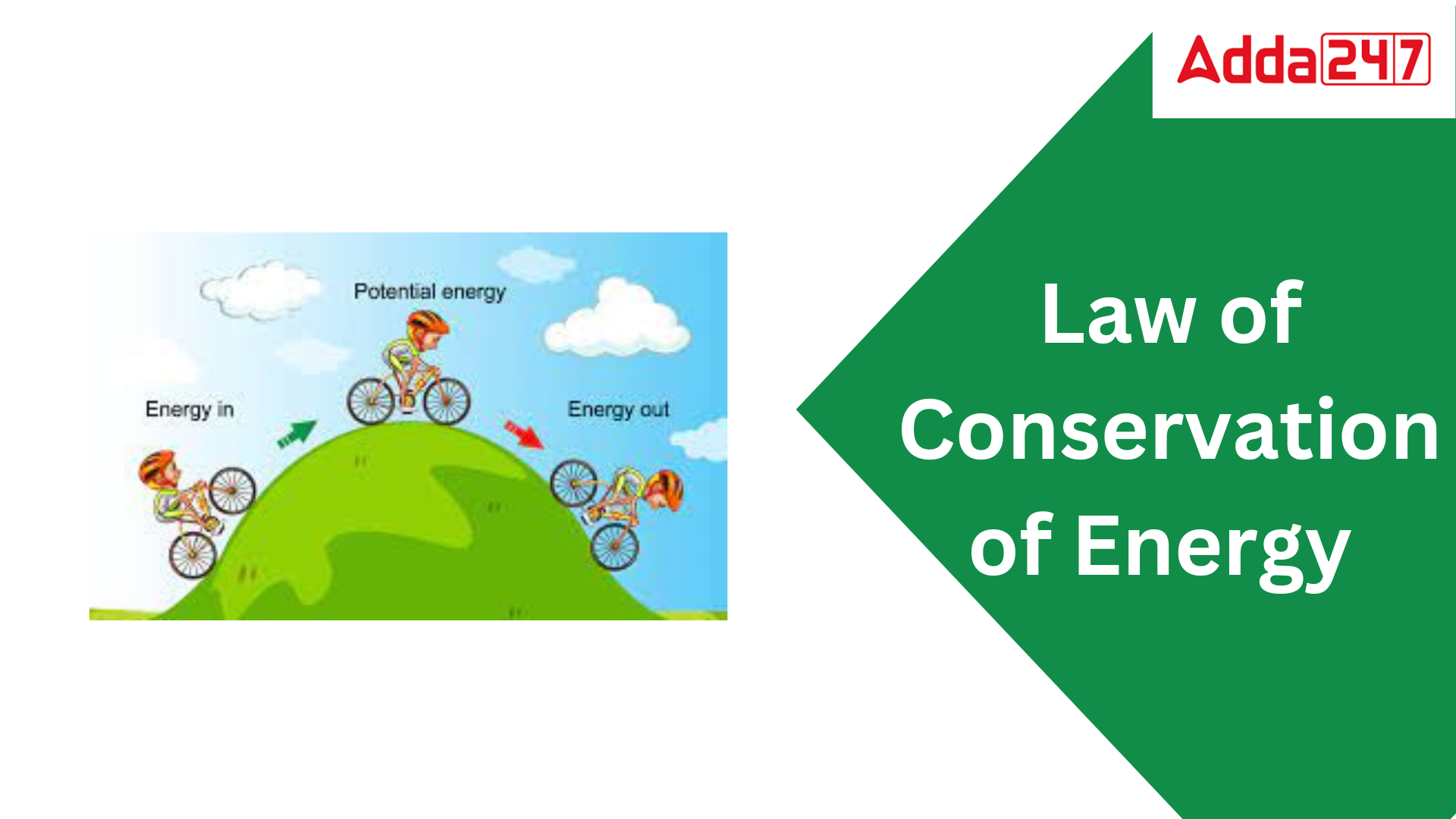
Think about it this way: you're sitting on a rollercoaster, right? As you climb that first terrifying hill, you're gaining potential energy. This is like the universe whispering, "Hold on tight, because this is going to be fun!" Then, as you plummet down, that potential energy transforms into kinetic energy – the energy of motion! Woo-hoo! All that stored-up potential is now being unleashed, turning you into a screaming, hair-flying blur. And where did it all come from? The initial energy used to haul you up that hill! (Plus maybe a little bit from the sheer terror fueling your vocal cords.)
Even your cup of coffee obeys the Law of Conservation of Energy. The heat from the coffee (thermal energy) is gradually transferred to the cooler air in the room. The coffee cools down, the room warms up (slightly). No energy is lost, just transferred from one place to another. It's a slow, agonizing process, especially when you're trying to stay awake during a particularly dull meeting. But hey, at least the universe is obeying the laws of physics!
Examples, Examples Everywhere!
Let's say you're throwing a baseball. You're putting in chemical energy from the food you ate. That gets converted to kinetic energy as your arm hurls the ball. The ball then has kinetic energy as it flies through the air. Eventually, it hits a glove (hopefully), and that kinetic energy is converted into a little bit of thermal energy (a tiny bit of heat from the impact) and maybe some sound energy – that satisfying "thwack"! All that energy, accounted for! It's like a cosmic accounting firm keeping track of every single erg.
Or consider a light bulb. You pump in electrical energy, and the bulb transforms it into light energy (so you can actually see where you're going) and, unfortunately, a lot of thermal energy (that's why old-school incandescent bulbs get so darn hot). Modern LEDs are much more efficient, converting more of the electrical energy into light and less into heat. Even the most efficient light bulb doesn't escape the law, though. Some energy always ends up as heat.
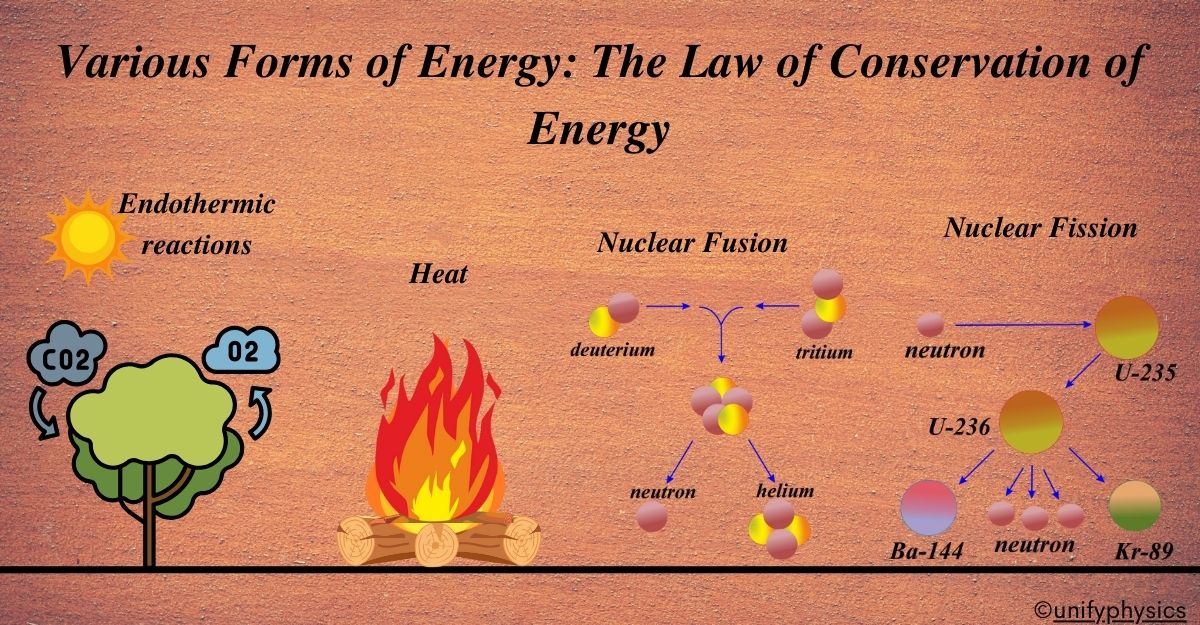
Speaking of heat, friction is a classic example of energy transformation. When you rub your hands together, you're converting mechanical energy (the energy of motion) into thermal energy. That's why rubbing your hands together warms them up. It’s also why sliding down a rope in gym class always resulted in those sweet, sweet rope burns – all thanks to energy conservation! (Okay, maybe "thanks" isn't the right word.)
The Universe's Budget
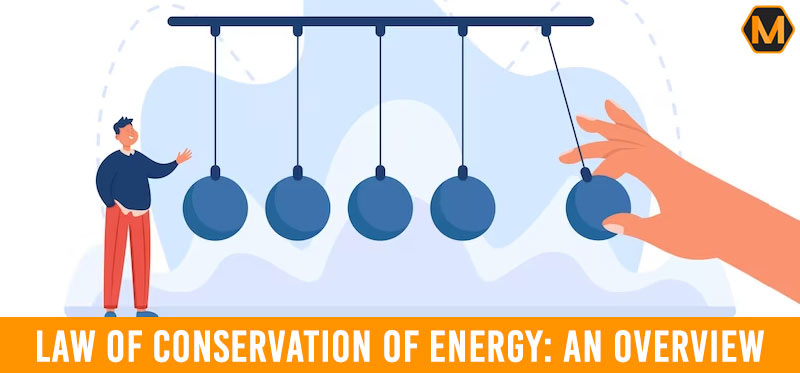
The Law of Conservation of Energy is like the universe's super strict budget. It dictates that the total amount of energy in the universe is constant. It can't magically increase, and it certainly can't decrease. It’s just constantly being shuffled around, transforming from one form to another. This law is so important that it's a cornerstone of pretty much all of physics.
Now, I know what you're thinking: "What about Einstein's famous equation, E=mc²? Doesn't that say energy can be created from mass?" Well, yes and no. The equation shows that mass and energy are interchangeable. Mass is a form of energy, and it can be converted into other forms, like in nuclear reactions. But the total amount of energy (including the energy locked up in mass) still stays the same! Think of it like turning your savings account (mass) into cash (energy). You still have the same amount of money, just in a different form.
So, the next time you’re doing something – anything – remember the Law of Conservation of Energy. Whether you’re eating a pizza (chemical energy), driving a car (kinetic energy), or simply breathing (more chemical energy!), you're part of this grand, cosmic dance of energy transformation. And that, my friends, is pretty darn amazing. Now, if you'll excuse me, all this explaining has made me hungry. I think I need to convert some potential energy (sitting here) into kinetic energy (walking to the fridge) and then into chemical energy (eating a sandwich). It's all connected, you see!