
Example Of Direct Current And Alternating Current
-vs-direct-current-(dc).png)
Hey there, sparky! Ever wonder about the juice that powers your life? I'm talking electricity! Specifically, Direct Current (DC) and Alternating Current (AC). Don't worry, it's not as scary as high school physics. Promise!
DC: The Steady Eddie
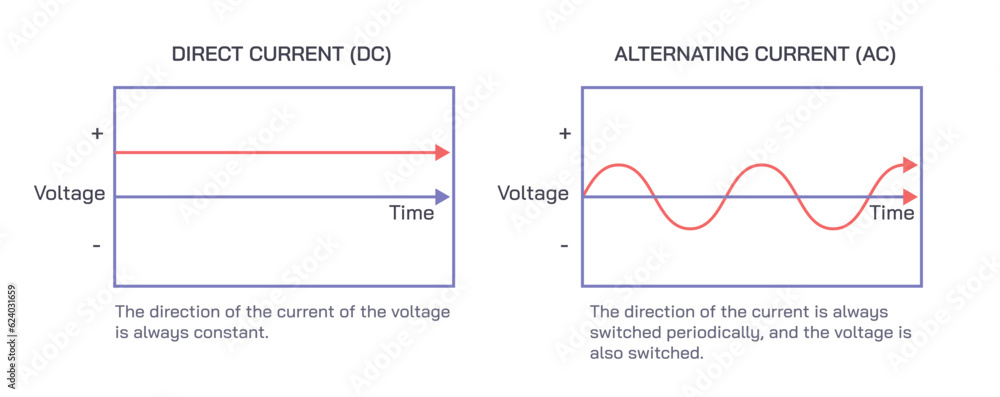
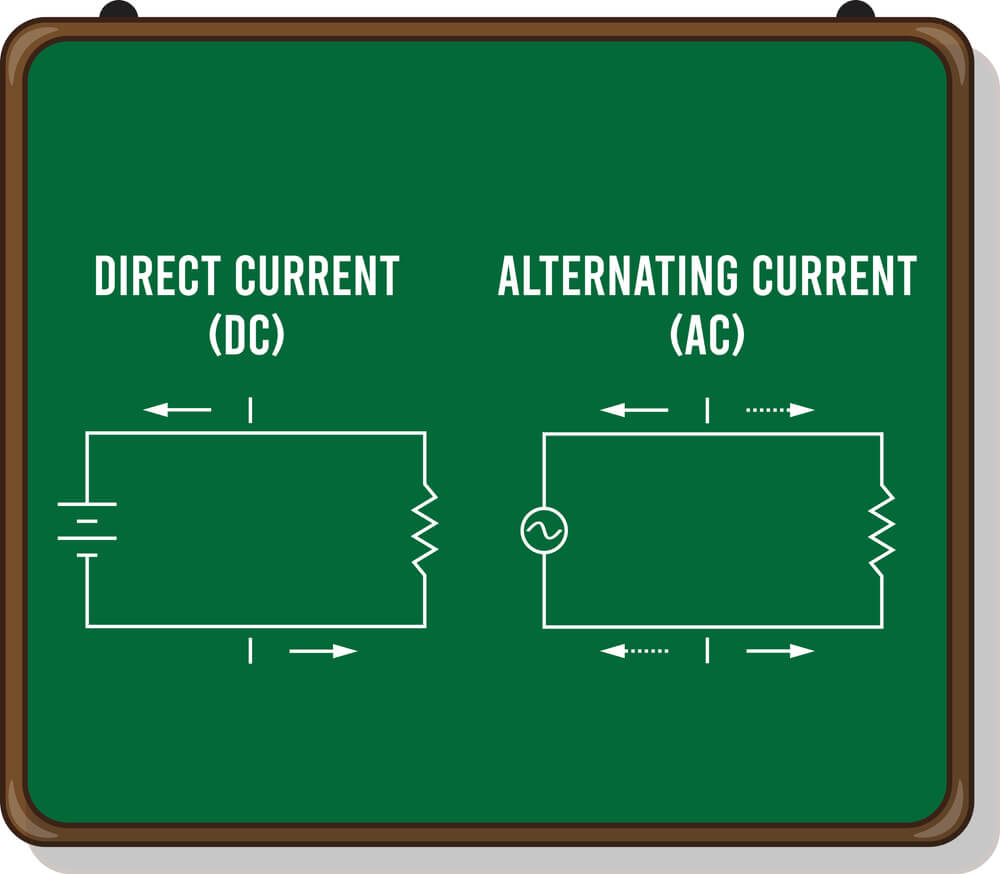
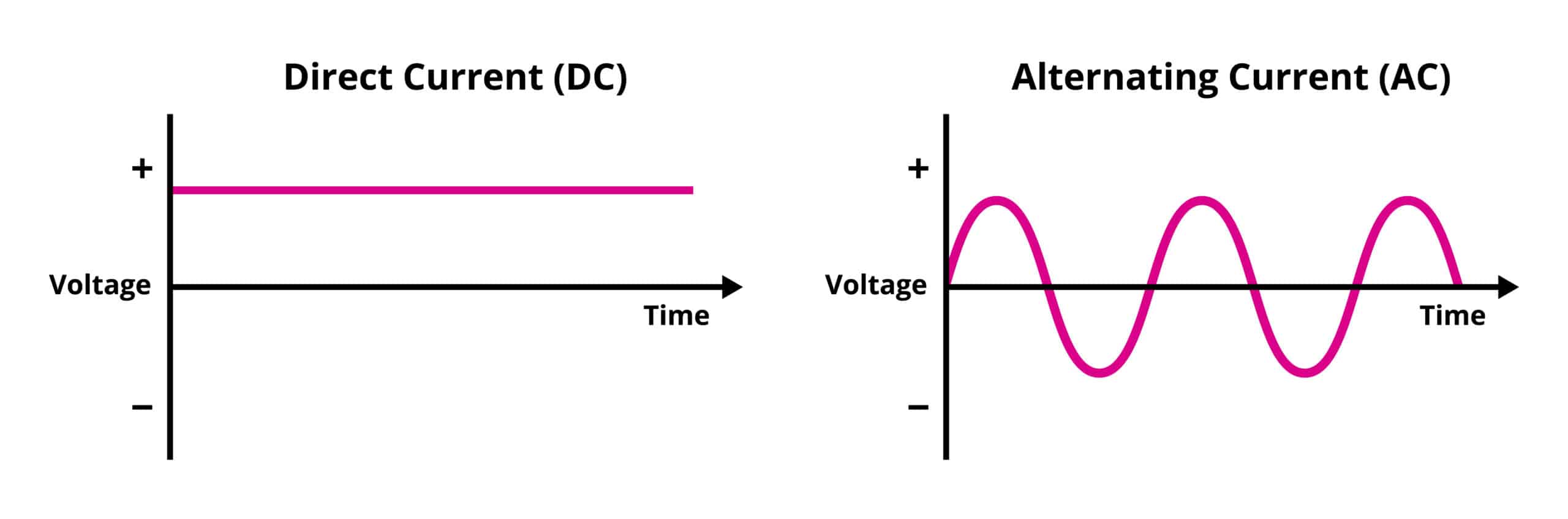
Think of DC as a one-way street. Electrons are like tiny cars all driving in the same direction. Super organized, right? It's a straight shot from the power source to your device. No messing around.
Batteries are the champions of DC! Your phone, your laptop, that weird singing hamster toy your aunt got you? All running on DC power.
Must Read
Did you know Thomas Edison was a HUGE proponent of DC? He believed it was the superior way to power the world. Talk about sticking to your guns!
But here's the thing: DC doesn't travel long distances very well. It loses steam (or, you know, electrons) along the way. That's where AC comes in…
AC: The Wild Child
AC is like a dance party for electrons. They're constantly changing direction, flowing back and forth. Think of it as a rave, but with subatomic particles. Totally chaotic!
Your wall outlet is pumping out AC. Your toaster, your TV, your disco ball? They're all slurping up AC power.
Nikola Tesla was the king of AC. He envisioned a world powered by AC, and he was right! (Sorry, Edison!). He even had a pet pigeon he was reportedly very attached to. Genius and bird lover? What a combo!
Why is AC so great? It can travel long distances with minimal loss. Power companies can crank up the voltage to send it across state lines, then step it down to a safe level for your home. It's all thanks to transformers! Those big metal boxes you see near power lines? They're the transformer superheroes.

Let's Get Specific: Examples Galore!
Okay, enough theory. Let's get down to brass tacks. What are some real-world examples of DC and AC in action?
DC Examples:
- Batteries: Obvious, right? From your car battery to those tiny watch batteries, they're all DC.
- Solar panels: Surprisingly, solar panels generate DC power. An inverter then converts it to AC for your home. Pretty neat!
- Fuel cells: These futuristic power sources also generate DC. Think hydrogen-powered cars!
- LEDs: Light-emitting diodes need DC to shine bright.
AC Examples:
- Household outlets: As mentioned before, your wall is an AC powerhouse.
- Power lines: Those giant wires strung across the landscape are carrying AC electricity.
- Generators: Most generators, including the ones at power plants, produce AC.
- Electric motors (some types): Many appliances, like refrigerators and washing machines, use AC motors.
Fun Facts & Quirky Details
Ready for some electric trivia?
- The standard frequency of AC in the US is 60 Hertz (Hz). That means the electrons change direction 60 times per second! Imagine trying to keep up with that dance party!
- In Europe and some other parts of the world, the standard frequency is 50 Hz. A slightly slower rave, perhaps?
- You can convert AC to DC using a rectifier. Your phone charger does this. It takes the AC from the wall and turns it into DC to charge your phone's battery.
- You can also convert DC to AC using an inverter. This is how solar panels power your home. Magic!
- Believe it or not, some electric cars use DC for their motors, while others use AC. It depends on the design of the car.
Warning! Electricity can be dangerous. Don't go poking around in electrical outlets or power lines. Leave that to the professionals!
So, Why Should You Care?
Knowing the difference between AC and DC might not seem like a crucial life skill, but it helps you understand how the world around you works. Plus, it's a great conversation starter at parties! (Okay, maybe not every party.)
Understanding the basics of electricity empowers you to make informed decisions about energy efficiency, renewable energy, and the technology you use every day. Plus, you can impress your friends with your newfound knowledge. "Hey, did you know that..."
Ultimately, electricity is a fascinating force that shapes our modern world. So, embrace your inner nerd and learn a little something new! Who knows? Maybe you'll be the next Tesla (minus the pigeon obsession, perhaps).
Now go forth and electrify your day!