Energy Released As A Gas Changes To A Liquid
Ever felt the cool spray of deodorant coming out of a can? Or watched steam condense on a cold windowpane? What you're experiencing is the fascinating phenomenon of a gas changing into a liquid – and guess what? Energy is released in the process! Understanding this simple concept can unlock a lot of interesting insights into the world around us, from how refrigerators work to why a hot shower feels so good.
So, why is this information useful? For beginners, grasping this concept forms a foundation for understanding states of matter and energy transfer, which is crucial for science classes. For families, it's a great way to introduce kids to the idea that things aren't always as they seem. A seemingly "cool" process like condensation actually involves a release of energy! And for hobbyists, like brewers or gardeners, understanding phase changes can improve processes like fermentation or greenhouse management.
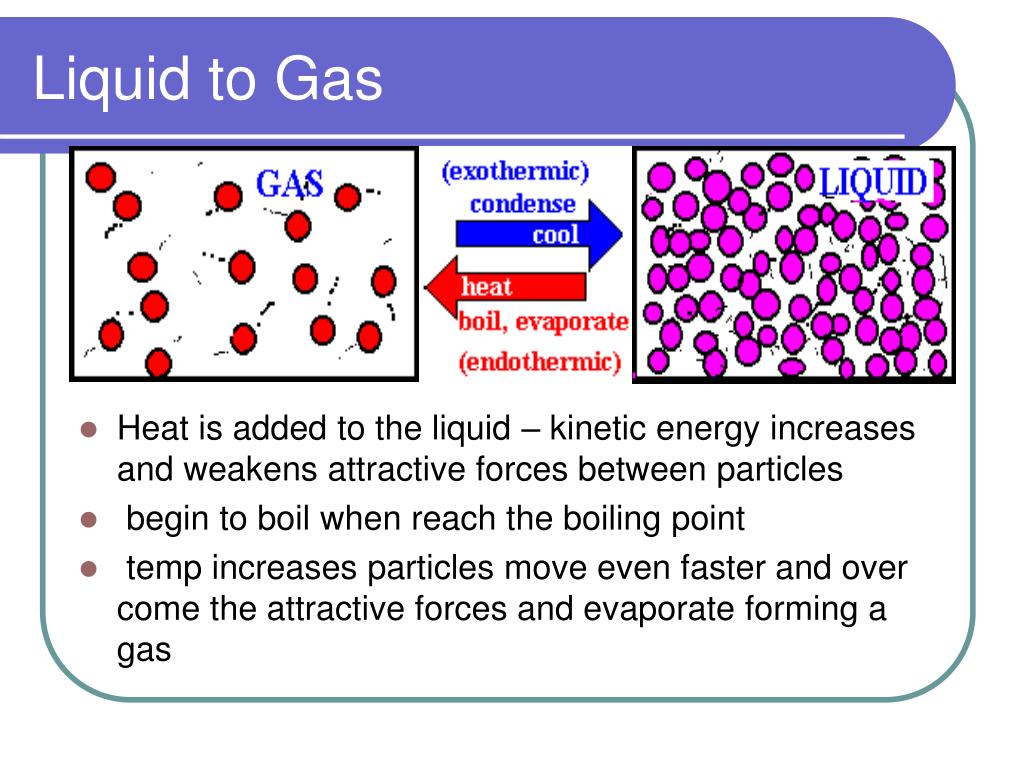
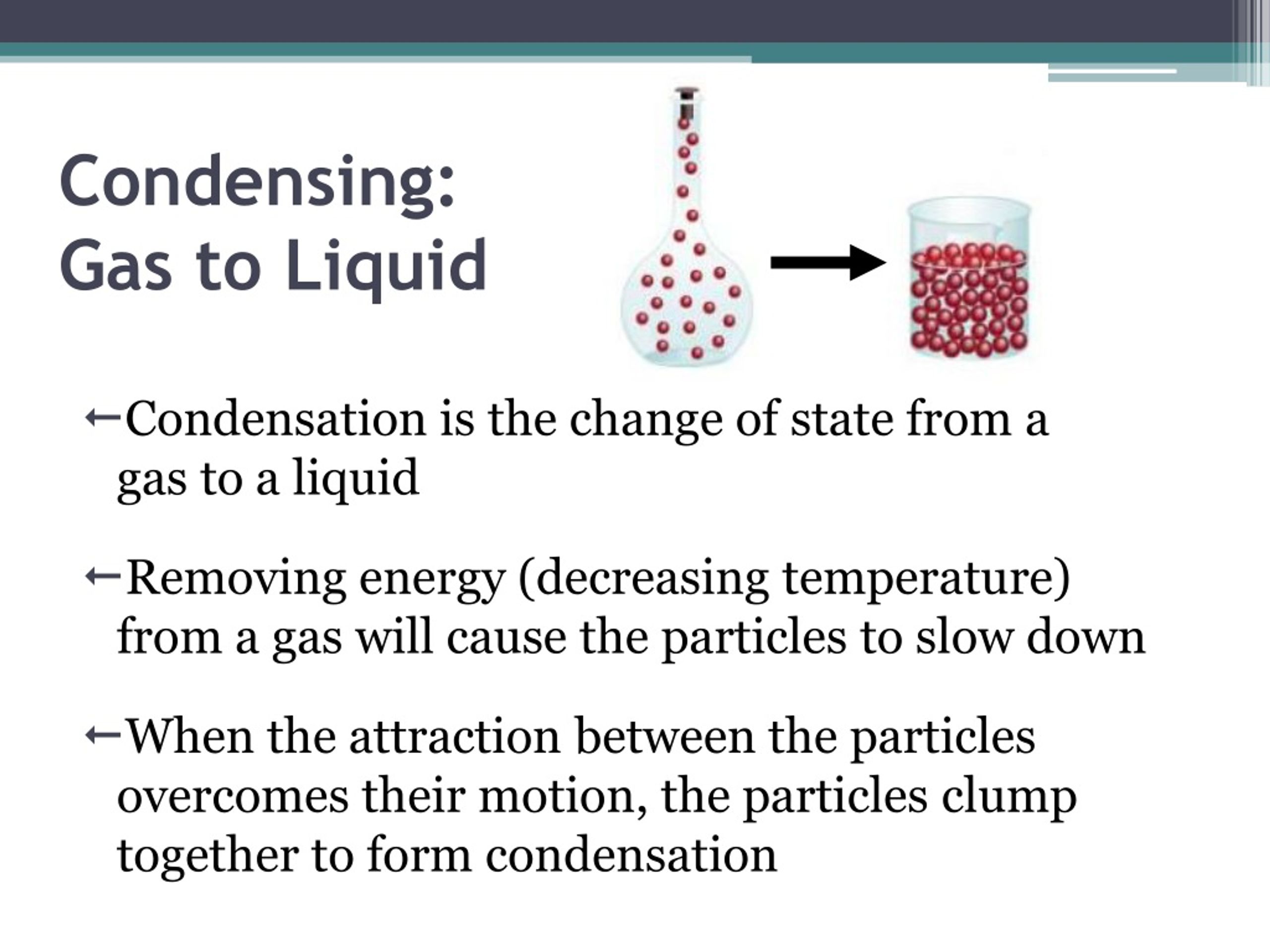
Let's break it down. When a gas turns into a liquid, the molecules slow down and get closer together. They're no longer bouncing around wildly with lots of energy. That extra energy they had as a gas? It has to go somewhere! It's released into the surrounding environment, usually as heat. This release of energy is called condensation.
Must Read
Consider water vapor (steam) turning into liquid water. When water boils, it gains energy and becomes a gas. Now, if that steam touches a cold surface, like a mirror in your bathroom, it cools down. As it cools, it loses energy and the water molecules huddle together, forming liquid droplets. The heat that the steam had is released onto the mirror, which is why the mirror might get a little warmer (though you probably won't notice it much!).
Here are some real-world examples:
- Refrigeration: Refrigerators use a special refrigerant that cycles between liquid and gas. The evaporation of the liquid inside the fridge absorbs heat, cooling the contents. Then, the refrigerant is compressed back into a liquid, releasing heat outside the fridge.
- Sweating: When you sweat, the water evaporates from your skin, taking heat with it and cooling you down. But what happens to that water vapor as it moves away from your body? It can condense into liquid water on nearby objects, like a glass of iced tea on a humid day.
- Cloud Formation: Clouds form when water vapor in the air cools and condenses into tiny liquid water droplets (or ice crystals) around microscopic particles. The released energy contributes to atmospheric processes.

Want to get started exploring this concept? Here are a few simple tips:
- Observe: Pay attention to condensation around your home. Where do you see it happening? What might be causing it?
- Experiment: Try putting an ice cube in a glass of water. Watch the condensation form on the outside of the glass. Where is the water coming from?
- Research: Look up "latent heat of vaporization" and "latent heat of condensation" online to learn more about the specific energy involved in these phase changes.
Understanding the energy released when a gas changes to a liquid isn't just about science; it's about observing and appreciating the intricate processes happening all around us. It's a chance to marvel at how energy transforms and shapes our world. So, keep an eye out for those condensing droplets and remember, there's a little bit of fascinating science happening right before your eyes!