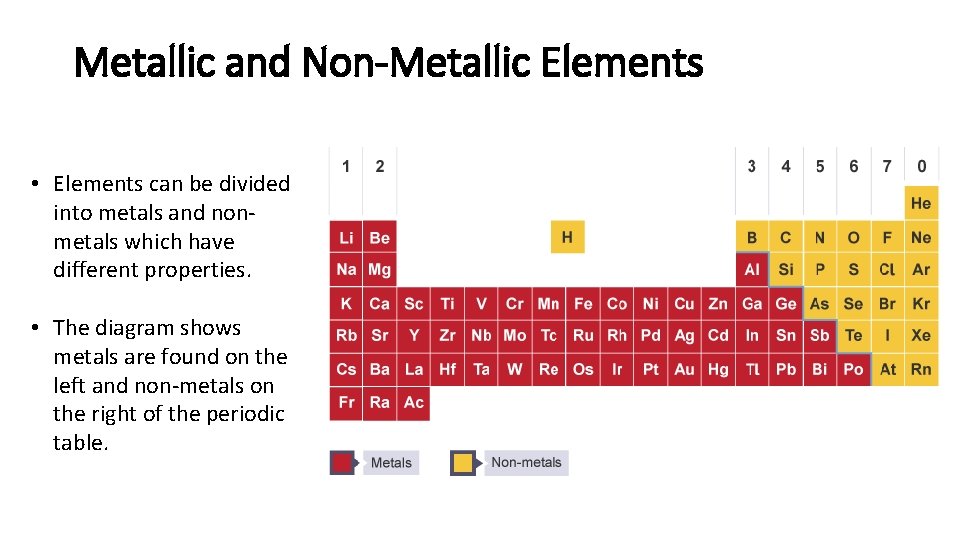
Element With Metallic And Nonmetallic Properties

Ever wonder why your phone screen is so responsive, or why your computer chips are so darn fast? Part of the magic lies with a class of elements that are surprisingly versatile: the metalloids! Think of them as the chameleons of the periodic table, possessing properties that dance between the worlds of metals and nonmetals. They’re the unsung heroes making modern technology tick, and understanding them can unlock a whole new appreciation for the world around us.
So, what exactly makes these elements so special? Metalloids, sometimes called semi-metals, possess the unique ability to conduct electricity, but not as readily as true metals. This intermediate conductivity is key to their importance. They can act as insulators under certain conditions and conductors under others, making them perfect for controlling electrical flow in electronic devices. Think of them as tiny switches, turning on and off at lightning speed, enabling the complex operations that power our digital lives.
The benefits of metalloids extend far beyond just speed and responsiveness. Their ability to be easily manipulated and integrated into different materials allows for the creation of devices that are smaller, more efficient, and more reliable. They are crucial for the development of solar panels, allowing us to harness the power of the sun, and are even used in medicine to treat various ailments. Their versatility makes them indispensable across numerous industries.
Must Read
Perhaps the most well-known metalloid is silicon. It's the backbone of the entire semiconductor industry. You'll find it in your computer's central processing unit (CPU), your smartphone's memory chips, and countless other electronic components. Another important example is germanium, also used in semiconductors and optical fibers. Arsenic, while also toxic, finds applications in alloys and certain types of lasers. Boron is used in everything from strengthening alloys to creating heat-resistant glass, like that used in ovenware.
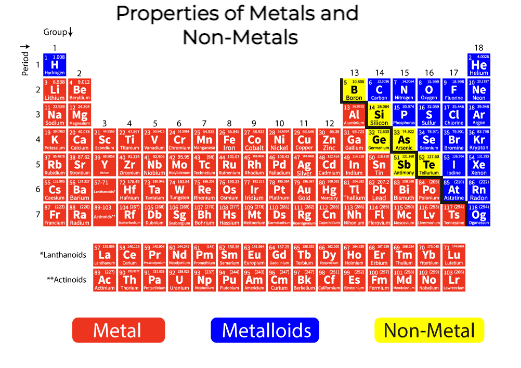
So, how can you appreciate the impact of metalloids more effectively? Start by noticing the small things. Consider the smooth operation of your touchscreen – that's metalloids at work. When you're using your computer, remember the countless tiny transistors made from silicon, rapidly processing information. When looking at solar panels, appreciate the crucial role metalloids play in converting sunlight into electricity.
To truly appreciate their impact, delve a little deeper. Research the specific uses of different metalloids, like boron in high-strength magnets or tellurium in solar cells. You might be surprised at the diverse applications. Another way is to simply be more mindful of the technology around you and consider the complex chemistry that makes it all possible. For instance, learn about the process of doping silicon, where impurities are added to control its conductivity. This process is vital for creating the transistors that drive modern electronics. By understanding the science behind the magic, you can gain a much deeper appreciation for the vital role metalloids play in our modern world. Metalloids aren't just elements; they're the building blocks of innovation!