
Electrical Machines Drives And Power Systems
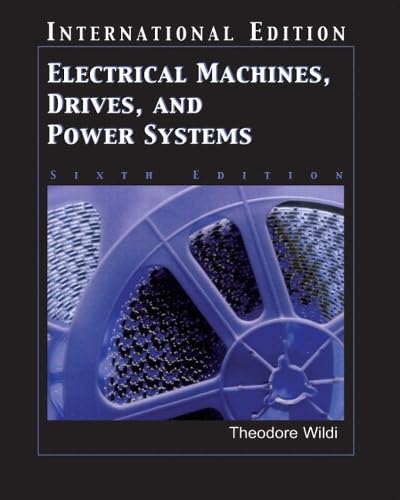
Ever wonder what makes your fridge hum, your electric car zoom, or keeps the lights on when you’re binging your favorite show? It's all thanks to a beautiful blend of Electrical Machines, Drives, and Power Systems. Sounds complicated, right? Don’t worry, we're going to break it down in a way that’s less textbook and more…well, relatable. Think of it like this: your electrical system is the body, power systems are the heart, electrical machines are the muscles, and drives are the nervous system. Stay with me!
Power Systems: The Heart of the Operation
Power systems are the big guys – the ones responsible for generating, transmitting, and distributing all that sweet, sweet electricity. They’re like the infrastructure of your electric life. Imagine them as the heart of the operation, pumping energy to keep everything running smoothly. Without them, we'd be back to candles and carrier pigeons (which, while romantic, isn't exactly ideal for streaming Netflix). Think massive power plants, transformers humming quietly in substations, and those high-voltage transmission lines marching across the landscape. They're the unsung heroes, making sure the electrons keep flowing. They're also like that friend who always makes sure everyone gets home safely after a party – essential, and slightly underappreciated.
You know when you get a power outage and the whole neighborhood goes dark? That’s usually a hiccup in the power system. It’s like your heart skipping a beat. Scary, but usually gets back on track quickly, hopefully with a backup generator (like CPR for your house!).
Must Read
Electrical Machines: The Muscle
Now, let’s talk about electrical machines. These are the workhorses that convert electrical energy into mechanical energy (like in a motor) or vice versa (like in a generator). Think of them as the muscles. Motors are everywhere! From your washing machine that spins your clothes clean (magically, it seems!) to the fan that keeps you cool on a hot day, to the pump that circulates water in your fish tank, they’re all powered by motors. And generators? They’re the reverse. They convert mechanical energy into electrical energy. Think of a wind turbine – the wind turns the blades, which spins a generator, producing electricity. It’s like a workout routine, but for energy!
Ever had a blender that just couldn't quite crush those ice cubes? That’s probably a case of a motor not having enough oomph. Like a weightlifter trying to lift too much – it needs more power!

Electrical Drives: The Nervous System
Okay, so we have the heart (power systems) and the muscles (electrical machines). But how do you control those muscles? That’s where electrical drives come in. They are the brains and the nervous system that control the motor. Electrical drives precisely control the speed, torque, and position of a motor, allowing it to perform tasks with accuracy and efficiency. Think of it as the brain telling your arm to pick up a cup of coffee – it's a precise command, not just a random flail. Ever notice how elevators start and stop so smoothly? That’s thanks to sophisticated drives controlling the motor. Without them, you'd be jerked around like a ragdoll.
Imagine trying to drive a car without a gas pedal or brakes. That’s what running a motor without a drive would be like – chaotic and probably disastrous. Drives are what allow us to fine-tune the motor's performance and get exactly what we want, whether it's gentle or power.
Putting it All Together
So, you see, Electrical Machines, Drives, and Power Systems work together harmoniously to power our modern lives. The power system generates and distributes the electricity, the electrical machines convert that electricity into useful work, and the drives control how those machines perform.
Next time you flip a light switch, remember all the engineering wizardry that goes on behind the scenes. It’s a complex, fascinating, and utterly essential system that we often take for granted. And maybe, just maybe, you’ll appreciate that humming fridge a little bit more. Because without it, where would we keep the ice cream?

