Drill Bit Size For 12 24 Tap

Imagine you're in the workshop, coffee steaming, feeling like a DIY god. You've got this brilliant idea, a perfectly engineered widget gleaming in your mind's eye. All you need is a threaded hole. Easy peasy, right? You grab your tap – it's a 12-24, a bit of an odd duck, perhaps, but you like a challenge. Then it hits you. The age-old question that has plagued humankind since the invention of the threaded fastener: "What gosh-darn drill bit do I use for that?!"
Ah, the 12-24 tap. It’s not your run-of-the-mill 1/4-20, the popular kid everyone knows. No, the 12-24 is like that slightly eccentric, but ultimately brilliant, cousin. It demands precision. It scoffs at guesswork. Get it wrong, and you're either staring at a stripped-out mess that mocks your efforts, or, far worse, a tap that's snapped off in your workpiece, turning your brilliant widget into an expletive-laden paperweight. Been there, cursed that, needed a new project.
The Grand Reveal: Your Drill Bit Soulmate!
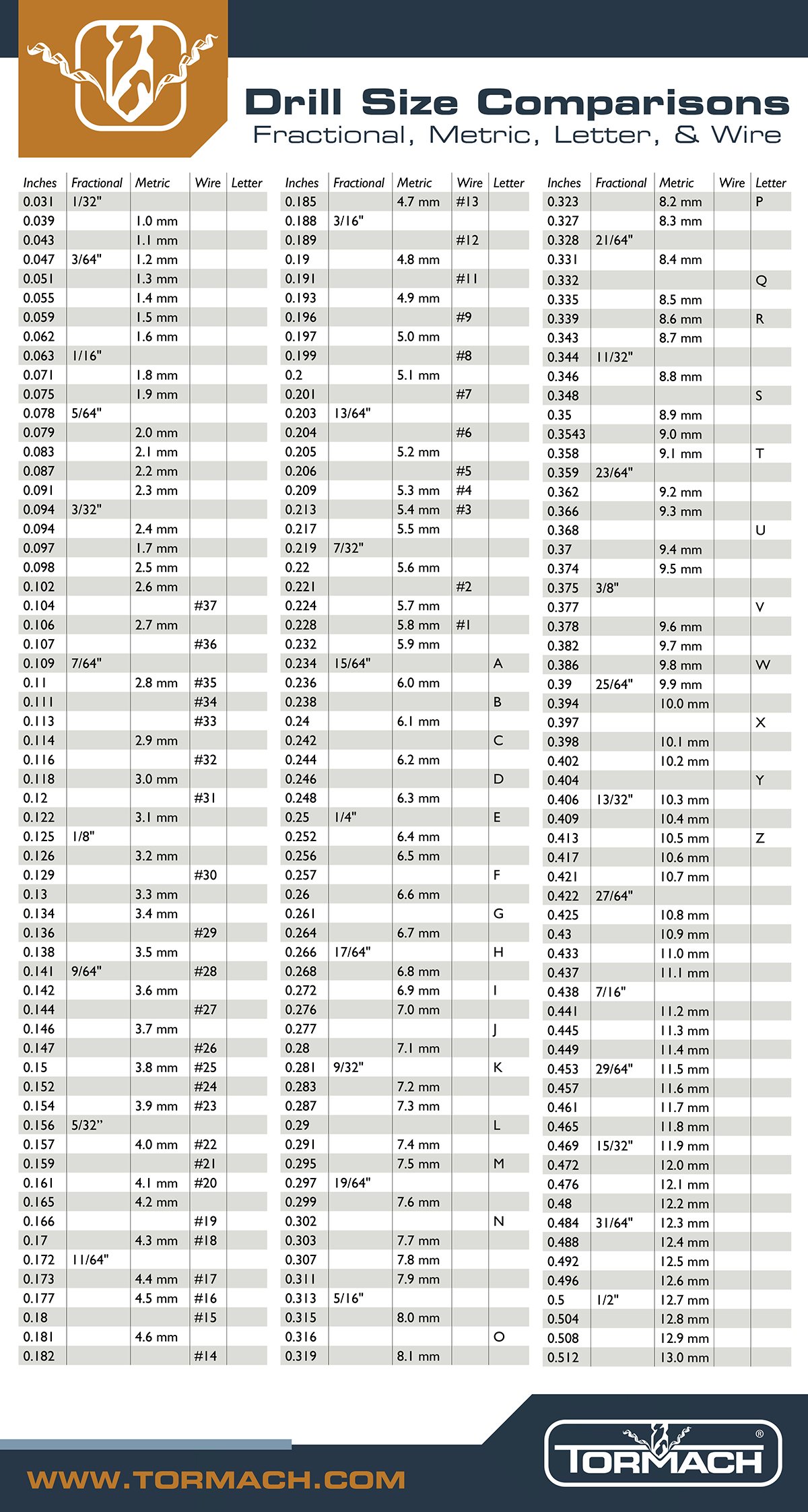
So, let's cut to the chase before your coffee gets cold and your patience runs thinner than cheap sheet metal. For a 12-24 tap, you're usually going to reach for a drill bit that’s a Size 16. Yes, a "Size 16" drill bit. Not 16 millimeters, not 16 inches (though that would make a spectacularly large hole for a very tiny screw). We’re talking about an old-school, numbered drill bit, which translates to a glorious 0.160 inches in diameter.
Must Read
"Why 16?!" you might exclaim, spitting a little coffee in surprise. "Why not just 0.160 inches and be done with it?!" Well, my friend, sometimes the universe throws us these numerical curveballs. The Size 16 drill bit is the unsung hero that gives you approximately 75% thread engagement.
Now, 75% might sound like you're skimping, like only getting three-quarters of a pizza. But in the world of threads, it's the sweet spot. Any less, and your threads are weaklings, easily stripped, like trying to hold water with a colander. Any more, and your tap will feel like it's trying to chew through concrete with a blunt spoon, dramatically increasing the risk of it snapping off. And nobody wants a broken tap – it's the mechanical equivalent of stepping on a LEGO barefoot, but with more regret and expensive tools involved.
The Agony of Incorrect Sizing
Imagine using a bit that's too big. You'll spin your tap with glee, thinking you're a threading wizard, only to pull it out and realize you've created what I like to call a "pre-stripped" hole. It's like trying to thread spaghetti. The screw goes in, wiggles around, and then pulls out faster than your last-minute attempt to finish a DIY project before guests arrive. Epic fail.
Now, picture using a bit that's too small. This is where the real drama happens. You start tapping, maybe a turn or two, feeling good. Then, resistance. More resistance. You push a little harder, maybe even grunt a bit, imagining yourself as a mighty blacksmith. Then, with a sickening CRACK!, your tap snaps. Half of it is now irretrievably embedded in your precious workpiece, looking like a metallic tombstone. Your project just went from "almost done" to "guess I'm starting over... after a long, therapeutic scream into a pillow." It's a rite of passage, sure, but one best avoided!

The Unsung Hero: Tap Drill Charts
Here's a surprising fact that might save your sanity and your wallet: Tap drill charts are your best friend. These magical tables, often found online, in tool catalogs, or even etched onto the back of your hand if you're truly dedicated, lay out the exact drill bit sizes for virtually every tap known to humankind. They save you from existential dread and broken taps. Consult them! They are the oracle of the workshop, whispering sweet, precise numbers into your ear.
It's also worth a chuckle to remember that the material you're drilling into can sometimes nudge your choice ever so slightly. If you're tapping super soft aluminum, you might get away with a hair smaller drill bit for slightly fuller threads. Think of it as gently caressing the material. If it's something brutally hard like stainless steel, a slightly larger hole (meaning slightly less thread engagement) can save your tap from an early grave. It's a delicate dance, like trying to pick the perfect avocado – sometimes you need to feel it out.

Where to Find These Elusive Bits?
"But where do I find a 'Size 16' drill bit?" you ask, perhaps envisioning a dusty antique shop. Fear not! While fractional and metric bits dominate the shelves, good quality drill bit sets often include numbered bits. Or, you can easily order a specific numbered bit online. They're not mythical creatures, just a little less common than their decimal cousins, like finding a perfectly ripe heirloom tomato amidst a sea of Roma.
So, the next time you're staring down a 12-24 tap, remember its name: Size 16 (0.160 inches). Keep that 75% thread engagement in your heart, avoid the agony of snapped taps, and don't be afraid to consult a chart. You'll be threading like a pro, turning out perfectly fastened widgets, and maybe even impressing your cat with your newfound mechanical prowess. Happy tapping, my friend! Just try not to get too much coffee in the drill press.