
Does Window Air Conditioner Use Alot Electricity
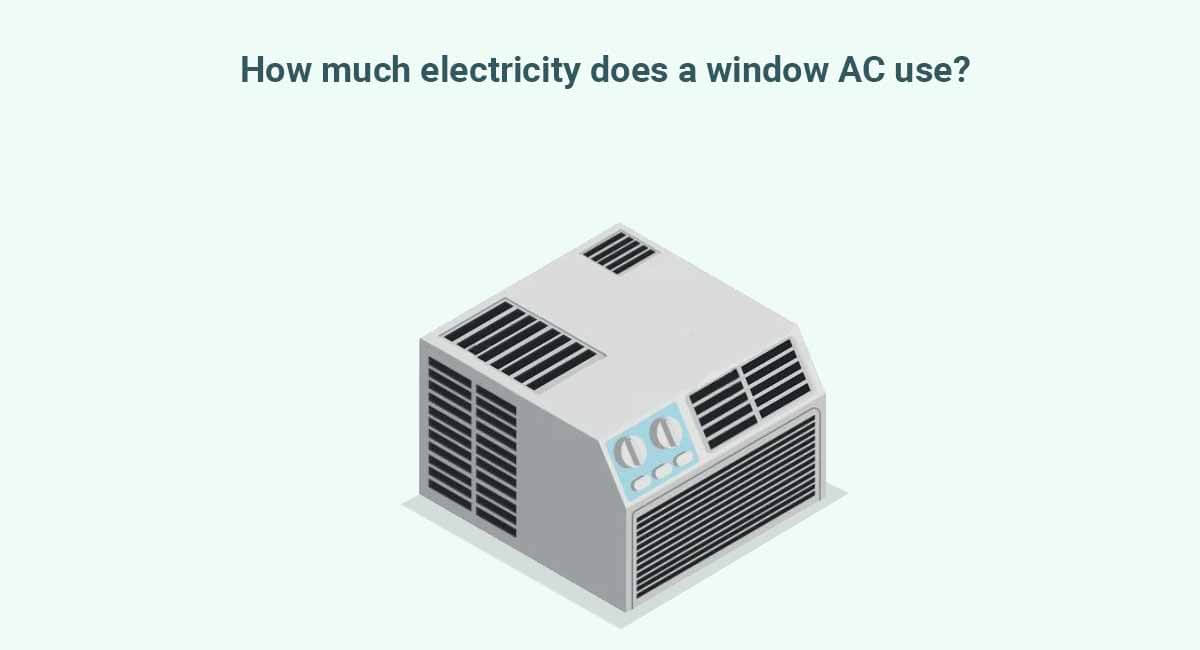
Alright, gather 'round, folks! Let's talk window AC units. Those glorious, noisy, sometimes-drippy boxes of summertime salvation. But the question on everyone's mind, whispered in hushed tones as the electricity bill arrives: Do these things really suck up all the power?
Well, the short answer is… it's complicated. (Isn't it always?) Think of it like this: a tiny kitten probably won't eat a whole Thanksgiving turkey. But a giant, ravenous kitten bred specifically for competitive eating? Turkey's in trouble. Window AC units are similar – some are kitten-sippers of electricity, others are ravenous power-guzzling monsters.
The BTU: Your New Best (or Worst) Friend
Here's the deal: your AC's energy consumption is largely tied to something called BTU, or British Thermal Unit. It's not some weird British measurement of tea temperature, though that would be entertaining. Instead, it measures how much heat your AC can remove from a room per hour. The higher the BTU, the more powerful the AC… and generally, the more electricity it uses.
Must Read
Imagine trying to cool the Sahara Desert with a tiny fan. You'd be there forever, probably getting a sunburn in the process. That's like using a tiny AC unit in a giant room. It'll run constantly, working overtime, and your electric bill will weep bitter tears. On the flip side, using a massive, industrial-strength AC in a broom closet will freeze you solid and likely cause penguins to spontaneously appear.
So, how many BTUs do you need? It depends on the size of your room. There are charts online (Google is your friend!), but a general rule of thumb is: 5,000-6,000 BTU for a small room (100-250 sq ft), 7,000-8,000 for a medium room (250-400 sq ft), and 9,000-12,000 for a large room (400+ sq ft). Oversizing can actually be less efficient, as the unit cycles on and off frequently instead of running steadily.
The Energy Efficiency Ratio (EER): Decode the Mystery!
Now, BTU isn't the whole story. There's also something called the EER, or Energy Efficiency Ratio. This tells you how efficiently your AC converts electricity into cooling power. A higher EER is better. Think of it like miles per gallon in a car. You want a car that goes far on a little gas, right? Same principle applies here. Look for models with an EER of 10 or higher.
Some fancy, modern ACs even have a SEER rating (Seasonal Energy Efficiency Ratio). This is like EER, but it considers the whole cooling season. So, basically, it's even more accurate in predicting how much electricity you'll use. If you're a super-serious energy saver, delve into SEER.

The Vampire Appliances and Phantom Loads
Okay, here's where it gets a little spooky. Did you know that even when your AC is "off," it might still be sucking up a tiny bit of electricity? It's true! These are called vampire appliances, or phantom loads. They're like tiny, invisible gremlins draining your wallet while you sleep. Unplugging your AC when you're not using it can save you a few bucks over time.
Other factors can impact electricity usage:
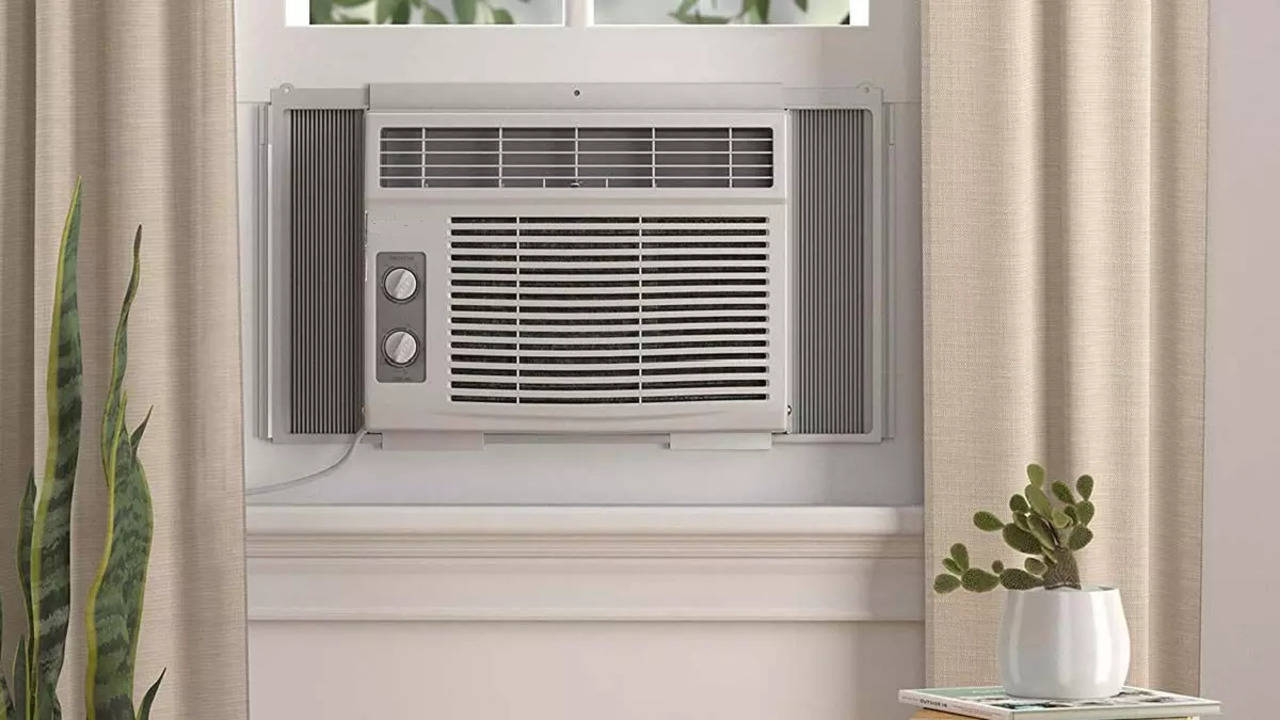
![Window AC Wattage [2024 Study | Most Efficient & Lowest W]](https://ecocostsavings.com/wp-content/uploads/2022/04/window-ac-wattage.jpg)
- How often you use it: Duh, right? But it's worth saying. Running it 24/7 will cost more than running it only when you're home.
- Your insulation: A poorly insulated room will let heat in (and cool air out), forcing your AC to work harder. Think of your house wearing a thin t-shirt in the Arctic. Not good.
- Sun exposure: A room that gets blasted by sunlight all day will be hotter than a room that's shaded. Blinds and curtains are your friends!
- Dirty filters: A clogged filter makes your AC work harder, reducing its efficiency. Clean or replace them regularly! It's like asking someone to run a marathon while wearing a surgical mask made of cheese.
The Verdict: Is it a Power Hog or a Power Saver?
So, does a window AC unit use a lot of electricity? It depends. A poorly sized, inefficient, constantly running AC in a poorly insulated, sun-drenched room? Yes, that's a power hog extraordinaire. A properly sized, energy-efficient AC used sparingly in a well-insulated room? Not so much. It’s more like a polite energy guest.
Here's the takeaway: Do your research, choose the right size and EER, and use it wisely. Your wallet (and the planet) will thank you. Now, if you'll excuse me, I'm going to go unplug my toaster... just in case.
