
Does United States Have Nuclear Power Plants
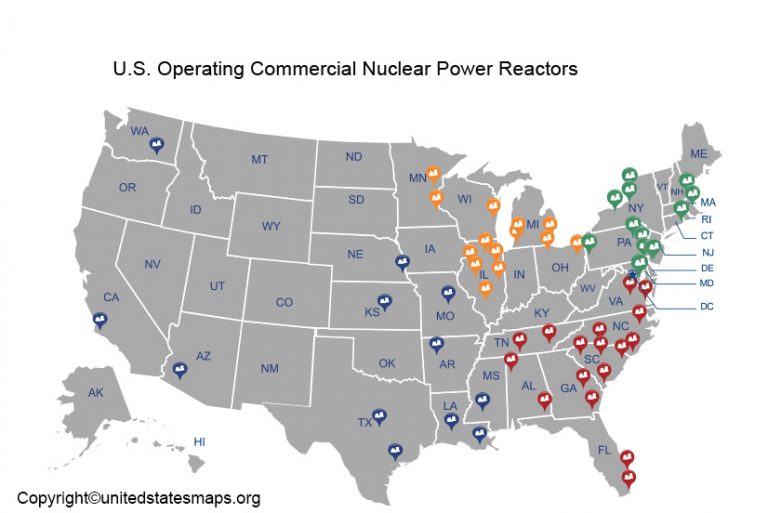
Ever wonder where the electricity that powers your phone, lights up your home, and keeps your fridge humming comes from? We often take it for granted, but the sources are diverse and fascinating. One significant contributor in the United States is nuclear power. It's a topic that can feel a bit intimidating, conjuring images of towering cooling towers and complex scientific jargon. But the basic idea is pretty straightforward, and understanding it can give you a real appreciation for the energy landscape we live in. So, let's dive in and answer the question: does the United States have nuclear power plants?
The short answer is a resounding yes! The US has a considerable number of operational nuclear power plants, making it one of the leading countries in nuclear energy production. But what exactly is a nuclear power plant, and why do we use them?
Essentially, a nuclear power plant uses the heat generated from nuclear fission – the splitting of atoms, usually uranium – to produce steam. This steam then spins turbines, which are connected to generators that create electricity. Think of it like a super-powered, super-efficient water heater boiling water to drive a turbine. The "fuel" is uranium, and the process releases a tremendous amount of heat compared to burning fossil fuels.
Must Read
One of the biggest benefits of nuclear power is its low carbon footprint. Unlike coal or natural gas plants, nuclear plants don't release significant amounts of greenhouse gases during operation. This makes them a valuable tool in efforts to combat climate change. They also offer a reliable and consistent source of energy, operating around the clock regardless of weather conditions, unlike solar or wind power, which are intermittent.
Where might you encounter the impact of nuclear power in your daily life? Well, if you live in a state with a nuclear power plant, it's likely contributing to the electricity grid that powers your home and community. Beyond that, the principles of nuclear science are used in various educational settings. Physics and chemistry classes often delve into the structure of atoms and the process of nuclear fission. In some medical fields, radioactive isotopes, produced using similar techniques to those in nuclear power plants, are used for diagnostic imaging and cancer treatment.
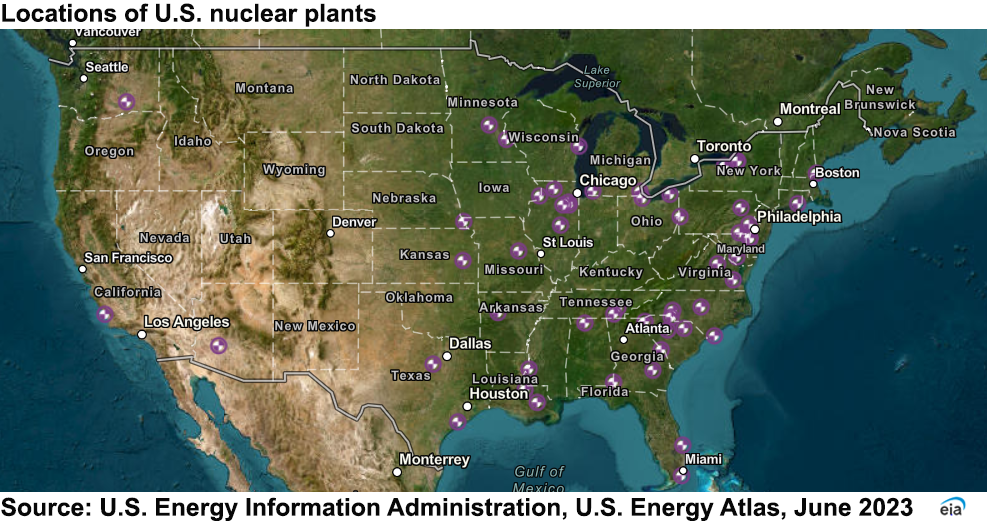
Interested in learning more? There are several ways to explore the topic further. Start by searching for "nuclear power plants near me" to see if there are any facilities in your region. Many offer public tours or educational programs. Websites like the US Department of Energy and the Nuclear Regulatory Commission provide a wealth of information about nuclear energy, from the science behind it to safety regulations and environmental considerations. You can also find documentaries and videos online that explain the process in an accessible way.
Understanding nuclear power is about more than just knowing how electricity is generated. It's about understanding the complex interplay between energy, technology, and the environment. By taking a little time to learn about it, you can become a more informed and engaged citizen in the ongoing conversations about our energy future.
![U.S. Nuclear Power Plants and Production by State [1650x1275] : MapPorn](https://external-preview.redd.it/IabWt3J8zmHtcCP04mPXZQaKuufPN2t7tvlvUtSatUU.png?width=960&crop=smart&auto=webp&s=35c6857a877c048ddb83a9b7b0f8b2ef93024b3b)

