Does Leaving Lights On Increase Electric Bill
Let's face it, we've all been there. Standing at the doorway, ready to leave, and then that nagging question pops into your head: "Should I turn off the lights? Or is it better to just leave them on?" It's a debate as old as the electric light bulb itself, and honestly, it's kind of fun! Why? Because it involves saving money! And who doesn't love saving a few bucks, especially when it comes to something as simple as flipping a switch?
The purpose of this little exploration is to finally settle this age-old question. We're going to dive into the nitty-gritty of electricity costs and figure out whether leaving your lights on when you're not using them is actually draining your wallet faster than a leaky faucet. The benefit? You'll finally have a definitive answer to silence that internal debate and make informed decisions that could lead to a lower electric bill. Think of it as becoming a mini-expert on household energy consumption!
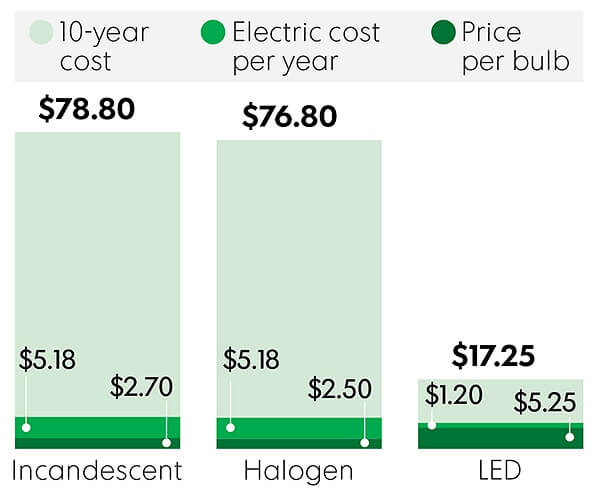
So, does leaving the lights on actually increase your electric bill? The short answer is: yes, absolutely! But, like most things in life, the devil is in the details. It all boils down to the type of light bulb you're using and how long you'll be gone.
Must Read
Let's break it down. Older incandescent bulbs are notorious energy hogs. They convert only a small percentage of the electricity they use into light; the rest is lost as heat. Leaving these bulbs on, even for short periods, can significantly increase your energy consumption. Think of them as little furnaces, constantly burning electricity and adding to your bill.

However, the equation changes with more modern bulbs. Compact fluorescent lamps (CFLs) and light-emitting diodes (LEDs) are much more energy-efficient. They use significantly less electricity to produce the same amount of light as incandescent bulbs. So, the impact of leaving them on for short periods is less dramatic, but it still adds up over time.
Here's a general rule of thumb: if you're going to be out of a room for more than 15 minutes, it's almost always more cost-effective to turn off the lights, regardless of the type of bulb. Think of it this way: even the smallest drip from a faucet will fill a bucket eventually. Similarly, even the low energy consumption of an LED left on for hours will slowly but surely increase your electricity bill.
Consider this: leaving a 60-watt incandescent bulb on for an extra 8 hours a day can add up to a significant increase in your electricity bill over the course of a year. While an LED equivalent (using around 8-12 watts) will have a lesser impact, it's still wasted energy and wasted money!
Ultimately, the decision is yours, but understanding the energy consumption of different types of light bulbs and being mindful of how long lights are left on can make a real difference in your energy bill. So, next time you're about to leave a room, remember this: a little bit of effort can lead to a lot of savings. And who knows, you might just find yourself enjoying the small victory of outsmarting your electric bill!