
Do You Disconnect Positive Or Negative First

Alright, let's talk about something that might seem super technical, but trust me, it's something we've all probably encountered, maybe even with a little internal monologue that goes something like, "Uh oh, hope I don't mess this up!" We're diving into the age-old question: When disconnecting a battery, do you yank off the positive or negative cable first?
Think of it like this: Imagine you're untangling a Christmas tree light extravaganza. Do you start from the plug end, or just grab a random bulb in the middle and hope for the best? (Spoiler alert: the random bulb approach usually ends in tears and a string of muttered swear words.) Disconnecting a car battery is similar – there's a "best practice" way to avoid fireworks and possibly a very unpleasant zap.
Why Does It Even Matter?
Okay, so why can't we just go all willy-nilly on those terminals? Well, the key is the car's chassis. Your car's body is usually connected to the negative (-) terminal, creating a ground. This is like the safe zone of electrical circuits. It’s where the electricity wants to go.
Must Read
Now, picture this: you’re using a wrench to disconnect the positive (+) terminal. If that wrench accidentally touches any metal part of your car while still connected to the positive terminal...BAM! You've created a short circuit. Think of it like accidentally touching a live wire while standing in a puddle – not a pleasant experience.
It's not like a Hollywood explosion or anything, but you might see some sparks, and you could potentially damage your electrical system. Plus, it's just plain startling. Trust me, I’ve been there, done that, got the slightly singed t-shirt.
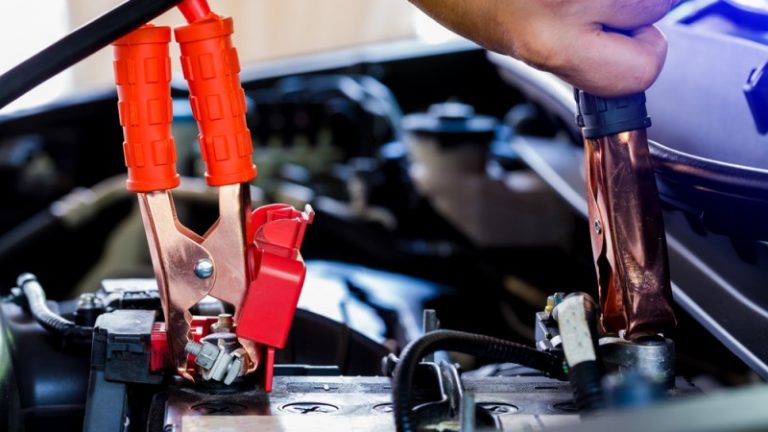
The Golden Rule: Negative First, Last to Connect
So, the universally accepted wisdom is this: Disconnect the negative (-) terminal first. Why? Because if your wrench slips and touches the car's body, nothing happens! The circuit is already broken, so no sparks, no drama. It’s like trying to start a party when the power is already out – not going to happen.
And when you're reconnecting the battery, do the opposite. Connect the positive (+) terminal first, then the negative (-). This way, if you accidentally touch the car's body while connecting the positive terminal, the circuit isn't complete yet, so you're still safe.

A Little Anecdote (Because Everyone Loves a Good Story)
I remember once, helping a friend jump-start their car. I was feeling all confident, like a seasoned mechanic, until I went to disconnect the jumper cables and completely spaced out which one to remove first. Of course, my wrench brushed against the car frame while still on the positive terminal. Cue the sparks, a small yelp from me, and my friend giving me that look. We both learned a valuable lesson that day!
It’s a simple thing to remember. Negative first, positive last. Repeat it like a mantra. Write it on your hand. Get a tattoo (okay, maybe not the tattoo). Whatever it takes to drill it into your brain.

Practical Tips for Battery Disconnection
- Wear safety glasses: Just in case. You don't want battery acid in your eyes.
- Use the right size wrench: A loose wrench is a recipe for slipping and causing sparks.
- Don't force anything: If a terminal is stuck, use a terminal puller or a bit of penetrating oil. Don't just yank on it like you're trying to uproot a stubborn weed.
- Keep metal objects away: Take off any rings or bracelets. Remember, metal conducts electricity!
Think of it as good car karma. Following these simple steps can save you from potential headaches (and sparks!) down the road. So, next time you're wrestling with a battery, remember the golden rule: Negative first, positive last. Your car (and your nerves) will thank you.
And if you're ever in doubt, consult your car's manual or ask a professional. There's no shame in seeking help, especially when electricity is involved. Better safe than sorry, right?
