
Do We Use Alternating Current Or Direct Current

Okay, so picture this: you're at a coffee shop, right? Frappuccino in hand (or maybe you're a black coffee purist, no judgment!), and the barista is telling you this wild story about… electricity. Not just any electricity, but the epic battle between AC and DC. Sounds boring? Trust me, it's way more dramatic than a reality TV show.
Now, before you reach for the emergency exit, let me explain. We’re talking about Alternating Current (AC) and Direct Current (DC). Think of them as rival superhero factions, each with their own powers and weaknesses. It’s kind of like Batman versus Superman, but with electrons instead of brooding billionaires.
The DC Dynamo: Always Going the Same Way
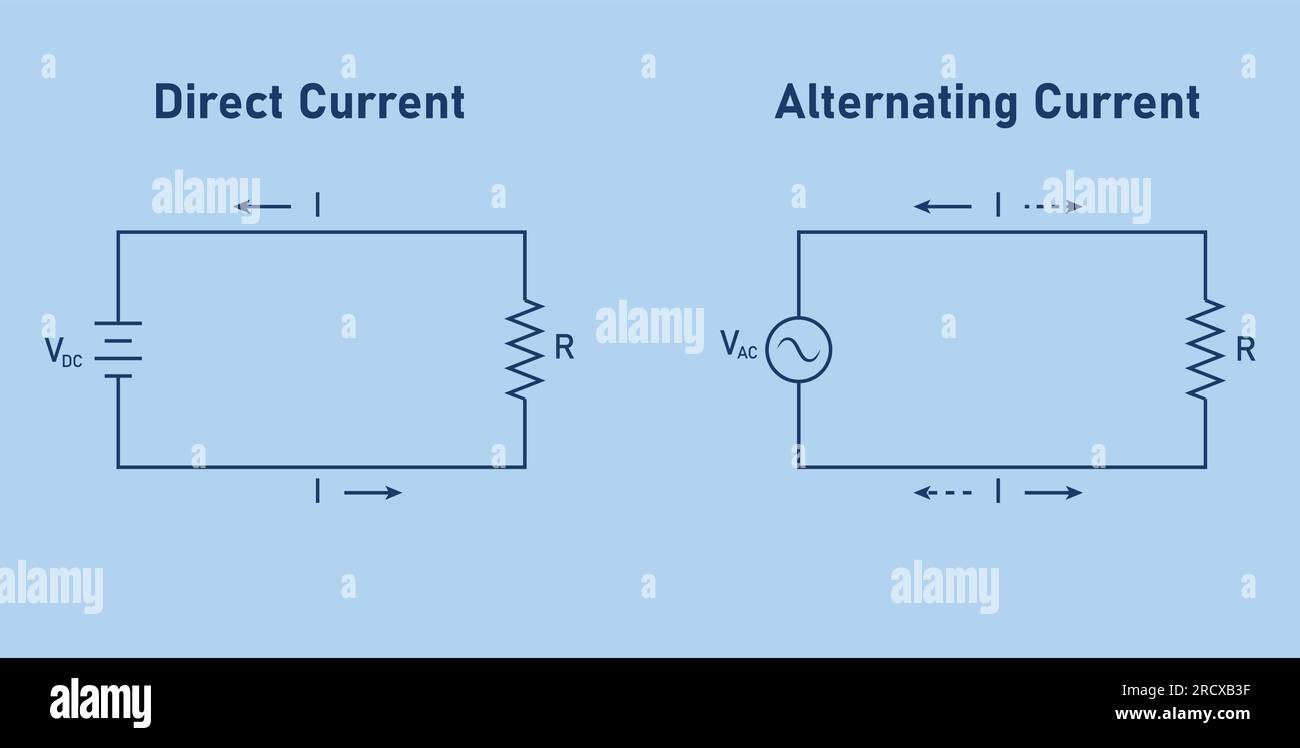
Let’s start with DC, because it’s simpler. Imagine a bunch of tiny electrons marching in perfect formation, all heading in the same direction, like well-behaved soldiers. That’s DC in a nutshell. Direct Current flows in a single, constant direction. It’s reliable, predictable, and generally pretty chill.
Must Read
Think of batteries! Your phone? DC. Your laptop? DC (internally, at least – we’ll get to that little secret later). Even that weird remote control for your grandma's ancient TV? You guessed it: DC. See, DC is like the comforting, familiar sweater of the electricity world.
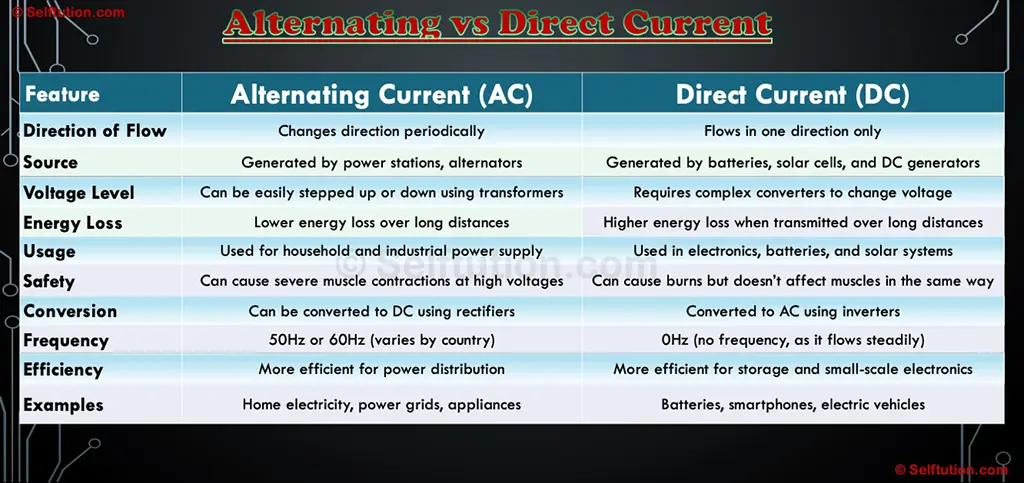
But here’s the catch: DC doesn't travel well over long distances. Imagine those electron soldiers trying to march from, say, New York to Los Angeles. By the time they get to Vegas, they'd be utterly exhausted, and most would have deserted for a buffet. The energy loss is a real problem. This is why your phone charger transforms AC power from the wall to DC, and the battery stores it as DC.
AC: The Wild, Rebellious Current
Enter AC, the electricity equivalent of a rock star. Alternating Current doesn’t just flow in one direction; it’s constantly changing, oscillating back and forth like a hyperactive teenager on a sugar rush. It's like a mosh pit of electrons, constantly pushing and shoving each other in both directions. Absolute chaos, right? Actually, it's beautifully efficient (in its own chaotic way).
This constant change is key because it allows AC to be easily transformed to different voltages using, wait for it... transformers! These nifty devices can step up the voltage for long-distance transmission, then step it down again for safe use in our homes. Think of transformers as electricity translators, allowing AC to speak different "voltage languages." This is how power plants send electricity across hundreds of miles without losing too much energy.
-vs-direct-current-(dc).png)
So, your wall socket? Almost certainly AC. Your toaster? AC. That suspiciously glowing lava lamp? Probably AC too. AC is the powerhouse behind our modern electrical grid, the invisible force that keeps our lights on and our Netflix streaming. It's all thanks to the clever invention of the transformer, which AC pairs with perfectly.
Fun fact: There was a literal "War of the Currents" back in the late 19th century between Thomas Edison (a big proponent of DC) and Nikola Tesla (champion of AC). Tesla and George Westinghouse ultimately won, and AC became the dominant standard for electricity distribution. Imagine what the world would be like if Edison had won!
So, Who Wins?
The truth is, there's no real "winner" in the AC vs. DC battle. They both have their strengths and weaknesses, and we use them both extensively. It's more like a collaboration than a competition.
Think of it this way: AC is the highway system, efficiently transporting electricity over long distances. DC is the local road, powering the devices in your neighborhood. We need both to get where we're going (electrically speaking, of course).

Most of our devices, from smartphones to electric cars, need DC to operate, but we use AC to get electricity to our homes. Inside these devices, a charger or power adapter converts the AC power into the DC power that these devices need.
Plus, with the rise of renewable energy like solar panels, DC is making a comeback! Solar panels produce DC electricity, and while it often needs to be converted to AC for grid integration, advancements in battery technology are making DC-powered homes and microgrids increasingly viable. So, those electron soldiers might just be getting a second chance to shine.
So, next time you flip a light switch or plug in your phone, take a moment to appreciate the invisible battle (or harmonious collaboration) of AC and DC. It's a story of innovation, rivalry, and a whole lot of electrons. And remember, it all started with a very serious argument over which current was better. Kinda like arguing about whether pineapple belongs on pizza… but with potentially world-changing consequences!