
Do We Know How A Tornado Forms

Ever had one of those days where the weather just can't make up its mind? Like it’s been out on a wild night and now it’s got a serious case of the Mondays, throwing everything from sunshine to sideways rain at you in the span of an hour? Yeah, we’ve all been there, scratching our heads at the sky. But when it comes to something as utterly jaw-dropping as a tornado, the head-scratching goes into overdrive. We see them, we fear them, but do we really, truly know how a tornado forms?
It’s a bit like trying to explain why your cat suddenly decides 3 AM is prime zoomies time. You know the ingredients (cat, floor, 3 AM), but the exact sequence of events that leads to that frantic dash from one end of the house to the other? That’s where it gets fuzzy. Tornadoes are kind of like that, but with a lot more scientific drama and considerably more destructive results.
The Big Question (and Why It's Tricky)
If you think meteorologists just follow a simple recipe – “add one cup of warm air, a pinch of cold air, stir vigorously, and voilà!” – you’d be sorely mistaken. It’s less like baking a perfect soufflé and more like a mad scientist’s kitchen experiment where sometimes, against all odds, a magnificent (and terrifying) concoction emerges from the chaos. We understand the main ingredients, absolutely. But the precise chemistry that kicks off the full-blown, destructive dance? That’s still a work in progress, a bit like trying to decipher your teenager's texts.
Must Read
So, what are these crucial ingredients? Picture this: you've got a big, enthusiastic blob of warm, moist air, usually wafting up from the Gulf of Mexico, feeling light and full of energy. Think of it as that overly optimistic friend who always wants to party. This air wants to rise, rise, rise!
Then, we have the grumpy counterpart: a hefty mass of cool, dry air, often swooping in from the Rocky Mountains. This air is dense, heavy, and frankly, just wants to sit down and be left alone. It acts like a lid, keeping that warm, party-animal air from rising too quickly. It’s the bouncer at the atmospheric club.
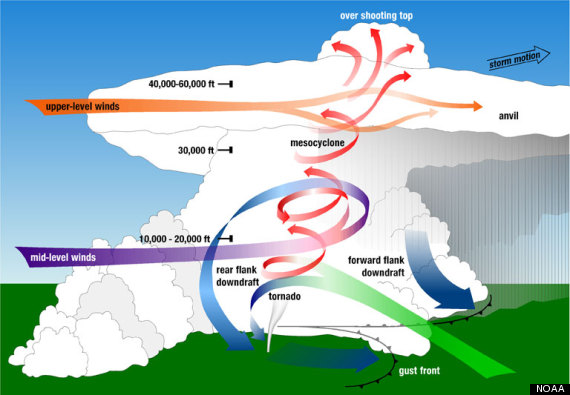
But here’s where things get interesting, and why it's not just a simple clash of personalities. The true secret sauce, the plot twist in our atmospheric drama, is something called wind shear. Imagine winds blowing at different speeds and even different directions at various altitudes. Down low, maybe the wind is gently heading north. Up higher, it’s decided to sprint east. This difference in wind speed and direction creates a horizontal, invisible "rolling pin" effect in the atmosphere.
The Dance of the Air (and the Magic Trick)
Now, our party-animal warm air, despite the grumpy bouncer, finds a weakness, an instability. It bursts upwards, creating a powerful updraft. This is like punching a hole in the ceiling of that club. And here’s the magic trick: as that horizontal "rolling pin" of wind shear gets caught in the powerful updraft, it starts to get tilted upwards. Suddenly, that horizontal rotation is standing on its head, becoming a vertical column of spinning air. This rotating updraft is what we call a mesocyclone. It’s the engine, the spinning heart of what could become a tornado.
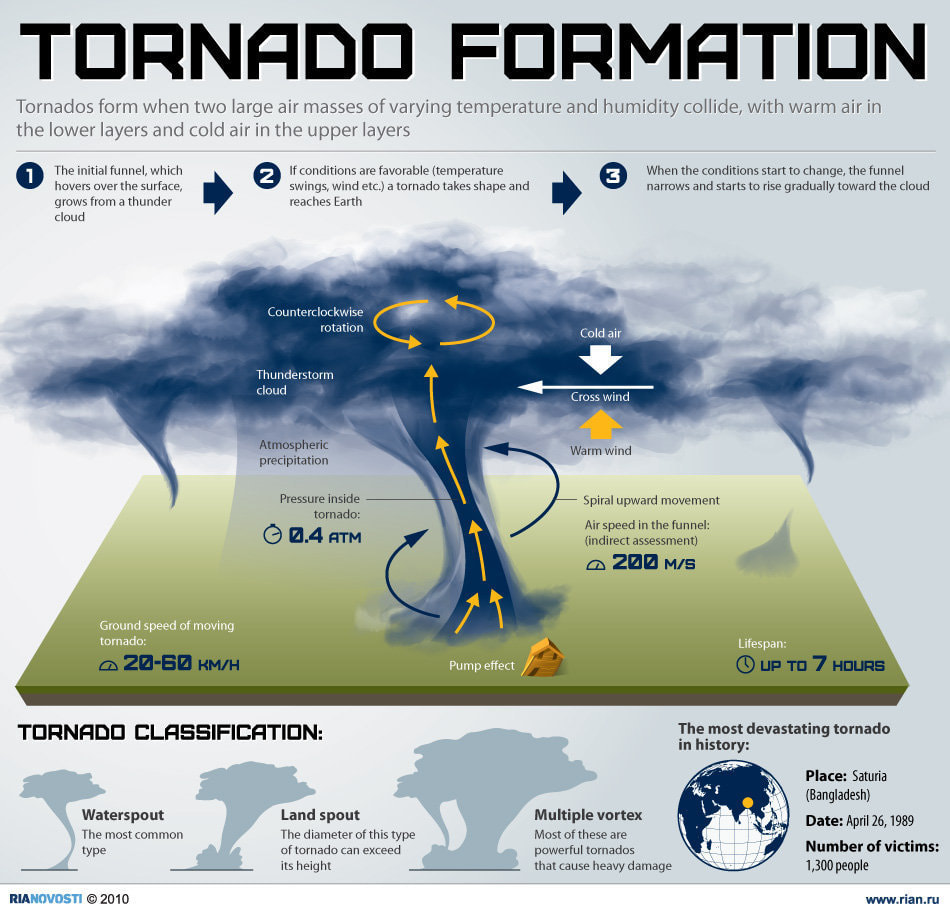
Think of an ice skater pulling their arms in to spin faster. As the mesocyclone stretches and tightens, its rotation intensifies dramatically. The pressure inside this rapidly spinning column drops like a stone, causing the moisture in the air to condense, revealing that iconic, swirling funnel cloud. It’s like the grand reveal, the dramatic spotlight hitting the stage. The crowd (us, staring nervously from afar) holds its breath.
When that funnel makes contact with the ground, that’s when it officially becomes a tornado, making its grand, destructive entrance. It’s the ultimate mic drop, but one you absolutely don't want to be standing near.

So, Do We KNOW Everything? (Spoiler: Not Quite)
Despite all this incredible understanding, there’s still a maddeningly elusive "last mile" problem. We can predict when the ingredients are right for severe thunderstorms that might produce tornadoes. We can spot those mesocyclones on radar. But knowing precisely which one will spin up a tornado, and when it will touch down, is still a challenge. It's like having all the clues for a murder mystery but the culprit still manages to slip away before the final act.
Why do some supercells create violent tornadoes while others, with seemingly identical ingredients, just produce a lot of rain and hail? That’s the million-dollar question keeping meteorologists up at night. They're diligently studying tiny atmospheric disturbances, temperature gradients, and moisture levels, trying to pinpoint those critical, fleeting moments that tip the scales from "big storm" to "major disaster."
So, do we know how a tornado forms? We know the script, the main characters, and most of the acts. But the exact improvisation that leads to the final, terrifying performance still holds some secrets. It’s a testament to the incredible, complex power of nature – and a reminder to always respect the sky, even when it’s just having one of its "mad Monday" moments.
