Do All Types Of Coal Have The Same Energy Value

Imagine you're baking a cake. You’ve got flour, sugar, eggs, the whole shebang. But what if I told you not all flour is created equal? Some is bleached, some is unbleached, some is made from ancient grains your great-grandma probably used. They all LOOK like flour, but they’ll behave differently and give you a slightly different tasting (and rising!) cake. Well, the same goes for coal! It's not just “black rock” - it's a whole family of black rocks, and some members are definitely the energetic party animals of the group.
Coal Isn't Just Coal: It's a Family Affair!
We generally think of coal as this uniform, black substance that gets burned to make power. But in reality, coal is a bit like a family with several children, each with their own quirks and personalities. We're talking about a spectrum, folks, from the "barely coal" types to the "powerhouse" champions! Think of it like siblings: one might be a marathon runner, another a crossword puzzle enthusiast, and yet another… well, let’s just say they’re good at sleeping. All siblings, all different. And coal is the same!
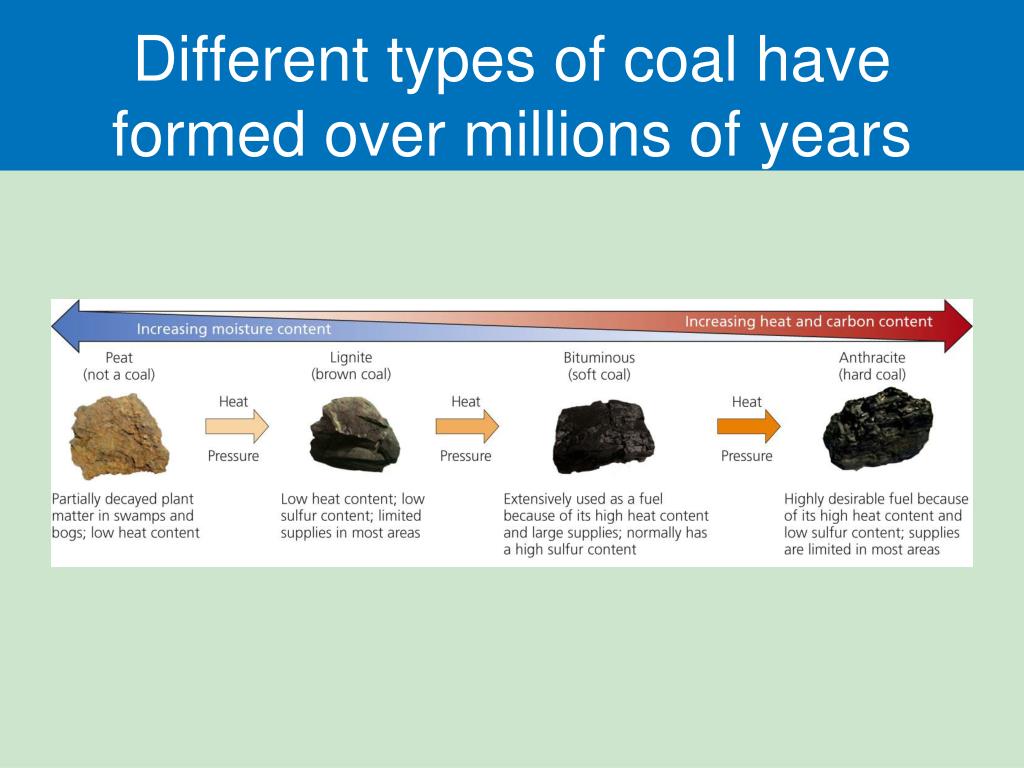
The main difference comes down to how long it’s been cooking underground. See, coal is basically ancient plant matter that’s been squished and heated over millions of years. The longer it cooks, the more concentrated the carbon gets, and the more energy it packs. Think of it like slowly roasting vegetables: the longer they roast, the sweeter and more intensely flavored they become.
Must Read
The Coal Family Lineup: From Peat to Anthracite
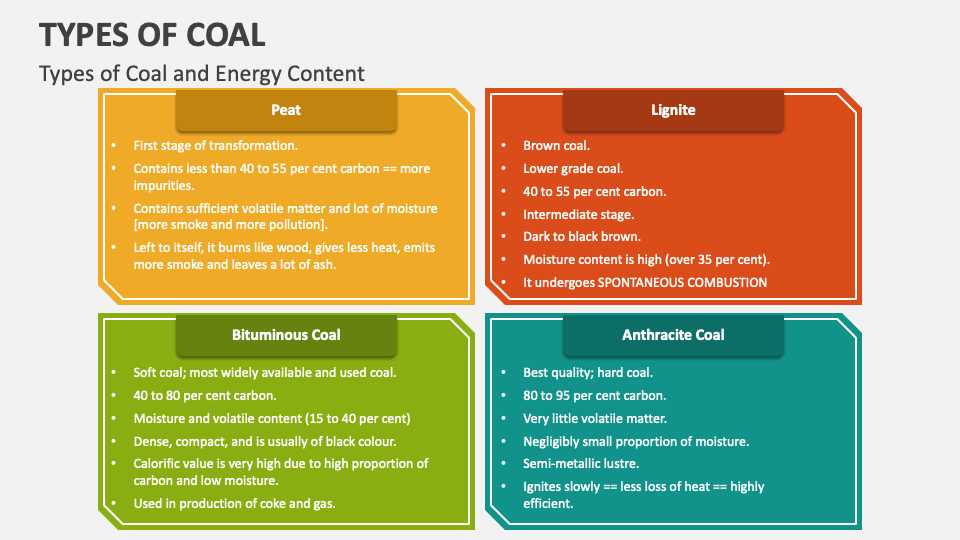
Let's meet the family, shall we? At the very beginning of the coal-ification process, we have peat. It's basically the awkward teenager of the coal family. It's still pretty plant-y, super moist, and burns with a LOT of smoke. Think of trying to light damp leaves on fire – that’s peat. Not exactly the life of the party.
Next up is lignite, also known as "brown coal." Lignite is a bit further along, but it’s still got a lot of water in it. It's like the college student who still comes home every weekend to do laundry. It’ll burn, but it's not going to win any energy efficiency awards.

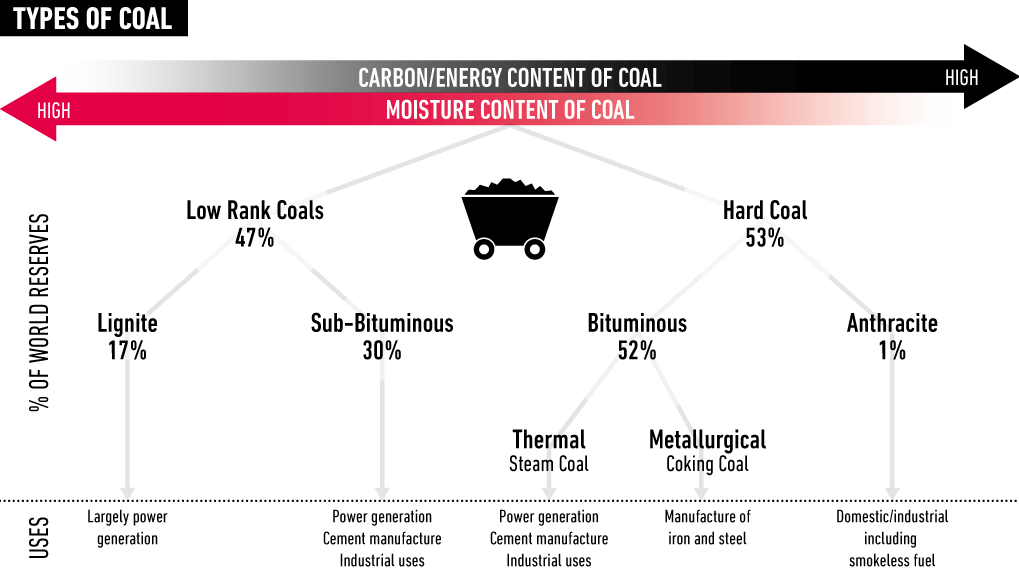
Then comes bituminous coal. This is your average, everyday workhorse of the coal world. It's used in power plants and steel production. Think of it as the reliable, dependable sibling who always shows up on time and gets the job done.
And finally, we have anthracite, the rock star of the coal family! This stuff is hard, shiny, and packed with energy. It's been cooking underground for ages, and it’s lost most of its moisture and impurities. It's like the sibling who became a CEO. It's the hottest burning and cleanest of the bunch. It's also relatively rare, which adds to its mystique.
The Moral of the Story: Not All Black Rocks Are Created Equal
So, does all coal have the same energy value? Absolutely not! It’s like comparing a weak cup of instant coffee to a perfectly brewed espresso. Both are technically coffee, but one is going to give you a much bigger kick! The type of coal directly impacts how much energy you get out of it.
This difference matters a lot. Power plants need to know what kind of coal they’re burning to predict how much electricity they can generate. It also affects how much pollution is produced; the “younger” coals like peat and lignite tend to be dirtier to burn.
The next time you see a lump of coal, remember it's not just a black rock. It's a story of ancient forests, immense pressure, and millions of years of geological cooking. It's a member of a diverse family, and each type of coal has its own unique energy value and story to tell. And who knows, maybe that lump of coal is a rock star in disguise, just waiting to unleash its anthracite energy upon the world!
And just think, all that energy, locked away for millions of years, waiting to power our homes and factories. It’s kind of amazing, isn’t it? A little bit like unlocking the secrets of the Earth itself. Who knew rocks could be so fascinating?
“Coal: It’s not just a fossil fuel, it’s a geological adventure!” – An anonymous (but probably very enthusiastic) geologist.
So, the next time you flip on a light switch, take a moment to appreciate the complex and fascinating world of coal. You might be surprised at what you discover!