Do Alkaline Earth Metals Occur Freely In Nature
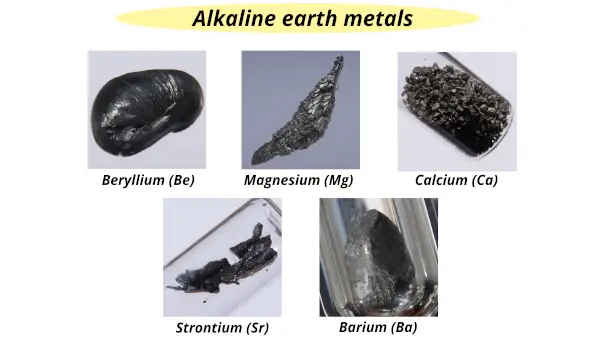
Okay, let's talk about alkaline earth metals. Sounds super scientific, right? Like something you last heard about in that chemistry class you tried really hard to forget. But trust me, they're more relatable than you think. Think of them as the slightly less showy cousins of the alkali metals (those guys are wild, always reacting with everything). Our alkaline earth metal buddies are important, but they're also kinda chill, chemically speaking.
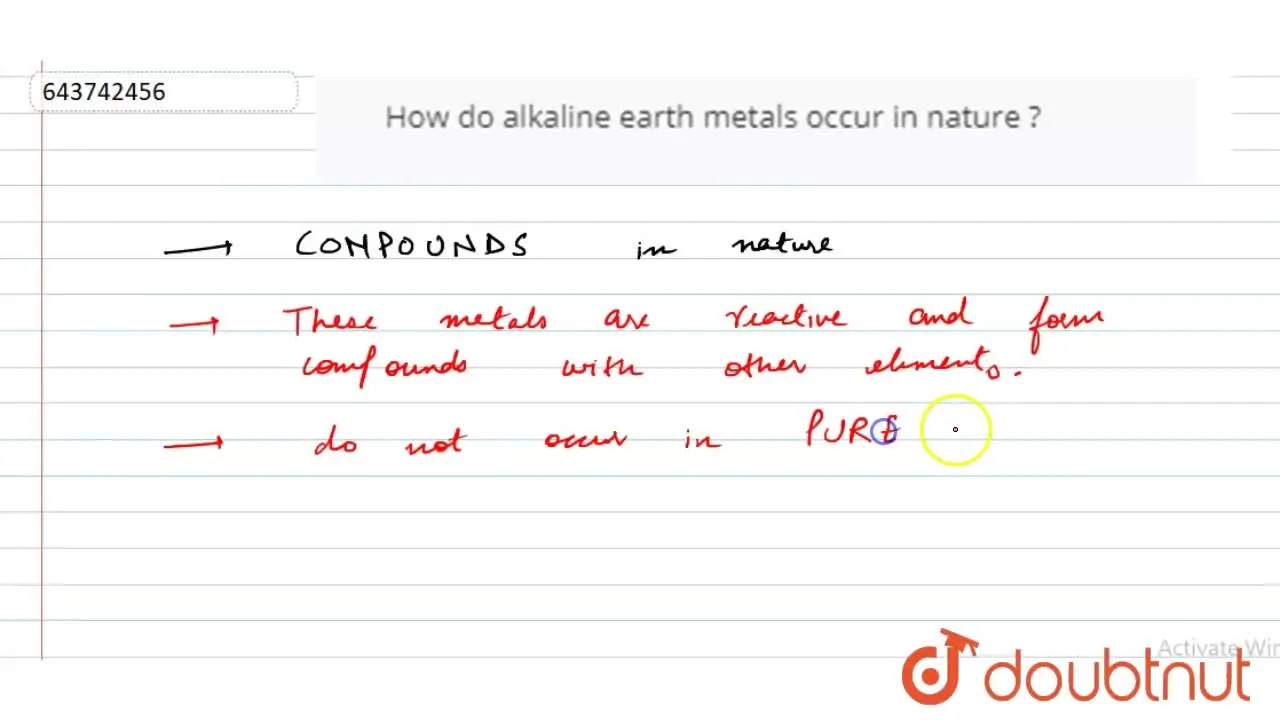
So, the big question: Do you find them just hanging out, all by themselves, in nature? Like, could you stumble upon a chunk of pure calcium while hiking in the woods? Short answer: absolutely not. Longer, more entertaining answer? Keep reading.
Why Can't I Find a Magnesium Nugget in My Backyard?
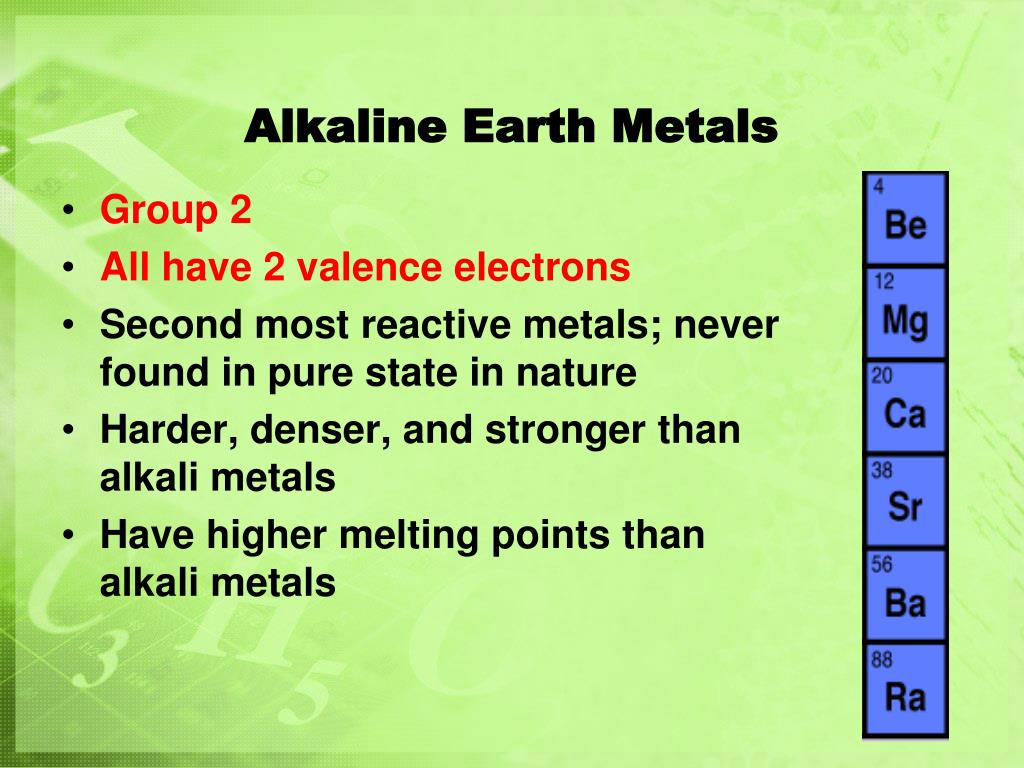
Imagine baking a cake. You wouldn't just leave the flour, sugar, and eggs sitting out on the counter, expecting them to magically transform into a delicious dessert, would you? Nah! They need to combine, react, and bake to become something… well, something edible. It’s the same with alkaline earth metals. They are too reactive to just exist in their pure, uncombined form. They’re basically social butterflies of the element world; they have to hang out with other elements.
Must Read
Think of it like this: Sodium (an alkali metal, remember those wild cousins?) is like that friend who starts a dance-off at every party. Magnesium (an alkaline earth metal) is more like the friend who joins in… eventually. But both are definitely participating. That "joining in" means reacting with other substances, like oxygen or water, to form compounds. These compounds are much more stable and less likely to cause trouble (like, say, exploding when they touch water – yes, that’s a thing some metals do!).
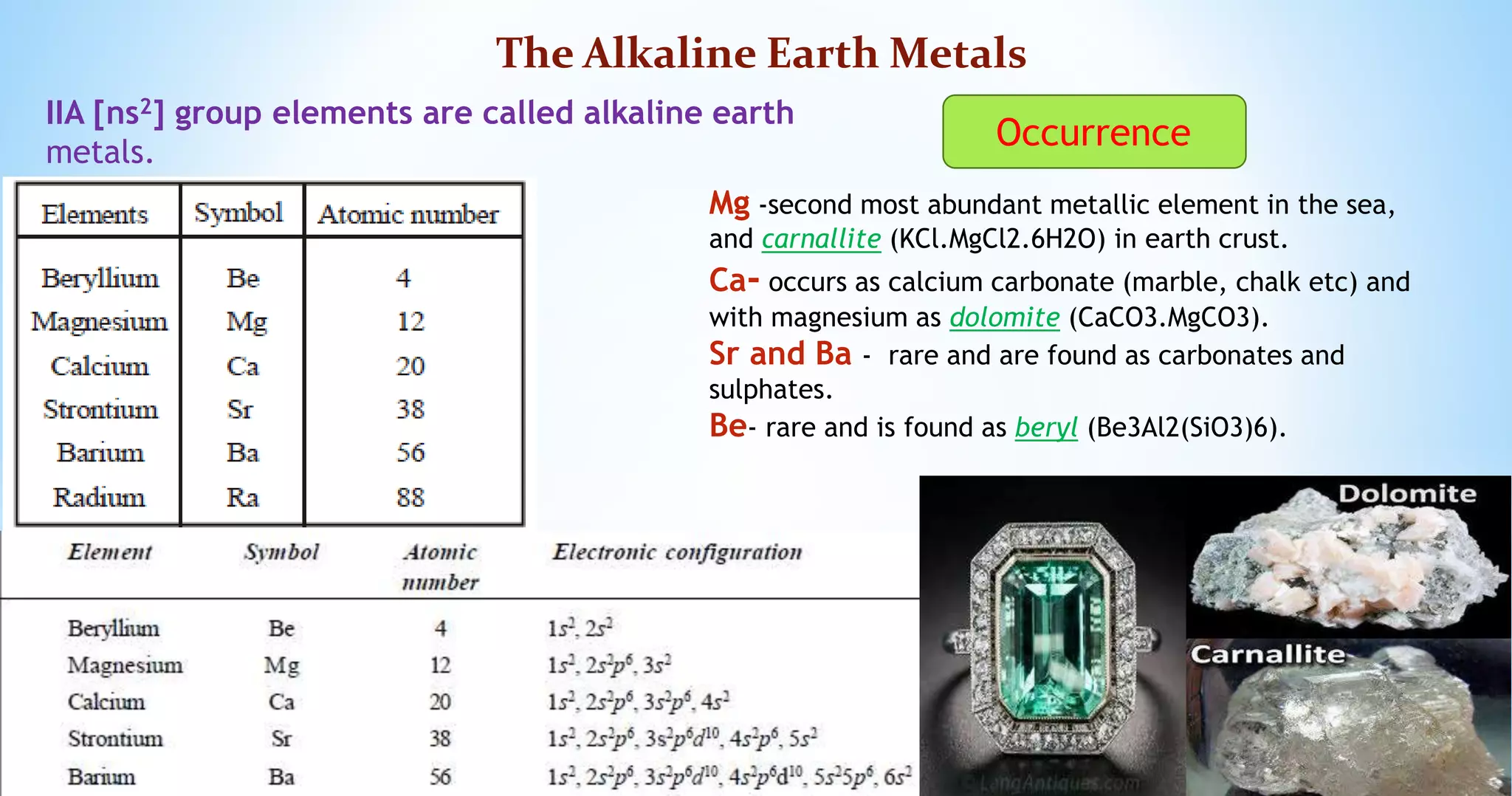
Therefore, you won't find pure beryllium, magnesium, calcium, strontium, barium, or radium chilling by themselves in nature. They're always found locked in compounds, like oxides, carbonates, or sulfates. They're team players, not solo artists.
Where Do We Find Them, Then?
So, if they’re not hanging out solo, where are these alkaline earth metals hiding? Everywhere, actually! Think about chalk. That's mostly calcium carbonate (CaCO3). Limestone? Same deal. The stuff that makes your bones strong? Mostly calcium phosphate. Epsom salts, the thing your grandma swears cures everything? Magnesium sulfate. See? They're all over the place, just not in their pure form.
They are usually found in minerals and rocks. It's like they're playing hide-and-seek, but instead of hiding behind a tree, they're hiding inside a rock, bonded to other elements. Smart, right?
Mining companies dig up these rocks and minerals, then use various chemical processes to extract the alkaline earth metals in their pure form. It's like a complicated recipe, requiring specialized equipment and some serious chemistry know-how. Way more involved than baking that cake!
Why Does This Matter?
Why should you care that alkaline earth metals don't occur freely? Because they are essential to life as we know it! Calcium, as mentioned, is crucial for strong bones and teeth. Magnesium is vital for muscle function and nerve transmission. Think of how much your muscles would ache without it! They also play key roles in various industrial processes. We use magnesium to make lightweight alloys for airplanes and cars. Barium compounds are used in medical imaging. Strontium gives fireworks that brilliant red color. Basically, they're behind-the-scenes heroes of the modern world.
So, next time you see a firework, think about strontium. When you drink a glass of milk, think about calcium. And when you feel a muscle cramp (and reach for that Epsom salt bath), remember magnesium. These alkaline earth metals might not be flashy, but they're definitely doing their part to keep the world running smoothly. Just don't expect to find them lying around in their pure form, waiting to be discovered. They're far too busy being useful, bonded to other elements, and generally making the world a better place. It's a team effort, after all!