
Do Air Conditioners Give Off Carbon Monoxide

So, picture this: I’m at my favorite coffee shop, fueled by caffeine and questionable life choices, when my friend Barry bursts in, sweating like he just ran a marathon… in a sauna. “Dude!” he gasps, “My AC… it’s trying to kill me with carbon monoxide!”
Naturally, I choked on my latte. Carbon monoxide from an air conditioner? Was Barry turning into a conspiracy theorist before my very eyes? Turns out, his brain was just overheating, a common summer ailment.
The Short Answer (Before Barry Faints)
Okay, deep breaths, Barry. The short answer is a resounding NO. Your average, everyday air conditioner – the kind that sits in your window or hums quietly in your wall – does NOT produce carbon monoxide. Like, zero. Zilch. Nada.
Must Read
Think of it this way: your AC is basically a high-tech fan with superpowers. It takes the hot air from your room, chills it down using a refrigerant (a fancy chemical that loves to play hot potato with heat), and then blows the cool air back at you. There’s no combustion involved. No fire. No tiny gremlins burning fossil fuels inside.
Where Barry (Probably) Went Wrong
Now, I say "probably" because Barry's brain is a mysterious and wonderful place. But here’s the thing: carbon monoxide is a product of incomplete combustion. That means it’s created when something is burning but not burning completely – like a faulty furnace, a gas-powered generator, or your Uncle Phil’s attempt at a barbecue.
So, unless Barry decided to hook up his AC to a miniature coal mine (which, knowing him, isn’t entirely out of the question), his AC is innocent. The real culprit might be:
- A malfunctioning furnace: Especially if it uses natural gas, propane, or oil. Get it checked ASAP!
- A dodgy water heater: Same deal as the furnace. Carbon monoxide is a silent killer, folks.
- A blocked chimney or flue: If you're burning anything (firewood, gas fireplace, etc.), make sure the smoke has a clear path to escape.
- Running a generator indoors: This is a MAJOR no-no. Seriously, don’t do it. Ever.
- Parking your car in the garage with the engine running: Even if the garage door is slightly open, it’s a bad idea.
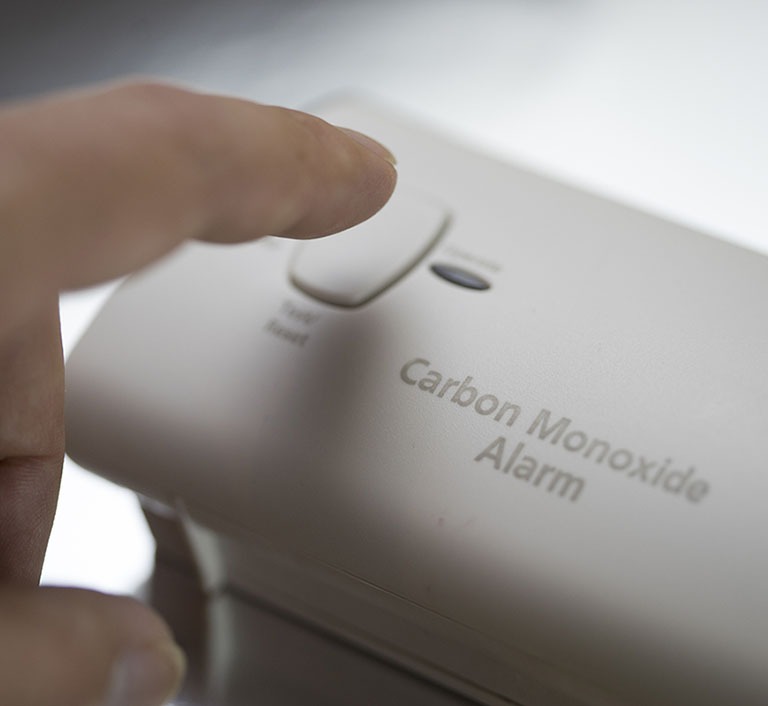
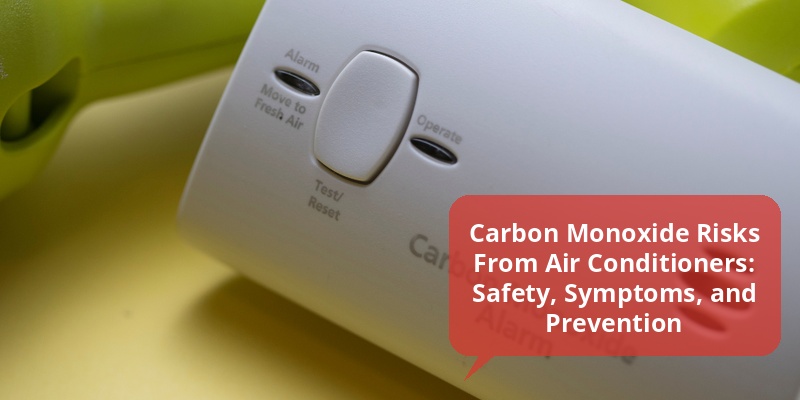
The moral of the story? Carbon monoxide detectors are your friends. Invest in one (or several) and make sure they’re working properly. It could save your life, and prevent unnecessary panic attacks in coffee shops.
The Slightly More Complicated Truth (Because Life Isn't Simple)
Okay, okay, I’m being a little simplistic. There are some situations where air conditioning and carbon monoxide could be related, but it’s indirect.
For example, if you have a window air conditioner and a faulty furnace, the AC might be circulating the carbon monoxide throughout your house, making the problem worse. It’s not producing the gas, but it’s definitely spreading the misery.
And let's talk about cars! Car air conditioners don't create carbon monoxide either. However, if your exhaust system is leaking, you could be getting carbon monoxide inside the car while the AC is running. Hence, regular car maintenance is important.
Also, large, industrial chillers can sometimes use combustion processes (like natural gas) for certain applications. But these are very specialized systems, and if you're dealing with one of these, you should definitely have qualified technicians handling it, who will take the appropriate safety measures.
Fun Facts (Because Why Not?)
- Carbon monoxide is odorless and colorless, which is why it’s so dangerous. It’s like a ninja assassin of the air.
- The first symptom of carbon monoxide poisoning is often a headache. So, if you suddenly develop a persistent headache, especially during the winter months, get it checked out.
- Birds are particularly sensitive to carbon monoxide. If your pet bird suddenly seems unwell, it could be a sign of a problem. (Another reason to love our feathered friends!)
The Bottom Line (For Barry and Everyone Else)
Don't blame your air conditioner for trying to poison you with carbon monoxide. It's probably just trying to save you from melting into a puddle. Instead, check your other appliances, invest in carbon monoxide detectors, and maybe lay off the conspiracy theories. Oh, and Barry, next time you have a sudden realization, try Googling it before you interrupt my caffeine ritual.
Now, if you'll excuse me, I need another latte. And maybe a carbon monoxide detector... just to be safe.
