Differentiate Between Kilowatt And Kilowatt Hour

Ever stare at your electricity bill and feel like you're reading a foreign language? All those numbers and abbreviations can be baffling, but understanding a couple of key terms – kilowatt (kW) and kilowatt-hour (kWh) – can make you a much savvier energy consumer. It’s like learning the difference between speed and distance; related, but definitely not the same thing! And trust me, once you grasp this, you'll be able to impress your friends at your next trivia night (maybe).
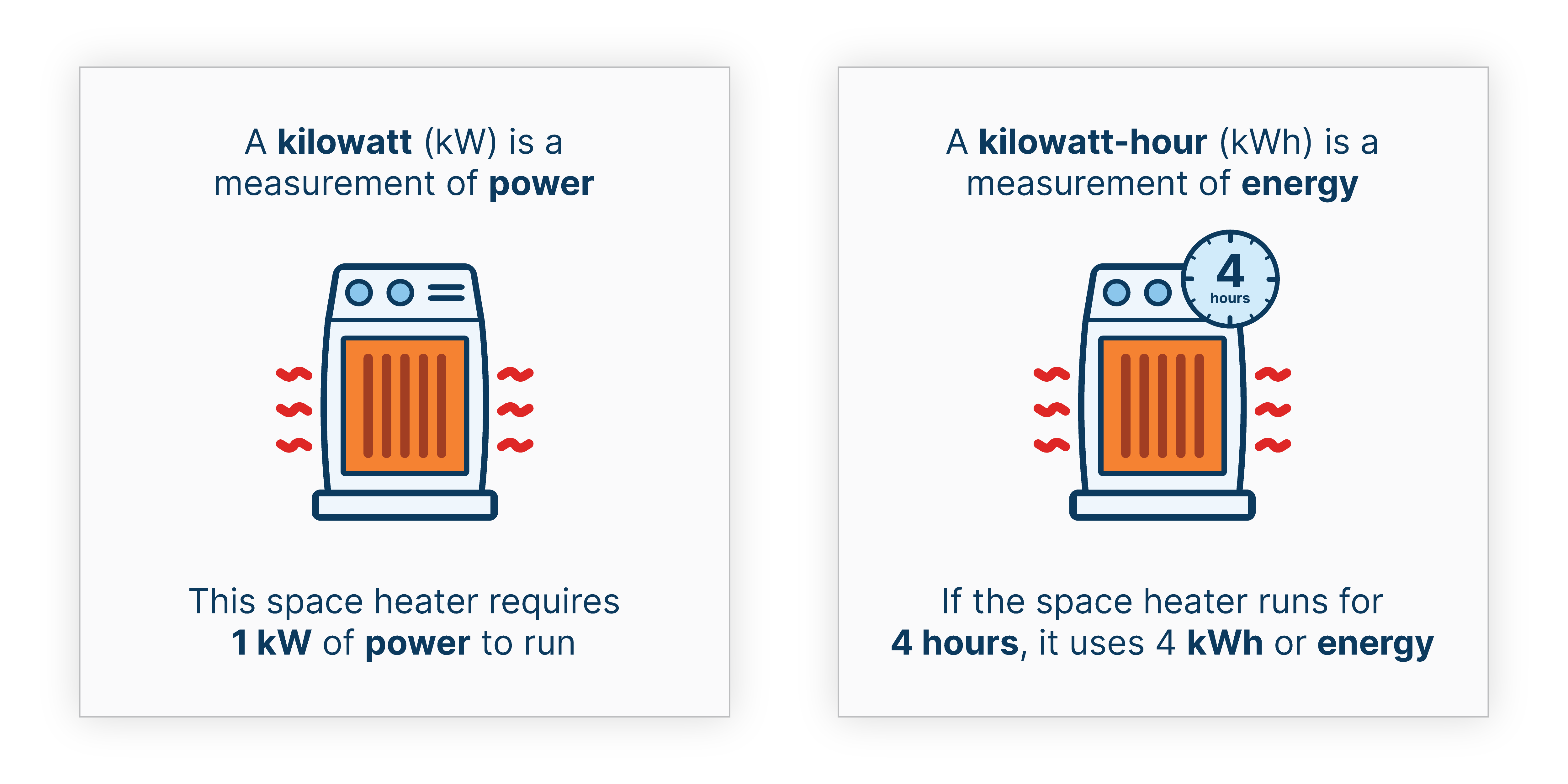
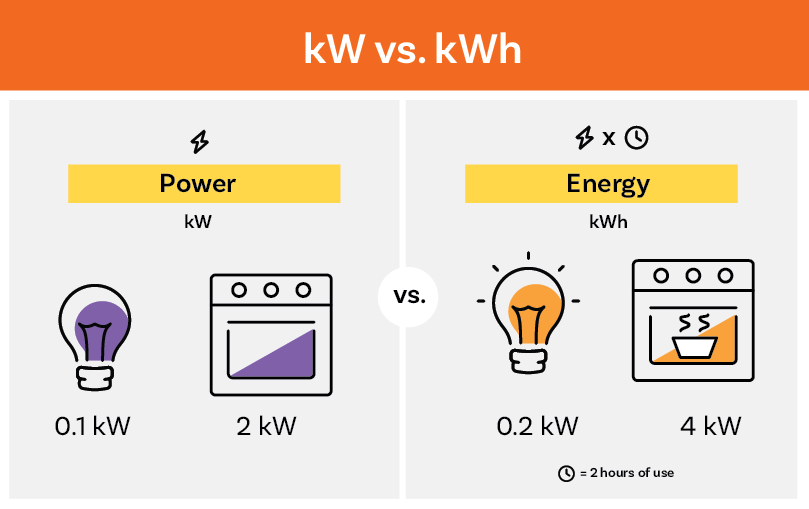
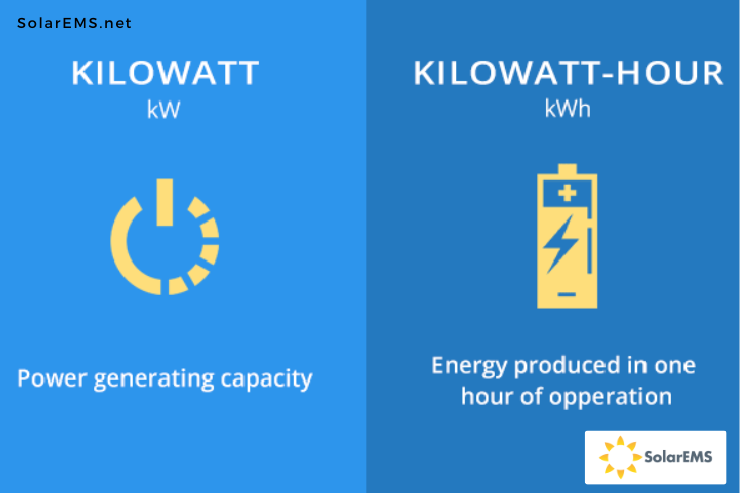
So, what are these mysterious kW and kWh? Think of a kilowatt (kW) as a measure of power. It’s like horsepower for your electrical devices. It tells you how much electricity a device is using at any given moment. A 100-watt light bulb, for example, uses 0.1 kilowatts (because 100 watts divided by 1000 equals 0.1). A microwave might draw 1.2 kW when it's running. The higher the kilowatt rating, the more power the device is sucking up right now.
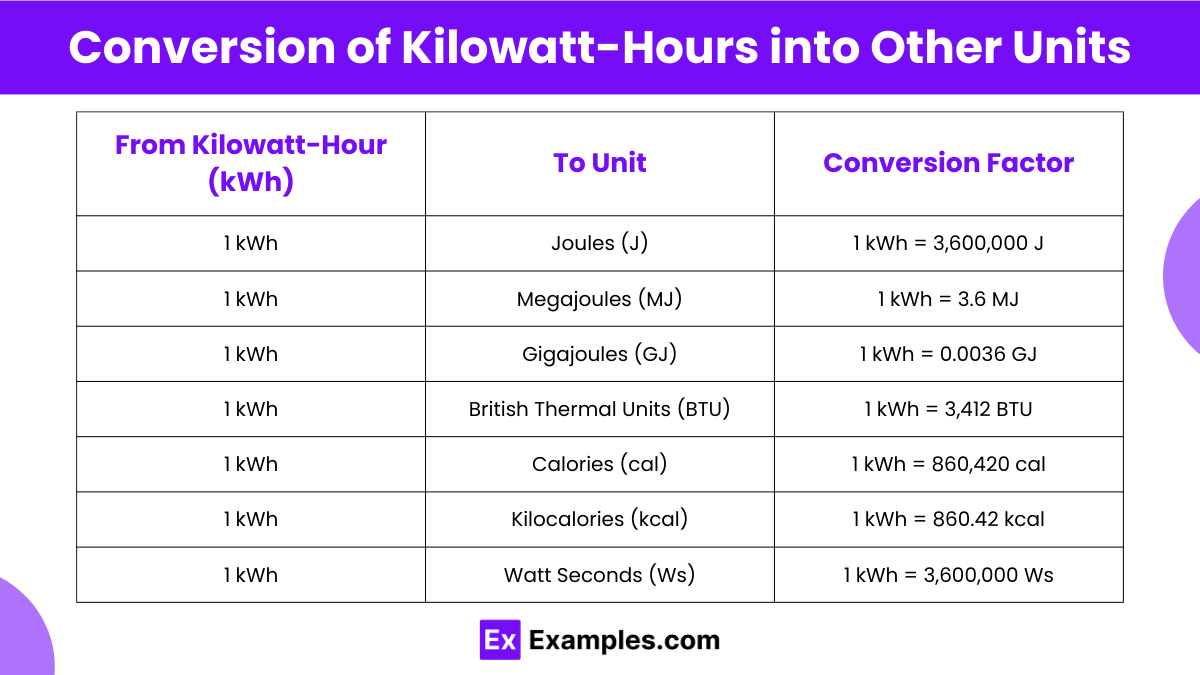
Now, let's talk about the kilowatt-hour (kWh). This is where the "time" element comes in. A kilowatt-hour measures energy – the total amount of electricity you've used over a period. Imagine leaving that 100-watt light bulb on for ten hours. That bulb would have consumed 1 kWh of energy (0.1 kW x 10 hours = 1 kWh). Your electricity bill is based on how many kilowatt-hours you consume each month.
Must Read
Understanding the difference has some serious benefits. For one, it allows you to make informed decisions about your energy consumption. Thinking about buying a new appliance? Check its wattage (or kW rating). A more efficient appliance with a lower wattage will use less power and, over time, save you money on your electricity bill. You can also use this knowledge to estimate how much it costs to run different devices. For instance, if you know your electricity costs $0.20 per kWh, you can calculate that running that 1 kWh light bulb for ten hours will cost you $0.20.
In schools, these concepts are often introduced in physics classes when discussing energy and power. Experiments involving simple circuits and measuring power consumption are excellent ways to solidify understanding. In daily life, you can use this knowledge to educate yourself and others. Try looking at the power ratings on your appliances. See if you can estimate how much energy your refrigerator uses in a day. Or, compare the energy consumption of different types of light bulbs (LEDs vs. incandescent) to see which ones are more efficient.
Here's a practical tip to explore this further: next time you get your electricity bill, take a close look at your usage patterns. Most utilities provide charts or graphs showing your energy consumption over time. Can you identify times of day when you use the most electricity? What appliances might be contributing to those spikes? You can even use online calculators to estimate the energy consumption of different appliances based on their wattage and usage time. This is a great way to become more aware of your energy footprint and identify opportunities to save energy (and money!). The more you explore, the more empowered you'll feel to make conscious choices about how you use electricity.