Differentiate Between Hard Water And Soft Water
Ever wondered why your shampoo sometimes feels like it's not quite rinsing out, or why your glassware has those annoying spots no matter how well you wash them? The culprit might be hiding in plain sight – your water! Understanding the difference between hard water and soft water isn't just for science nerds; it's actually super useful for everyday life. Plus, figuring out which one you have at home can save you money and headaches in the long run.
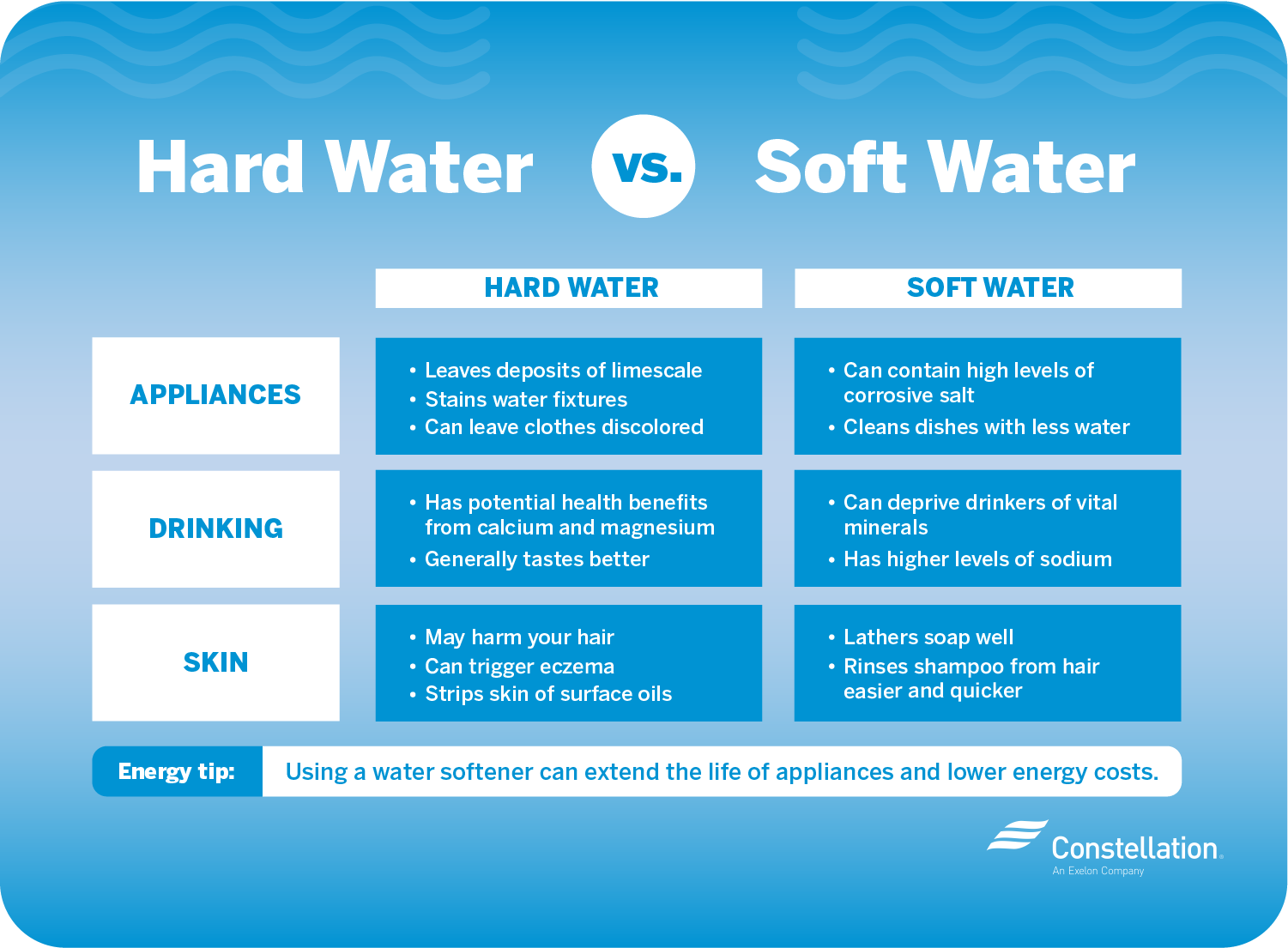
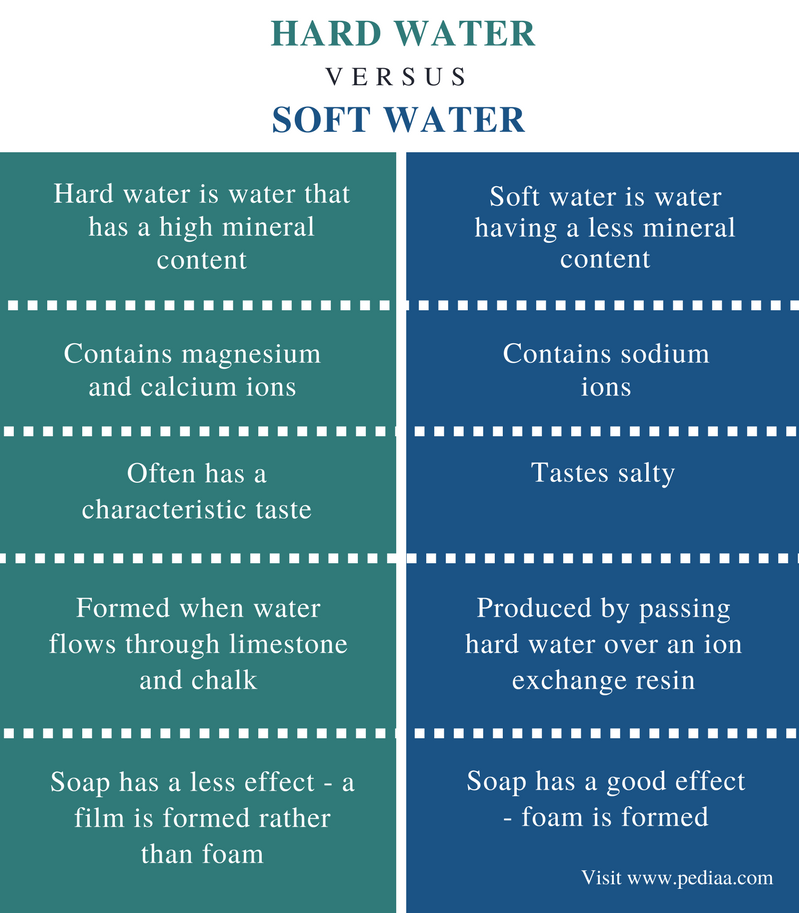
So, what's the big deal? Well, hard water contains a high concentration of minerals, primarily calcium and magnesium. Think of it like your water went on a mineral-collecting expedition before arriving at your tap. Soft water, on the other hand, has significantly fewer of these minerals. It's like the minimalist of the water world – clean, simple, and doesn't carry a lot of baggage (mineral baggage, that is!).
The purpose of differentiating between them comes down to understanding how these minerals impact your home and your body. Hard water's excess minerals can cause a whole host of problems. One of the most common is scale buildup. That crusty white stuff you see around your faucets, showerheads, and inside your kettle? That's scale, and it's basically mineral deposits sticking around long after the water has evaporated. Over time, scale can clog pipes, reduce the efficiency of your appliances (like your water heater and washing machine), and even shorten their lifespan. Talk about a costly consequence!
Must Read
Another telltale sign of hard water is the way it interacts with soap. Instead of creating a rich, bubbly lather, hard water often results in a curd-like scum. This means you need to use more soap to get the same cleaning power, whether you're washing your hands, your dishes, or your clothes. And that scum? It can cling to your skin and hair, leaving them feeling dry and itchy. Not ideal!
Soft water, conversely, is generally gentler on your plumbing and appliances. Because it doesn't contain as many minerals, it's less likely to cause scale buildup. It also allows soap to lather more easily, meaning you can use less product and still get things clean. Many people also find that soft water leaves their skin and hair feeling softer and smoother.
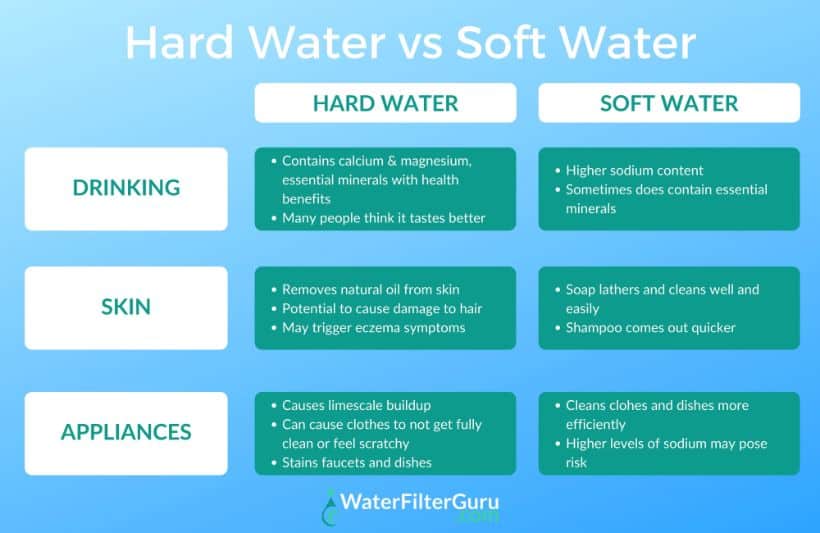
So, how do you know which type of water you have? One easy test is to simply observe. Look for scale buildup around your faucets and showerheads. Do you notice a film or residue on your clean dishes? Does your soap lather easily, or does it leave a curd-like scum? If you suspect hard water, you can purchase a water hardness testing kit from most hardware stores. These kits are relatively inexpensive and easy to use. Alternatively, your local water utility company can often provide information about the hardness of the water in your area.
Knowing whether you have hard or soft water empowers you to make informed decisions about your home and your health. If you have hard water, you might consider investing in a water softener to remove those excess minerals. Whatever you decide, understanding the difference between these two types of water can lead to a happier, healthier, and cleaner home!