
Differentiate Between A Monomer And Polymer
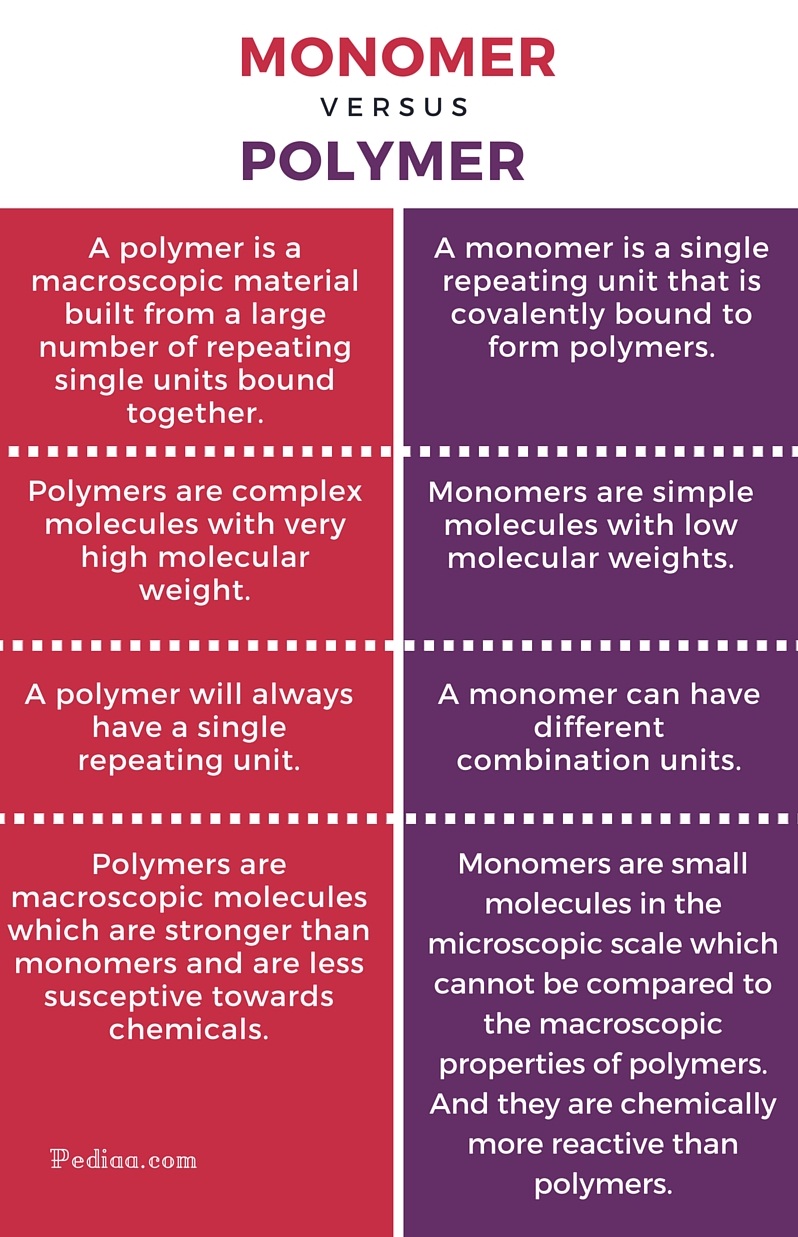
Hey friend! Ever wondered what makes up… well, pretty much everything around you? I mean, from the plastic bottle of water you’re sipping to the complex DNA inside your cells? The answer, in part, boils down to two cool words: monomers and polymers. Don't let the fancy names scare you; they're actually quite simple to understand!
Think of it like this: imagine you're building with LEGOs. (Who doesn't love LEGOs?!) A single LEGO brick, all by itself, is kind of neat, right? It's functional, has its own shape, and you could, theoretically, build something tiny with just one. But, it doesn't do much on its own. That single LEGO brick is like a monomer. It’s a small, single unit.
The word "monomer" literally means "single part" (mono = single, mer = part). So, a monomer is just a small molecule that can bind to other similar molecules to form something bigger. Think of amino acids (building blocks of proteins), glucose (a type of sugar), or those little plastic beads used to make friendship bracelets (remember those?!).
Must Read
From Bricks to Castles: Welcome to Polymer Town!
Now, let’s say you take a whole bunch of those LEGO bricks and connect them together. Maybe you build a cool spaceship, a towering castle, or even a miniature replica of your house (ambitious!). That whole structure, made up of many connected LEGO bricks, is like a polymer. A polymer is a large molecule made up of repeating monomer subunits.
The word "polymer" means "many parts" (poly = many, mer = part). So, you're essentially stringing together monomers like beads on a necklace (or LEGOs in a spaceship!). Plastics like polyethylene (used in plastic bags) and proteins (which do all sorts of important things in your body) are polymers. See? They're everywhere!
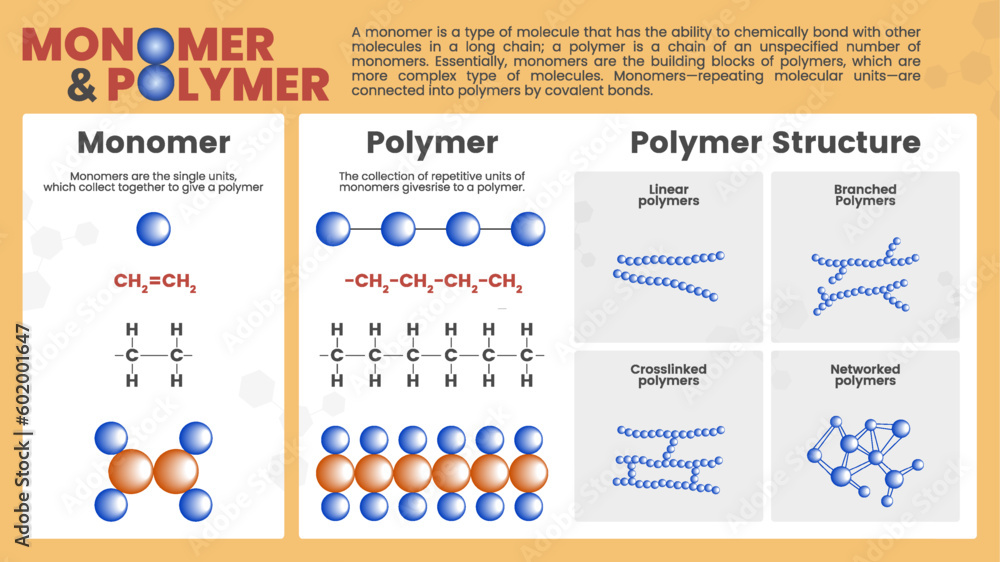
Here's a quick recap to make sure we're on the same page:
- Monomer: A single, small unit (like a single LEGO brick).
- Polymer: A large molecule made up of many repeating monomers (like a LEGO castle).
See? Not so scary, right? It's all about size and how things are connected.

Monomer vs. Polymer: A Side-by-Side Comparison (Because Visuals Are Fun!)
Let's put it in a table for extra clarity!
| Feature | Monomer | Polymer |
|---|---|---|
| Size | Small | Large |
| Structure | Single Unit | Many Repeating Units |
| Example | Amino acid, glucose | Protein, plastic |
| Analogy | Single LEGO brick | LEGO castle |
Think of it like this: a single grain of rice is a monomer. A whole pot of cooked rice? That's your polymer! Delicious and educational! (Okay, maybe not deliciously educational, but you get the idea.)
Sometimes, monomers link together using a process called polymerization. This is like using special LEGO glue (don't actually glue your LEGOs, though!) to make sure your castle stays together. Without polymerization, you’d just have a pile of monomers, and that's not nearly as fun!
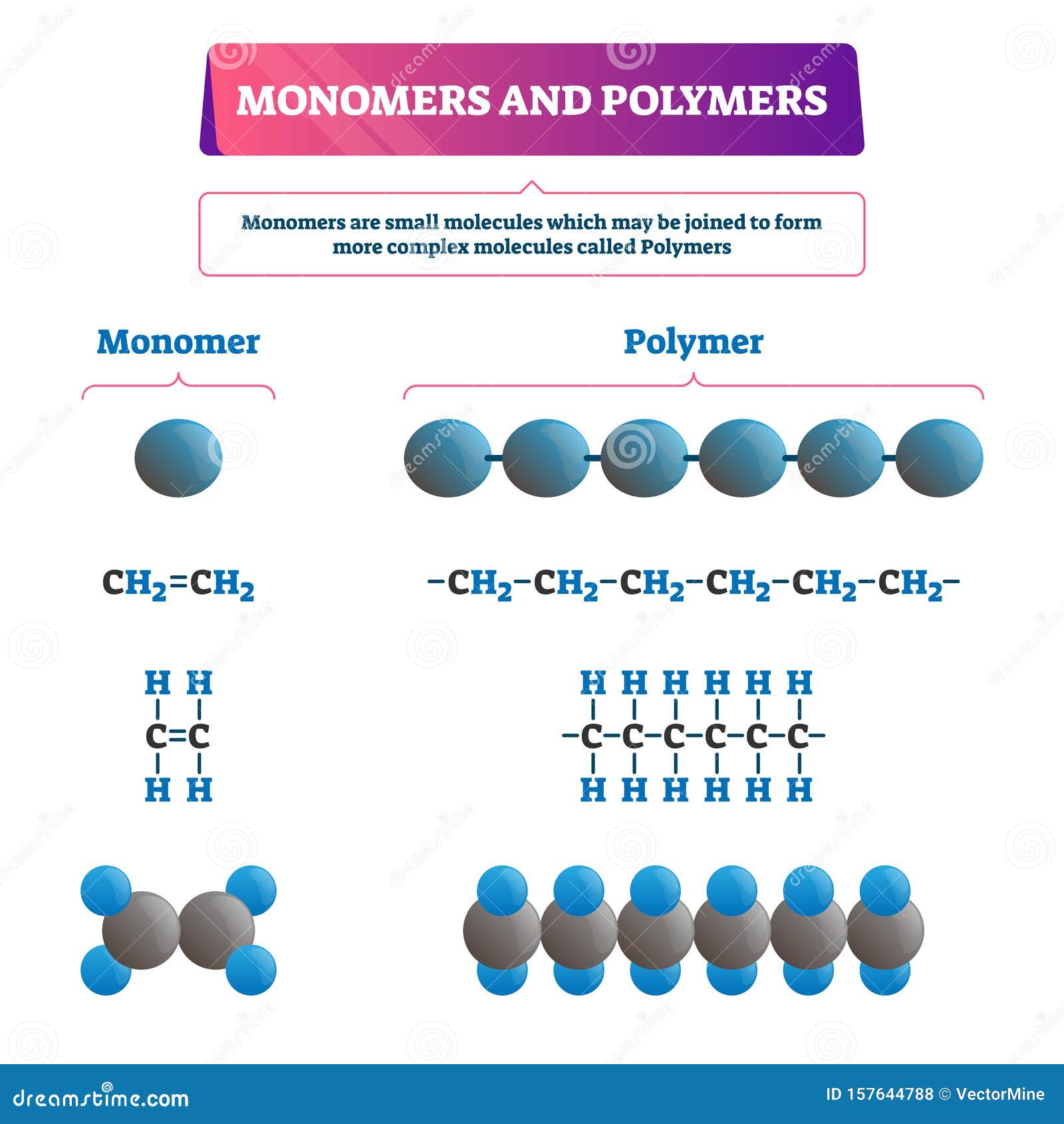
Now, there are different types of polymers. Some are natural, like proteins, carbohydrates, and DNA. These are the essential building blocks of life. Others are synthetic, like plastics and nylon. These are created by humans and have a wide range of uses. (Your favorite stretchy yoga pants? Probably a polymer!) Knowing the difference between monomers and polymers helps us understand how all these materials are created and how they behave.
So, What’s the Big Deal?
Why should you care about monomers and polymers? Well, understanding these fundamental concepts unlocks a whole new level of appreciation for the world around you! You start seeing things in terms of building blocks. That sandwich you’re eating? A collection of polymers (proteins, carbohydrates, fats) broken down into their monomer components by your body! The clothes you're wearing? Made of polymers! The phone you're using to read this? Yep, polymers! It's all connected!

Plus, knowing about polymers is super helpful if you're into things like cooking, gardening, or even just understanding product labels. Ever wondered what "polyunsaturated fat" means? Now you know it's a fat molecule (a polymer) made up of many unsaturated fatty acid monomers!
So, the next time you see a plastic bottle, a piece of clothing, or even a plate of pasta, remember the amazing world of monomers and polymers! They’re the tiny building blocks that make up the big, beautiful, and sometimes slightly overwhelming, world around us.
You've now officially leveled up your science knowledge! Go forth and impress your friends with your newfound understanding of monomers and polymers! You're awesome! Keep learning and stay curious!