Difference Between Watch Warning And Advisory

Okay, picture this: you're planning a beach barbecue. Sun's out, burgers are ready, and the playlist is fire. Suddenly, your phone buzzes. It's the National Weather Service. Now, depending on what that notification says, your burger plans might be sizzling or sinking faster than a dropped hotdog in the sand.
Because let's be honest, weather alerts can feel like decoding ancient hieroglyphs. Watch, Warning, Advisory... it's a meteorological alphabet soup. But fear not, intrepid outdoor enthusiast! Deciphering these terms is easier than remembering your best friend's birthday (hopefully!).
The Watch: The Sky's Doing Push-Ups
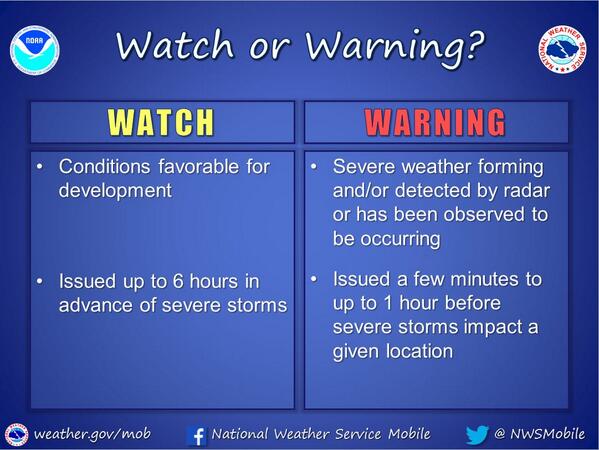
Think of a watch as the weather's way of saying, "Hey, heads up! Something might be brewing." It's like seeing a muscular sky start doing push-ups in the distance. A Tornado Watch, for instance, doesn't mean a twister is about to steal your picnic basket. It simply means conditions are favorable for tornadoes to develop in your area. Basically, the ingredients for a swirling disaster are present.
Must Read
This is your cue to get prepared, not panic. Charge your phone, secure loose items in your yard (like that inflatable flamingo you love so much), and keep an eye on the sky. It's a good time to practice your "I saw it coming!" face, just in case. You might even become the neighborhood weather guru!
The Warning: Houston, We Have a Weather Problem!
A warning? That's the real deal. The sky isn't just doing push-ups; it's bench-pressing a small car. A Tornado Warning means a tornado has been sighted or indicated by radar, and it's heading your way. This is when you put down the burger and find shelter – preferably a sturdy building or a designated safe room.

Warnings are urgent. They're the weather's equivalent of screaming, "Duck and cover!" Don't try to be a hero by filming the approaching storm (we’ve all seen those videos, and they rarely end well). Find safety immediately. Your selfie can wait.
Remember the difference with a fun little analogy: A watch is like a doctor telling you to exercise more because your cholesterol is a bit high. A warning is the doctor yelling, "You're having a heart attack! Get to the hospital!"
The Advisory: Annoying, But Not Life-Threatening (Usually)
Now, let's talk about the advisory. This is the slightly less dramatic cousin of the watch and the warning. An Advisory suggests potentially hazardous conditions that, while not immediately life-threatening, could still cause significant inconvenience or be outright annoying. Think of it as the weather being a passive-aggressive roommate.
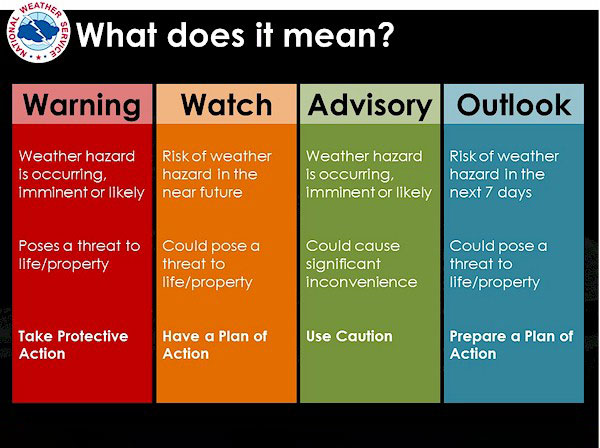
A Dense Fog Advisory, for example, means visibility is seriously reduced, making driving a real pain. A Heat Advisory suggests that the heat index is high enough to cause heat exhaustion if you're not careful. These alerts are a reminder to take precautions, like driving slower or staying hydrated. It's basically the weather telling you, "Don't be an idiot."
It might seem like advisories are less important, but they can still be serious. A Black Ice Advisory in winter, for instance, could lead to dangerous accidents if you aren't careful. So, pay attention to those advisories! They're not just trying to ruin your day; they're trying to keep you safe (and prevent you from filing an insurance claim).
"Knowing the difference between a watch, a warning, and an advisory can make all the difference in how you react to severe weather," says weather expert, Jane McCloud. "It's about being informed and prepared, not scared."
So, the next time your phone buzzes with a weather alert, take a moment to understand what it means. Are you under a watch? Get prepared. Under a warning? Seek shelter! Under an advisory? Take precautions and maybe grumble a little – because sometimes, the weather just likes to be a nuisance.
And hey, if all else fails, you can always blame the groundhog. It’s tradition, after all!