
Difference Between Nuclear Fission And Fusion

Hey there, science enthusiast! Ever wondered about the really big energy sources out there? Like, bigger than your morning coffee (though that's pretty powerful too!). Let's chat about nuclear fission and fusion. They sound similar, right? But trust me, they're totally different beasts, and both are seriously cool.
Fission: Atom Splitting Fun!
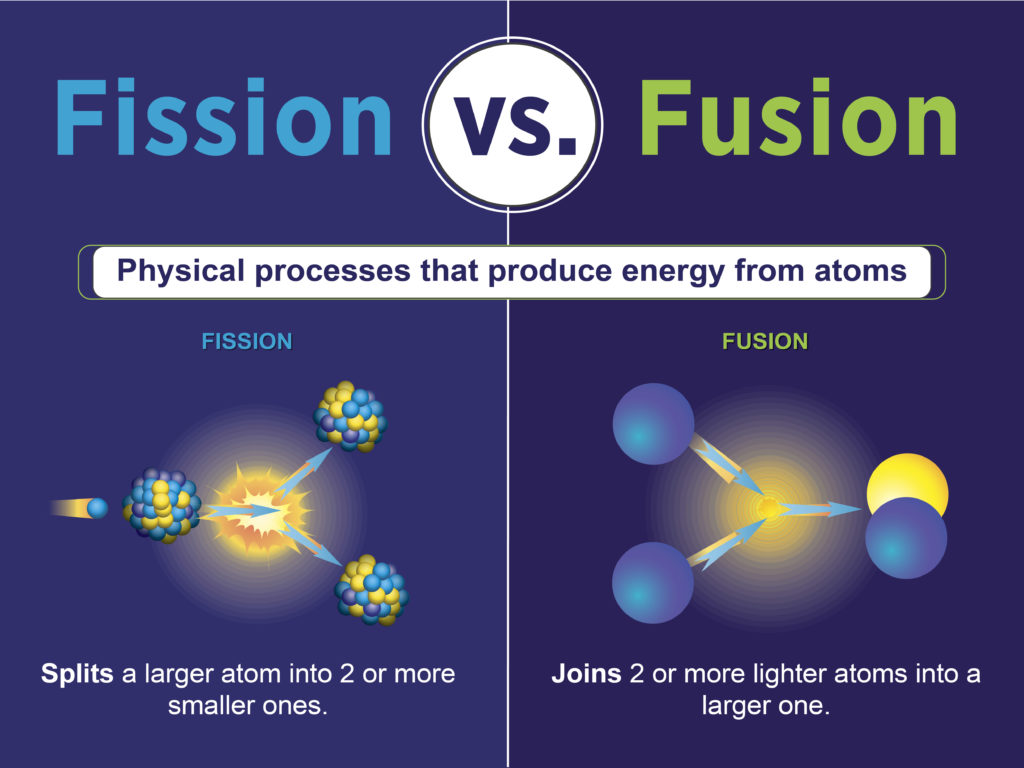
Fission is all about splitting atoms. Imagine a billiard ball (that's a neutron, in our analogy) slamming into a rack of pool balls (a uranium atom). BAM! The uranium atom splits into smaller pieces. And guess what? This releases a ton of energy!
Think of it like this: you're breaking apart something big to get smaller things. Sounds simple, right? It kinda is! This is what happens in nuclear power plants. They use the heat from fission to boil water, create steam, and spin turbines. Voila! Electricity!
Must Read
Here's a quirky fact: the first controlled nuclear chain reaction was achieved under a squash court at the University of Chicago! Talk about a powerful game of squash!
Fission is also used in atomic bombs. Yikes! But let's not dwell on the destructive side. The important thing is to understand the science behind it. It's all about controlled (or uncontrolled) chain reactions!
So, fission: splitting atoms, releasing energy, and sometimes, happening under squash courts. Got it?
Fusion: Atom Mashing Madness!
Now, let's talk about fusion. Forget splitting! We're now talking about mashing atoms together. Think of it as the opposite of fission.
Imagine squeezing two tiny hydrogen atoms together with so much force that they become a helium atom. Sounds difficult? You bet! It requires incredibly high temperatures and pressures. We're talking millions of degrees Celsius – hotter than the sun!
And speaking of the sun, that's exactly where fusion happens! The sun is a giant fusion reactor, constantly converting hydrogen into helium and blasting out energy in the form of light and heat.

Here's a fun detail: scientists are trying to recreate fusion on Earth. They're building these massive machines called tokamaks. These are basically giant, donut-shaped magnetic bottles designed to contain superheated plasma (that's the state of matter when atoms are stripped of their electrons).
Why are scientists trying so hard to achieve fusion? Because it's potentially a cleaner and more abundant energy source than fission. The fuel (hydrogen) is plentiful in seawater, and it produces less radioactive waste. Sounds like a win-win!
The problem? Fusion is ridiculously difficult to achieve. It's like trying to hold a tornado in a jar. But hey, scientists love a good challenge!
Fusion: mashing atoms, creating helium, and powering the sun (and hopefully, someday, our homes). Awesome, right?
Fission vs. Fusion: The Ultimate Showdown!
Let's recap the key differences in a super easy-to-remember way:
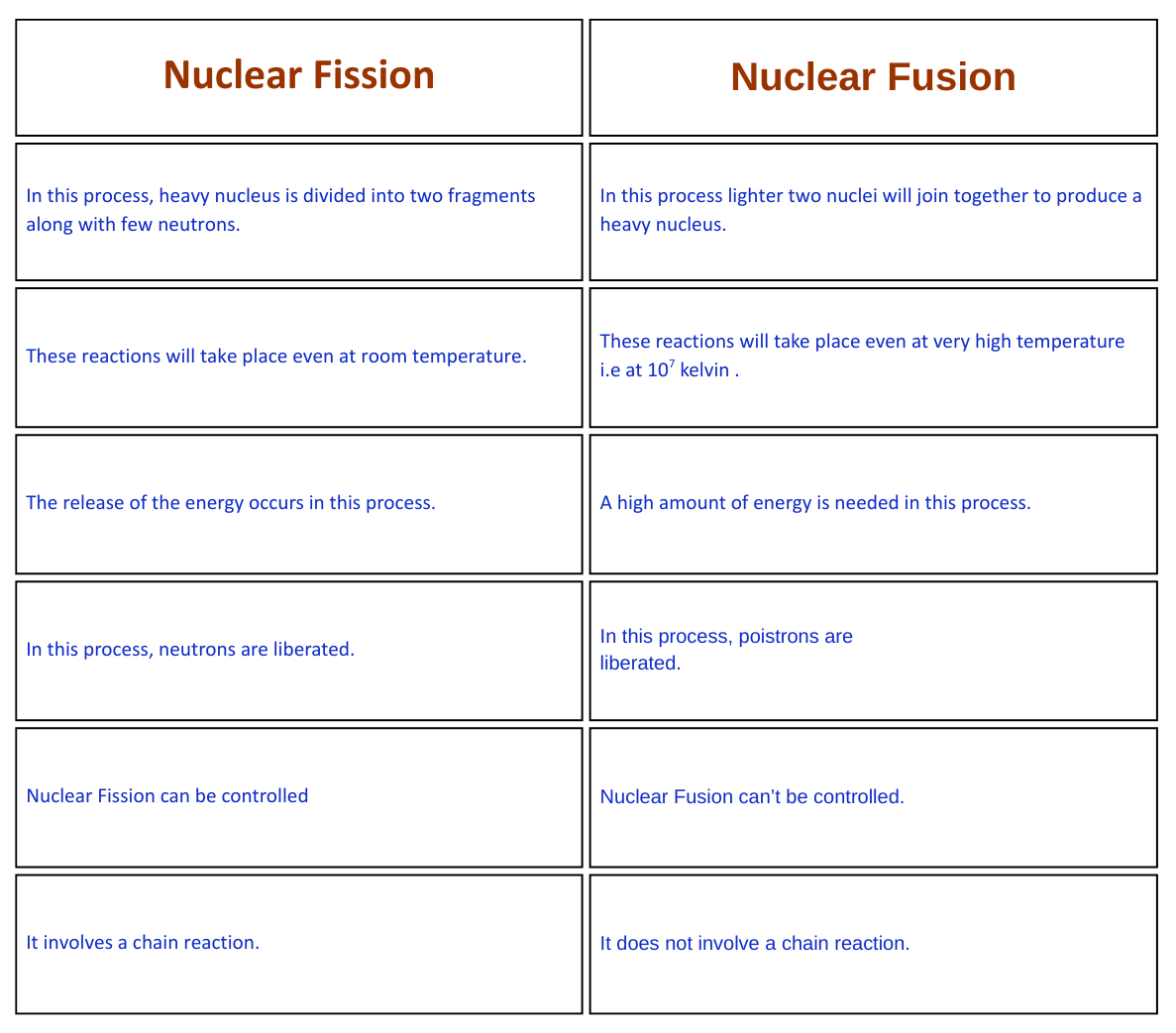
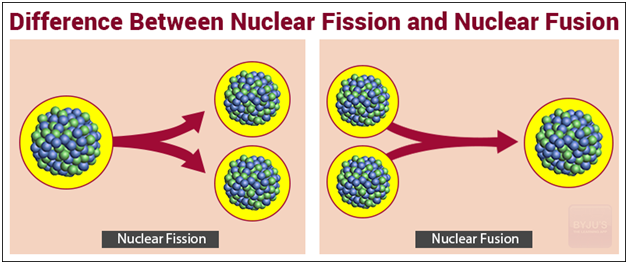
- Fission: Split 'em! Uses heavy elements like uranium. Happens in nuclear power plants and (sadly) atomic bombs.
- Fusion: Mash 'em! Uses light elements like hydrogen. Happens in the sun (and hopefully someday, fusion reactors).
Think of it like this: fission is like taking apart a Lego castle, while fusion is like building a new, even bigger Lego castle from scratch.
Both processes release enormous amounts of energy. But fusion has the potential to be a cleaner, more sustainable source of power. However, it's still a huge technological hurdle to overcome.
So, which one is "better"? Well, it's not really a competition. They're different tools with different applications. Fission is already a well-established technology, while fusion is the holy grail of energy production.
The coolest thing is that both fission and fusion demonstrate the immense power hidden within the atom. It's mind-blowing stuff!
Hopefully, this little chat has made nuclear fission and fusion a bit less intimidating and a whole lot more interesting. Keep exploring, keep questioning, and keep being curious!
And next time someone mentions nuclear energy, you can casually drop some knowledge about splitting atoms under squash courts and mashing them together to power the sun. You'll be the star of the conversation, guaranteed!